Senate Committee Halts Vote on Tech Investor Nominated to Lead National Science Foundation
Washington, Wednesday, 18 November 2026.
Senate leaders pulled Jim O’Neill’s nomination to direct the $9 billion science agency on Wednesday after committee leadership cited his failure to defend scientific integrity against political pressure.
Senate Committee Reverses Course on O’Neill Nomination
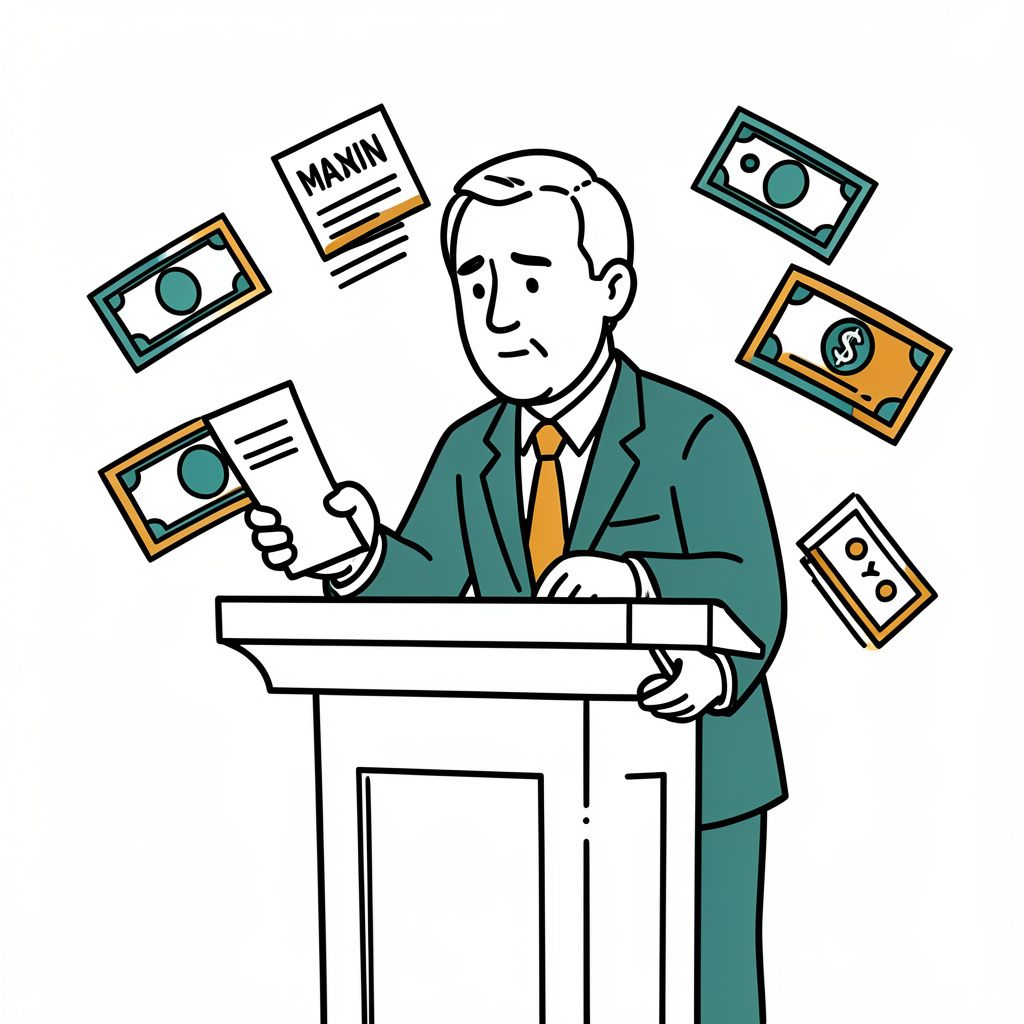
In a dramatic reversal, Senate Health, Education, Labor and Pensions (HELP) Committee Chair Bill Cassidy (R-LA) withdrew the nomination of tech investor James O’Neill to lead the National Science Foundation (NSF) on Wednesday, November 18, 2026 [1][2][3][5][7]. The decision came just hours before a scheduled committee vote that had been set for 12:26 p.m. EST, with Cassidy citing O’Neill’s insufficient defense of scientific integrity during his tenure at the Department of Health and Human Services and as acting CDC director [2][3][5][7]. The move represents a significant setback for President Donald Trump’s administration as it sought to place a business leader with no formal science background at the helm of the $9 billion federal research agency [3][4][5].
Activist Pressure and Political Calculus
The withdrawal follows intense pressure from advocacy groups, particularly Stand Up for Science, which coordinated a nationwide campaign demanding a public hearing before any confirmation vote [1]. The organization mobilized over 4,200 emails to Senate offices, including more than 700 directed at HELP Committee members, during the week leading up to the vote [1]. Founded in February 2025, Stand Up for Science has positioned itself as a watchdog against corporate influence in federal science policy, organizing over 170 events globally on its first National Day of Action in March 2025 [1]. ‘Voters wanted to see an end to billionaires meddling in our government and civic action doesn’t end at the voting booth,’ said Dr. Colette Delawalla, the group’s founder and CEO [1]. Democratic senators Maria Cantwell (WA) and Tammy Baldwin (WI) had also publicly objected to proceeding with a vote without a hearing, sending a letter to Cassidy on November 16 that was made public the following day [2][3].
O’Neill’s Background and Controversial Record
O’Neill’s nomination had drawn criticism from the outset due to his lack of an advanced science degree or experience managing large research enterprises, making him the first nonscientist proposed to lead the NSF [4][5][6]. His tenure in government service includes serving as deputy HHS secretary under President George W. Bush and as acting CDC director from August 2025 to February 2026 [2][5][6]. Cassidy specifically cited O’Neill’s failure to challenge controversial statements by HHS Secretary Robert F. Kennedy Jr., particularly regarding vaccine policy and a disputed hepatitis B study [2][3][5][7]. ‘As acting CDC director, Mr. O’Neill did not do enough to stand up for science against irresponsible decisions and statements from [HHS] Secretary [Robert F.] Kennedy, Jr.,’ Cassidy stated [2][5][7]. The committee chair also referenced O’Neill’s role in the firing of former CDC director Susan Monarez, which raised concerns about his independent judgment [2][5].
Implications for NSF Leadership and Future Nominations
The NSF has operated without a permanent director since April 2025, with chief of staff Brian Stone serving in an acting capacity while planning to depart at year-end [3][4][5]. With Democrats poised to take control of the Senate in January 2027, O’Neill’s chances of confirmation were already considered minimal [2][3][5]. The rejection of O’Neill’s nomination comes amid broader concerns about political interference in science agencies, with the Senate Appropriations Committee recently criticizing the NSF’s direction and dismantlement of the Directorate for Social, Behavioral and Economic Sciences [4]. The committee warned that the Foundation must adhere to congressional funding direction and return the National Science Board to full membership [4]. As the administration pivots to new nominations, the episode underscores the growing political friction between corporate interests, scientific integrity, and federal research policy in an era of heightened global competition in science and technology [4][6][7].
Sources
- www.einpresswire.com
- www.science.org
- fedscoop.com
- www.insidehighered.com
- www.statnews.com
- www.washingtonpost.com
- www.bloomberg.com