USS Gerald R. Ford to Supply Land Base With Nuclear Energy This Summer
Washington, D.C., Monday, 25 May 2026.
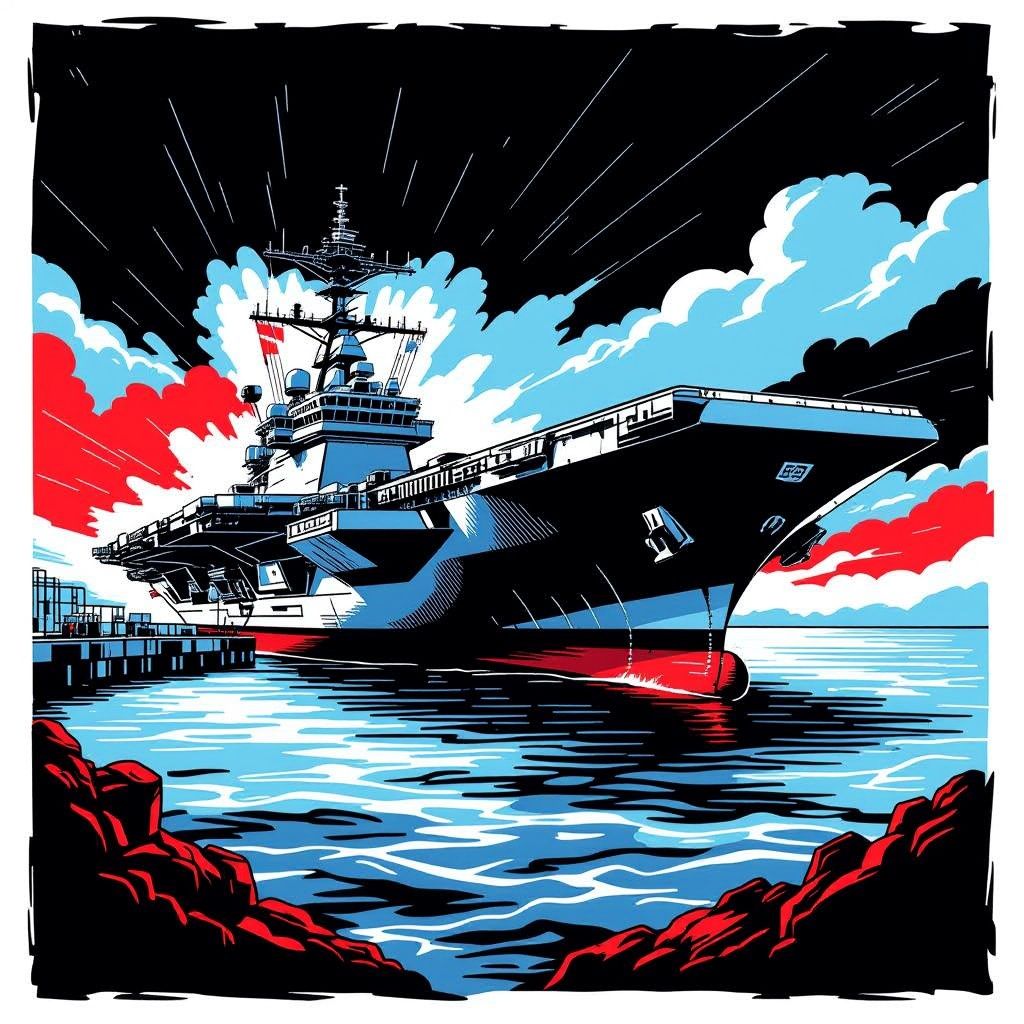
In a major strategic shift this summer, the U.S. Navy will use the USS Gerald R. Ford’s massive nuclear reactors to supply electricity directly to an onshore military base.
A Historical Precedent for Dual-Use Naval Power
While the concept of a floating nuclear power plant may seem novel, the U.S. military has a long-standing history of repurposing naval assets for disaster relief and energy provision. In 1931, the USS Lexington provided critical electrical aid to Nicaragua following a devastating earthquake [1]. During World War II, the U.S. Navy and the Royal Navy converted at least seven Buckley-class destroyer escorts into floating power plants, including the USS Donnell, which was effectively repurposed after sustaining severe battle damage [1].
Strategic Implications and Defense Policy
The upcoming summer 2026 test at Norfolk extends beyond a simple proof of concept; it is a strategic maneuver designed to bolster domestic and international military logistics. According to a Navy spokesperson, the strategy aims to demonstrate the capability to meet emergent needs, effectively transforming warships into deployable civic infrastructure [1]. By utilizing the 11 active aircraft carriers in the U.S. fleet—comprising ten Nimitz-class and one Gerald R. Ford-class—the Department of Defense can project not just military force, but essential utility infrastructure anywhere in the world [3].
Redefining Naval Asset Valuation
For defense contractors and geopolitical strategists, the dual-use capability of the USS Gerald R. Ford represents a paradigm shift in asset valuation. The U.S. Navy, which operates over 400,000 personnel and maintained 290 deployable combat vessels as of 2023, is redefining the return on investment for its massive nuclear supercarriers [3]. The sheer scale of these vessels continues to capture public attention, with social media commentators frequently highlighting the U.S. Navy’s ‘Extreme Nuclear Super Fleet’ and its status among the largest nuclear-powered ships on the planet [2][4]. By transforming these warships into mobile utility providers, the military enhances its disaster response toolkit while simultaneously justifying future procurement budgets. As the summer 2026 test approaches, the global defense community will be watching closely to see if this integration of naval power and civilian utility sets a new standard for military logistics [1][3].