Revised US Metal Tariffs Aim to Boost Manufacturing but Spark Industry Backlash
Washington, Tuesday, 2 June 2026.
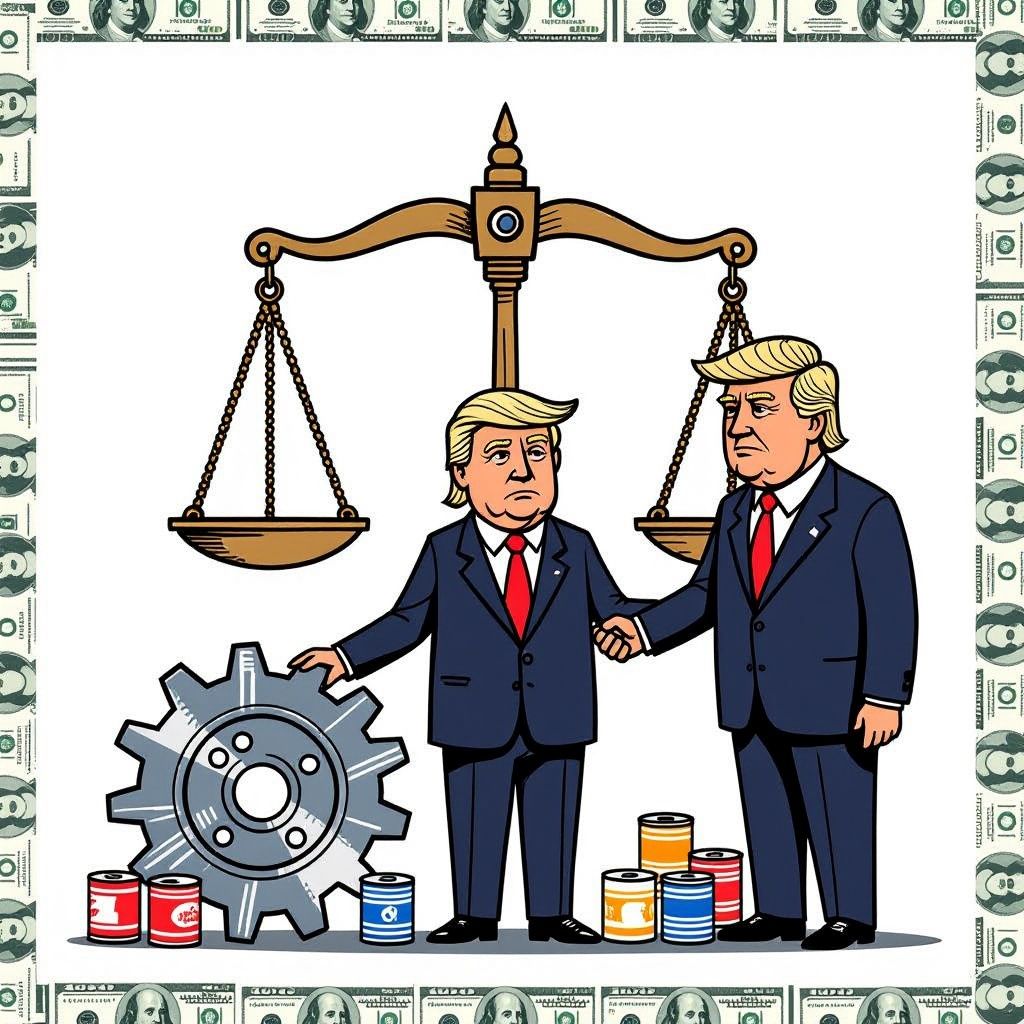
President Trump lowered tariffs on heavy machinery to boost US metal production, but critics argue the move inadvertently favors cheap foreign canned goods over domestic manufacturers.
Recalibrating the Industrial Supply Chain
On Monday, June 1, 2026, President Donald Trump signed a proclamation altering the tariff landscape for critical metals under the Section 232 program [1][2][3][4]. The policy, scheduled to take effect on June 8, 2026, reduces the import duties on specific heavy industrial and agricultural equipment containing steel, aluminum, and copper [2][3]. Previously set at 25 percent, the tariff rate for machinery such as agricultural combines, harvesters, forklifts, and bulldozers imported from eligible trade partners drops to 15 percent [1][2][3]. This represents a -40 percent change in the tariff rate applied to these goods. The adjustments are designed as a temporary lever to stimulate near-term capital investments and are scheduled to expire on December 31, 2027 [1][2][3][4].
Domestic Manufacturing Momentum
The White House has positioned these tariff adjustments as a catalyst for what it describes as a broader “reindustrialization” trend sweeping across the American economy [4]. The Section 232 tariffs have already elevated the United States to the position of the third-largest steel-producing nation globally [1]. Looking ahead, the administration projects that over 3.6 million metric tons of new domestic crude steelmaking capacity will become operational by June 2028 [1]. These industrial expansions are heavily concentrated in states such as West Virginia, Arkansas, and South Carolina [1][4].
The Unintended Casualties of Trade Protectionism
Despite the administration’s focus on heavy industry, the tariff structure has ignited fierce pushback from domestic manufacturers reliant on metal packaging [5]. A separate proclamation issued on May 30, 2026, maintained high Section 232 tariffs on raw packaging materials like sheet aluminum [5]. Industry advocates argue this creates a severe market distortion: it keeps the cost of producing metal cans in America artificially high while allowing foreign competitors, notably from China, to export cheaper, finished canned goods into the US market [5]. Scott Breen, president of the Can Manufacturers Institute, warned that the policy inherently disadvantages domestic production by inflating input costs [5].
Navigating Future Trade Dynamics
The friction between protecting raw material producers and supporting downstream manufacturers highlights the complex tightrope of international trade policy [GPT]. By maintaining high tariffs on raw sheet aluminum while lowering them for heavy machinery with high US-metal content, the Trump administration is effectively picking winners and losers within the broader manufacturing ecosystem [alert! ‘economic interpretation based on conflicting industry impacts’]. For supply chain managers and executives, the window between June 2026 and the policy’s expiration at the end of 2027 will require rapid adaptation to these shifting cost structures [1][2][3].
Sources
- www.whitehouse.gov
- www.wsj.com
- www.tradingview.com
- www.businesstoday.com.my
- americanrecycler.com
- www.ctvnews.ca