Leadership Crisis: Iran's Wounded Supreme Leader Secretly Evacuated to Moscow
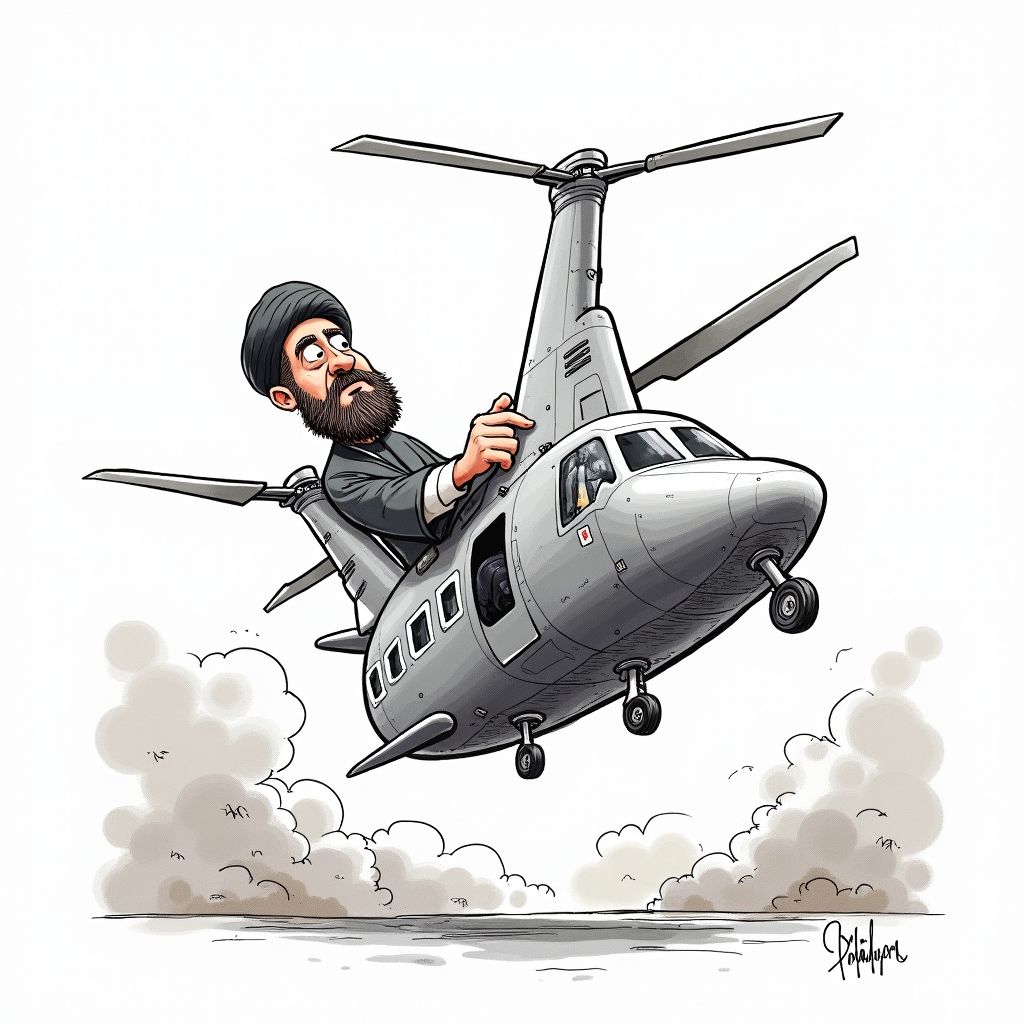
Tehran, Monday, 16 March 2026.
Following severe airstrike injuries, including losing a leg, Iran’s new Supreme Leader was secretly airlifted to Moscow, triggering a leadership crisis with profound geopolitical and global market implications.
A Regime in the Shadows
On February 28, 2026, the opening salvos of severe United States and Israeli airstrikes targeted Iran’s leadership structure, resulting in the assassination of Ayatollah Ali Khamenei [2][3][5]. His son and newly appointed successor, Mojtaba Khamenei, was caught in the bombardment and sustained catastrophic injuries [1][2]. Alireza Salarian, Iran’s ambassador to Cyprus, confirmed that the new Supreme Leader suffered severe trauma to his legs, hand, and arm, including the loss of one leg [1]. Faced with an overwhelmed domestic healthcare system struggling under the weight of ongoing military strikes, Iranian President Masoud Pezeshkian accepted an unprecedented offer of medical asylum from Russian President Vladimir Putin [2][3]. Mojtaba was secretly evacuated aboard a Russian military aircraft to Moscow, where he underwent successful surgery and is currently convalescing in a private hospital located within a Russian presidential compound [1][2][3].
Geopolitical Ramifications and Intelligence Maneuvers
The United States government is actively weaponizing the intelligence surrounding Mojtaba’s incapacitation to apply maximum psychological pressure on the Iranian regime [1]. On March 9, 2026, US President Donald Trump publicly questioned the Supreme Leader’s status, stating, “I think he is damaged, but I think he’s probably alive in some form” [1]. That same day, US Defense Secretary Pete Hegseth corroborated the assessment, confirming that American intelligence knows the leader is “wounded and likely disfigured” [1]. To further exploit the leadership vacuum, the US has placed a bounty of up to $10 million for actionable intelligence regarding the whereabouts of Mojtaba and nine other senior Iranian officials [2].
Eroding Regional Influence and Nuclear Setbacks
Iran’s broader geopolitical leverage is simultaneously collapsing across the Middle East. The ongoing regional conflict against the so-called “Axis of Resistance” has severely tested Tehran’s military infrastructure [1][5]. United States and Israeli airstrikes have systematically dismantled missile stockpiles and neutralized key proxy leadership [5]. The strategic depth Iran once enjoyed has rapidly eroded following the fall of the Assad regime, which precipitated Tehran’s forced exit from Syria and Lebanon [5]. As regional analysts note, Iran’s retaliatory maneuvers have failed to shift the military balance, leaving the nation with diminished political and military leverage everywhere except Iraq [5].
The Russian Lifeline and Market Uncertainty
As of mid-March 2026, the survival of Iran’s paramount leader rests entirely in Russian hands, housed in a Moscow medical facility far removed from the crisis engulfing his nation [1][2]. This profound strategic reliance on Vladimir Putin underscores a dramatic shift in Middle Eastern power dynamics, effectively rendering the Iranian leadership beholden to the Kremlin [GPT]. For global financial and energy markets, the combination of an autonomous IRGC, a decapitated proxy network, and a Supreme Leader in Russian exile introduces severe volatility [GPT]. Until a definitive change in Iranian leadership materializes or a decisive military moment forces negotiations, the region remains locked in a high-stakes war of attrition [5].