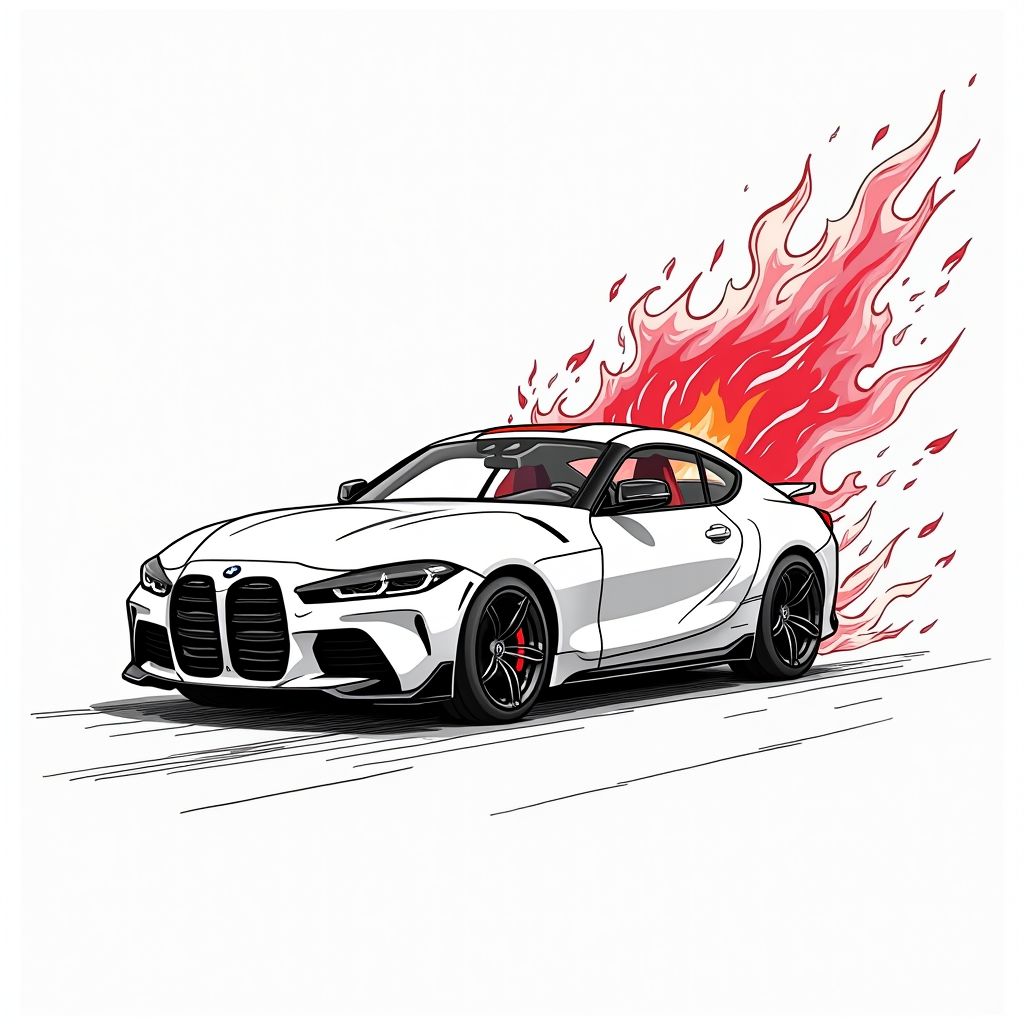
BMW Issues Global Recall for Over 500,000 Vehicles Due to Engine Fire Risks
Munich, Thursday, 12 February 2026.
BMW recalls 575,000 vehicles globally, including Toyota Supras, as worn starter motors pose a fire risk. Owners are urged to avoid leaving running cars unattended.
Global Scope and Technical Analysis
German luxury automaker BMW (BMWYY) has confirmed a significant safety recall affecting approximately 575,000 vehicles worldwide due to a critical defect in the engine starter system [1][3]. While initial regulatory filings in the United States identified 87,394 affected units, the scope of the issue is global, encompassing a production window for starter relays manufactured between July 2020 and July 2022 [3][5]. The defect centers on the starter motor’s magnetic switch, which is prone to excessive wear following a high number of starting operations [1]. This mechanical degradation can lead to a short circuit and localized overheating, posing a fire hazard even in worst-case scenarios while the vehicle is being driven [7]. The United States market accounts for approximately 15.199% of the total affected volume [3][5].
Identified Risks and Operational Warnings
The technical failure is attributed to wear on an internal component within the starter motor, specifically the solenoid [2][6]. BMW indicates that this wear can make it difficult or impossible to start the engine, but the primary safety concern involves the potential for combustion [1][6]. In response to these risks, the automaker has issued specific operational advice to owners of the affected vehicles: drivers should not leave their cars unattended while the engine is running, a precaution that is particularly relevant for users of remote engine start features [3][7]. Despite the severity of the fire risk, officials have reported that no accidents or injuries have been linked to this specific defect as of early 2026 [5].
Affected Models and Industry Implications
The recall spans a wide array of the manufacturer’s lineup, impacting sedans, coupes, and SUVs. Affected models include the 2 Series Coupe, 3 Series, 4 Series, 5 Series, and 7 Series, alongside the X3, X4, X5, X6, and Z4 lines [3][6]. Notably, the recall extends to the Toyota Supra (2021-2023 model years), as the Japanese sports car shares its powertrain and engineering architecture with BMW [2][5]. The faulty starters were sourced from the supplier Valeo during the specific production period identified [8]. BMW has committed to replacing the starter motors—and in some instances, the vehicle batteries—free of charge, with the repair procedure estimated to take approximately two hours [3].
Financial Outlook and Consumer Timeline
From a financial perspective, BMW aims to reassure investors that this quality control issue will not severely impact the company’s bottom line. A spokesperson stated that the recall would have “little if any impact” on BMW’s earnings, a marked contrast to a 2024 incident involving faulty brakes from supplier Continental that cost the automaker hundreds of millions of euros [7]. For consumers, the timeline for resolution is set for the coming weeks; notification letters are scheduled to be mailed to owners of impacted vehicles starting March 24, 2026 [2]. Owners are encouraged to verify their vehicle’s status using their Vehicle Identification Number (VIN) through official regulatory databases [2][3].
Sources
- www.reuters.com
- www.usatoday.com
- www.bmwblog.com
- www.youtube.com
- wgntv.com
- www.aa.com.tr
- www.straitstimes.com
- news.dealershipguy.com