US Democrats Urge EU to Maintain Climate Standards Despite Trump Pressure
Brussels, Friday, 6 February 2026.
Twenty-four Democrats formally requested the EU ignore Trump’s deregulation calls, arguing American political volatility shouldn’t dictate global methane standards, potentially complicating compliance for multinational energy firms.
A Widening Transatlantic Rift
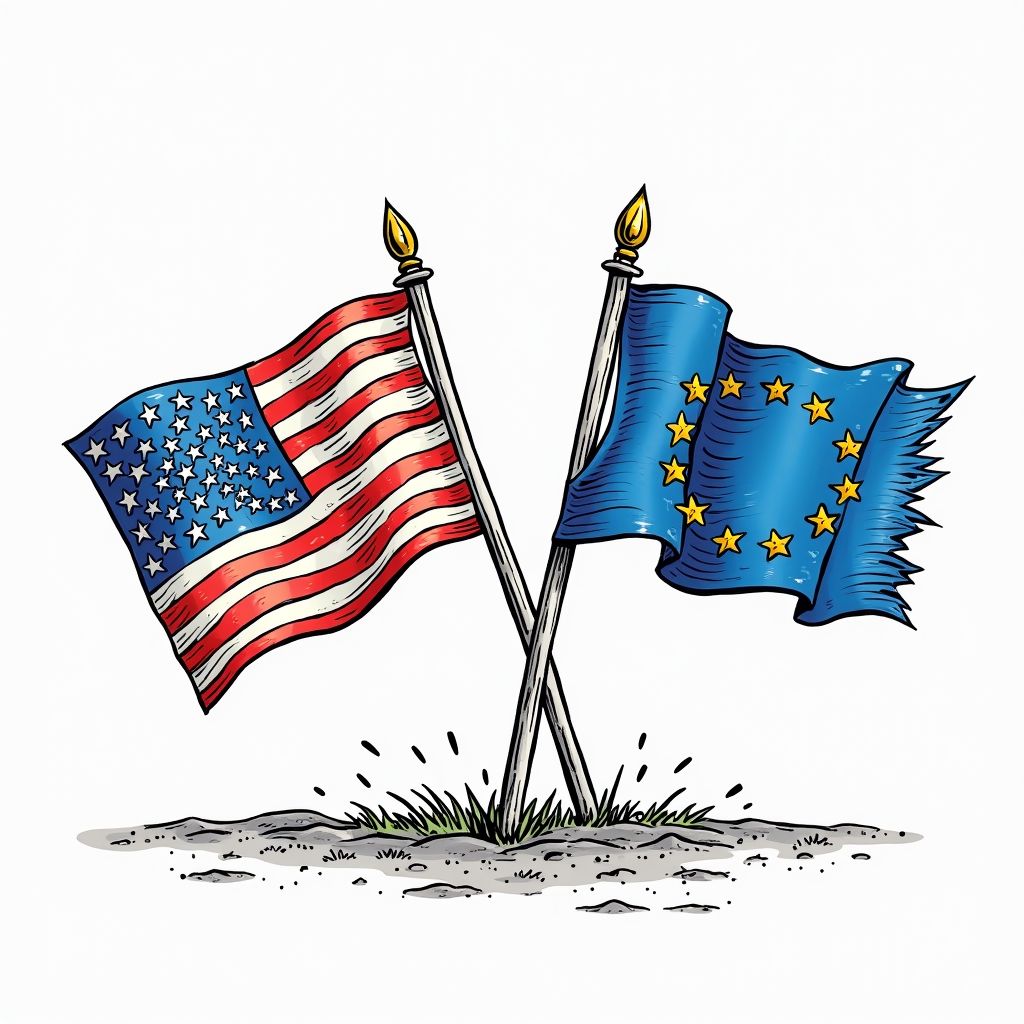
The letter from Capitol Hill arrives at a moment of heightened friction between Brussels and Washington. While the twenty-four Democrats warn that a “volatile White House” should not derail the European Union’s long-term environmental strategy [1], the geopolitical reality is already shifting. European leaders are gathering in Hamburg for a summit expected to further antagonize President Trump, who has previously dismissed renewable energy infrastructure, specifically wind turbines, as being for “losers” [2]. This diplomatic dissonance is matched by concrete policy divergence; as the Trump administration signals a retreat from regulation, the EU is tightening its financial and environmental dragnet. On January 22, the bloc moved to close sanctions loopholes regarding third-country oil refineries linked to Russia, drawing sharp criticism from Trump ally Scott Bessent, who labeled the move as “stupidity” [3].
The Economic Cost of Divergence
Underpinning the EU’s refusal to align with U.S. deregulation is a substantial body of economic and health data released in February 2026. A new study commissioned by the European Parliament reveals that despite decades of legislative effort, the economic damage from air pollution generated by Europe’s largest industrial plants ranges between €268 billion and €428 billion annually [4]. While the bloc has achieved progress—reducing premature deaths from 420,000 in 2010 to approximately 357,000 in 2022, a decline of -15 percent—the data supports the Commission’s aggressive push toward a zero-pollution target by 2050 [4]. This regulatory trajectory suggests that for European policymakers, the cost of compliance is outweighed by the macroeconomic burden of inaction, regardless of pressure from the West Wing.
Energy Security and Geopolitical Leverage
The debate over maintaining standards extends beyond emissions to the core of energy security infrastructure. In testimony given to the Irish Oireachtas Committee on Climate, Environment and Energy on February 5, 2026, Friends of the Earth argued that deepening reliance on imported fossil fuels, such as Liquefied Natural Gas (LNG), exposes nations to “geopolitical leverage from the US” [5]. The organization contended that “energy security that weakens climate law… is not security, it is a liability,” advocating instead for an electricity-led system based on renewables and interconnection [5]. This testimony highlights a growing concern among European stakeholders that aligning too closely with U.S. energy exports may compromise both sovereignty and climate obligations.
The Corporate Compliance Conundrum
For multinational corporations, this regulatory bifurcation creates a complex operating environment. The shifting sentiment was palpable at the World Economic Forum in Davos, where the dialogue has moved from “climate ambition” to a more resigned focus on “coping with the damage” [6]. Compounding the uncertainty are complex environmental feedback loops; a recent study indicated that lower air pollution during Covid-19 lockdowns paradoxically fueled a surge in methane, a powerful greenhouse gas, adding another layer of difficulty to atmospheric modeling [7]. As the U.S. and EU drift further apart on policy, energy firms must navigate a landscape where compliance in one jurisdiction may increasingly signal defiance in the other.
Sources
- www.politico.eu
- www.politico.eu
- www.politico.eu
- www.europarl.europa.eu
- data.oireachtas.ie
- www.politico.eu
- www.themountaineer.com