US Fuel Prices Expected to Remain Elevated Until 2027
Washington, Monday, 20 April 2026.
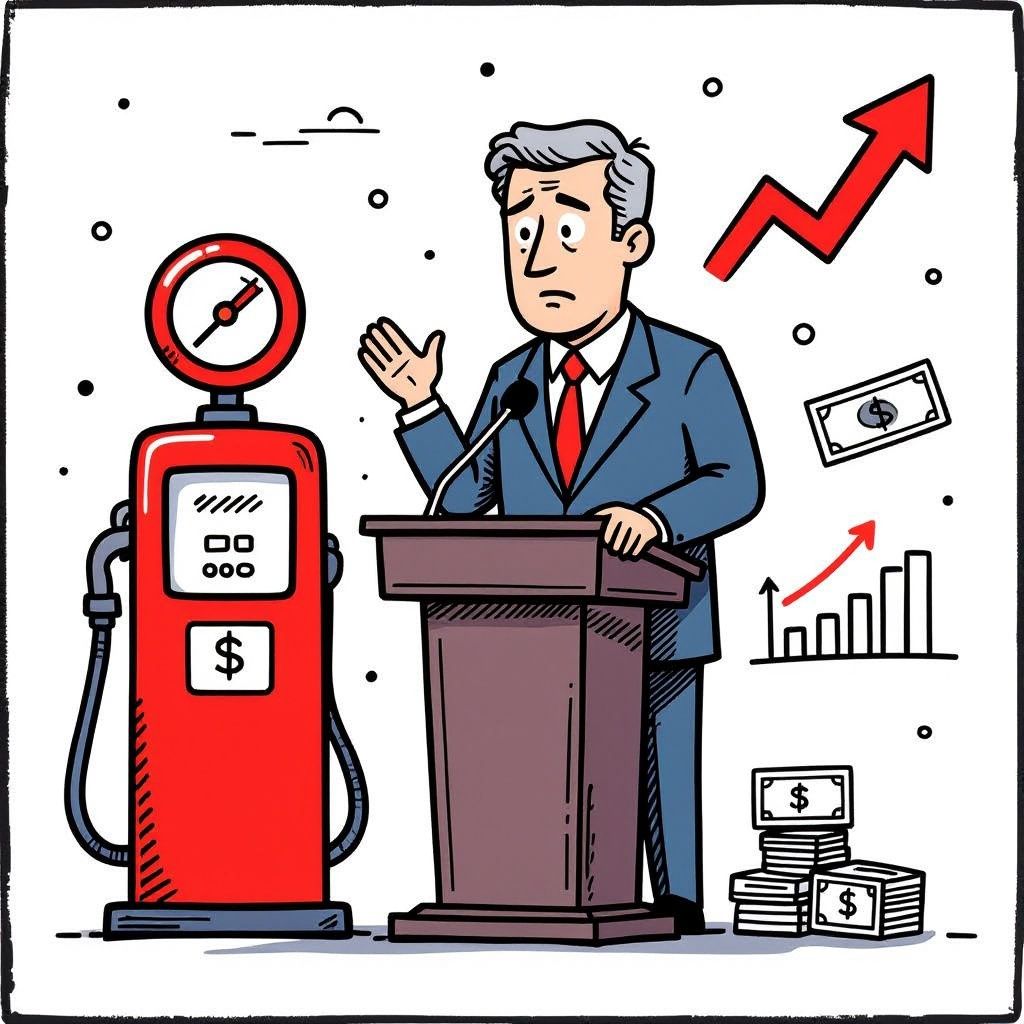
Reversing previous forecasts, Energy Secretary Chris Wright warns US fuel prices may exceed $0.79 per liter through 2027, ensuring prolonged financial strain on consumer spending and supply chains.
The Geopolitical Catalyst and Market Reality
The revised timeline from Energy Secretary Chris Wright emerged during a Sunday, April 19, 2026, television appearance, directly contradicting President Donald Trump’s earlier assertions that the fuel price spikes would be short-term [1]. The surge in energy costs is rooted in the ongoing military conflict between the United States, Israel, and Iran, which commenced in late February 2026 [1][2]. By mid-April, the national average for regular unleaded gasoline had reached $4.05 per gallon—equivalent to approximately $1.07 per liter—a sharp increase from the prewar average of $2.98 per gallon, or $0.79 per liter [1][GPT]. This represents a 35.906 percent price jump in a matter of weeks, driven largely by disruptions in the Strait of Hormuz, a critical maritime choke point that handles more than 20 percent of the world’s seaborne oil supplies [3][4].
Domestic Economic Strain and Political Fallout
The persistent elevation of energy prices is already manifesting in broader domestic inflation data. During a highly contentious April 16 congressional hearing, U.S. Representative Kathy Castor highlighted that energy inflation had surged by 10.9 percent in March 2026 alone [7]. Furthermore, household electric bills have seen national increases of up to 13 percent, compounded by the administration’s proposed budget cuts to the Low-Income Home Energy Assistance Program (LIHEAP) and weatherization initiatives [7]. The combination of soaring fuel and electricity costs is expected to cascade into higher consumer goods prices as diesel transport and supply chain margins absorb the shock [7].
Global Supply Chains and Agricultural Shockwaves
Beyond domestic borders, the closure of the Strait of Hormuz and disruptions in the Bab el-Mandeb strait have triggered a severe global food security crisis [6]. The International Fund for Agricultural Development (IFAD) issued a stark warning this week, detailing how the maritime bottlenecks have curtailed exports and delayed shipments of essential agricultural inputs, including fertilizers and tractor fuel [6]. Because farmers across nearly half the globe enter their critical planting seasons between March and June, these logistical failures risk significantly lower harvests and tighter global food availability in the coming months [6].
Diplomatic Efforts Amidst Fragile Ceasefires
Market stability now hinges heavily on the success of ongoing diplomatic interventions. A temporary U.S.-Iran ceasefire is scheduled to expire on Wednesday, April 22 [4][5][alert! ‘Sources conflict on the length of the ceasefire, citing it as both a 10-day and a two-week agreement’]. To prevent further market destabilization, the administration dispatched special envoys Steve Witkoff and Jared Kushner to Islamabad, Pakistan, for negotiations with Iranian counterparts on Monday, April 20 [3][4].
Sources
- www.nytimes.com
- www.theguardian.com
- www.cnbc.com
- nypost.com
- www.staradvertiser.com
- english.aawsat.com
- castor.house.gov