World’s First Industrial CO₂ Carrier: A Game-Changer for Carbon Capture
Winterthur, Thursday, 18 June 2026.
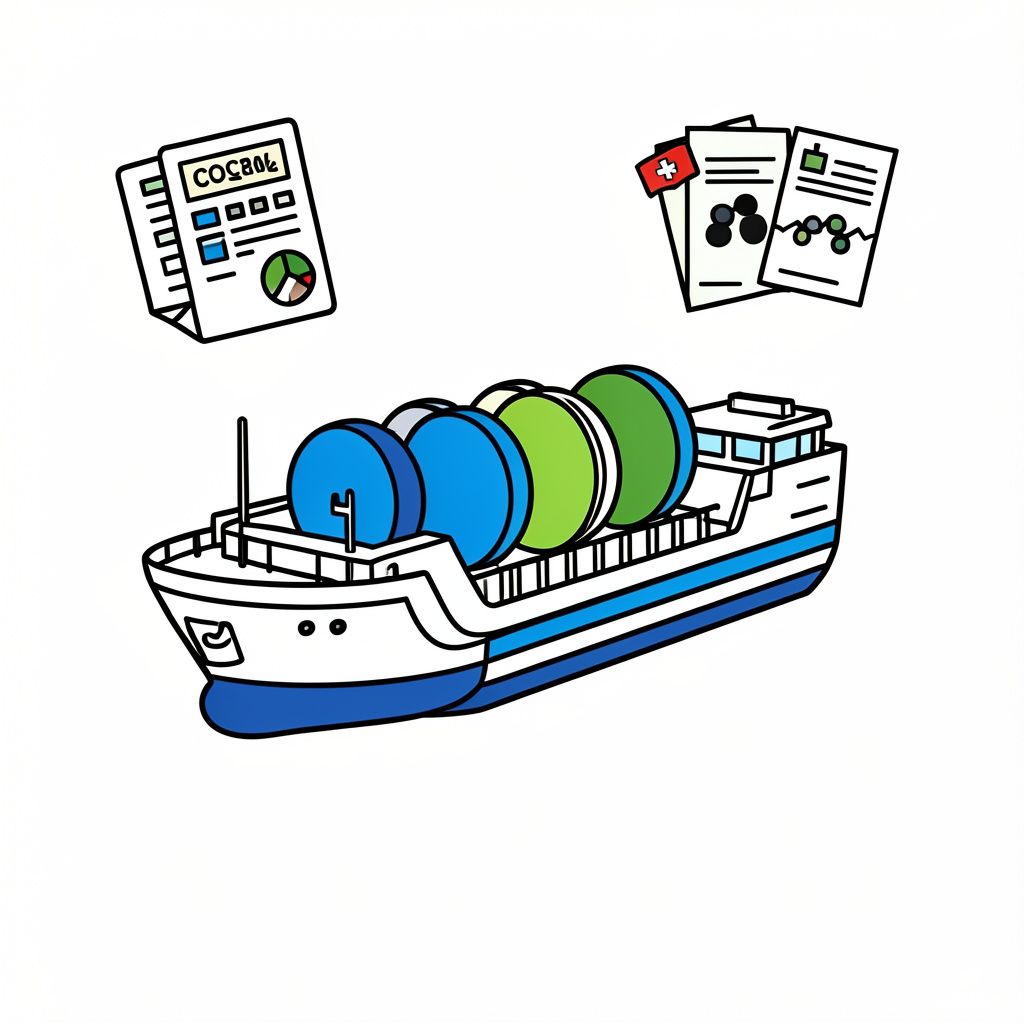
A Swiss engineering firm has secured a historic contract to build compressors for the first industrial-scale ship designed to transport liquefied CO₂. This breakthrough project, part of Europe’s Northern Lights initiative, will store up to 5 million tons of CO₂ annually by 2026—proving large-scale carbon transport is now a reality. The technology could redefine global emissions reduction efforts.
The Landmark Contract: Burckhardt Compression’s Role in Carbon Transport Innovation
Swiss engineering firm Burckhardt Compression (SWX: BUCN) has secured a historic contract to supply K-Laby compressors for the world’s first industrial-scale liquefied CO₂ (LCO₂) carrier, a pivotal development in carbon capture and storage (CCS) infrastructure [1][2]. The order, announced in June 2026, marks the transition from pilot-scale projects to full industrial deployment of carbon transport solutions. Burckhardt Compression’s compressors will enable the Northern Lights project—a collaboration between Equinor, Shell, and TotalEnergies—to transport captured CO₂ from European industrial emitters to permanent storage sites beneath the North Sea [1]. The compressors are specifically designed for marine LCO₂ applications, offering high flexibility, energy efficiency, and durability [1][2].
Northern Lights: Europe’s Flagship Carbon Capture Initiative
The Northern Lights project, operational since 2025, represents the world’s first cross-border CO₂ transport and storage initiative [1][2]. Located in Øygarden, Norway, the project aims to store up to 5 million tons of CO₂ annually by 2026, with plans to expand capacity to 15 million tons by 2028 [1]. The LCO₂ carrier, equipped with Burckhardt Compression’s technology, will transport CO₂ in liquid form from industrial sites across Europe to the Øygarden terminal, where it will be injected into saline aquifers 2,600 meters below the seabed [1]. This method ensures permanent storage, preventing CO₂ from re-entering the atmosphere. The project is backed by the Norwegian government and major energy companies, positioning Europe as a leader in carbon management innovation [1][2].
Why LCO₂ Carriers Are a Game-Changer for Carbon Markets
The deployment of industrial-scale LCO₂ carriers addresses a critical challenge in the carbon value chain: the safe and efficient transport of large volumes of CO₂ across borders [1]. While pipelines remain the preferred method for onshore CO₂ transport, they are often impractical for cross-border or offshore projects due to geographical and regulatory constraints [GPT]. LCO₂ carriers offer a scalable solution, enabling industries in regions without direct access to storage sites—such as inland Europe—to participate in carbon capture initiatives [1]. The Northern Lights project alone is expected to unlock carbon storage opportunities for over 1,000 industrial emitters across Europe, including cement, steel, and chemical plants [1].
Technological Breakthroughs and Economic Implications
Burckhardt Compression’s K-Laby compressors are central to the efficiency of the LCO₂ carrier, designed to handle the unique thermodynamic properties of liquefied CO₂ [1][2]. Unlike traditional gas compressors, these systems must operate at temperatures as low as -50°C and pressures up to 15 bar to maintain CO₂ in its liquid state during transport [1]. The compressors’ energy efficiency reduces operational costs, a key factor in making CCS commercially viable. Andreas Brautsch, President of Burckhardt Compression’s Systems Division, emphasized the significance of the project: “Industrial-scale CO₂ shipping is becoming a cornerstone for commercially viable carbon capture and storage. This order demonstrates how proven compressor solutions can help translate climate ambition into reliable operating infrastructure” [1].
Regulatory Tailwinds and Global Expansion
The Northern Lights project aligns with the European Union’s ambitious climate targets, including a 55% reduction in greenhouse gas emissions by 2030 and carbon neutrality by 2050 [GPT]. The EU’s Carbon Border Adjustment Mechanism (CBAM), which imposes tariffs on carbon-intensive imports, further incentivizes industries to adopt CCS technologies [GPT]. Globally, the carbon capture market is projected to grow at a compound annual growth rate (CAGR) of 895.238% between 2021 and 2030, reaching a value of $7.0 billion by 2030 [3]. The success of the Northern Lights project could accelerate similar initiatives in Asia and North America, where regulatory frameworks for carbon transport and storage are still evolving [GPT].
Challenges and the Road Ahead
Despite its promise, the LCO₂ carrier project faces hurdles, including high upfront costs and the need for standardized regulations across jurisdictions [1]. The Northern Lights project required an investment of approximately €2.6 billion, with the Norwegian government covering two-thirds of the costs [1]. Additionally, public acceptance of CO₂ storage sites remains a concern, particularly in regions with historical opposition to subsurface activities [GPT]. However, the project’s success could pave the way for a new era of carbon transport infrastructure, with Burckhardt Compression already in discussions to supply compressors for additional LCO₂ carriers in Europe and Asia [1][2].