US Closes Border to Chinese Electric Vehicles Imported Through Canada
Ottawa, Thursday, 2 April 2026.
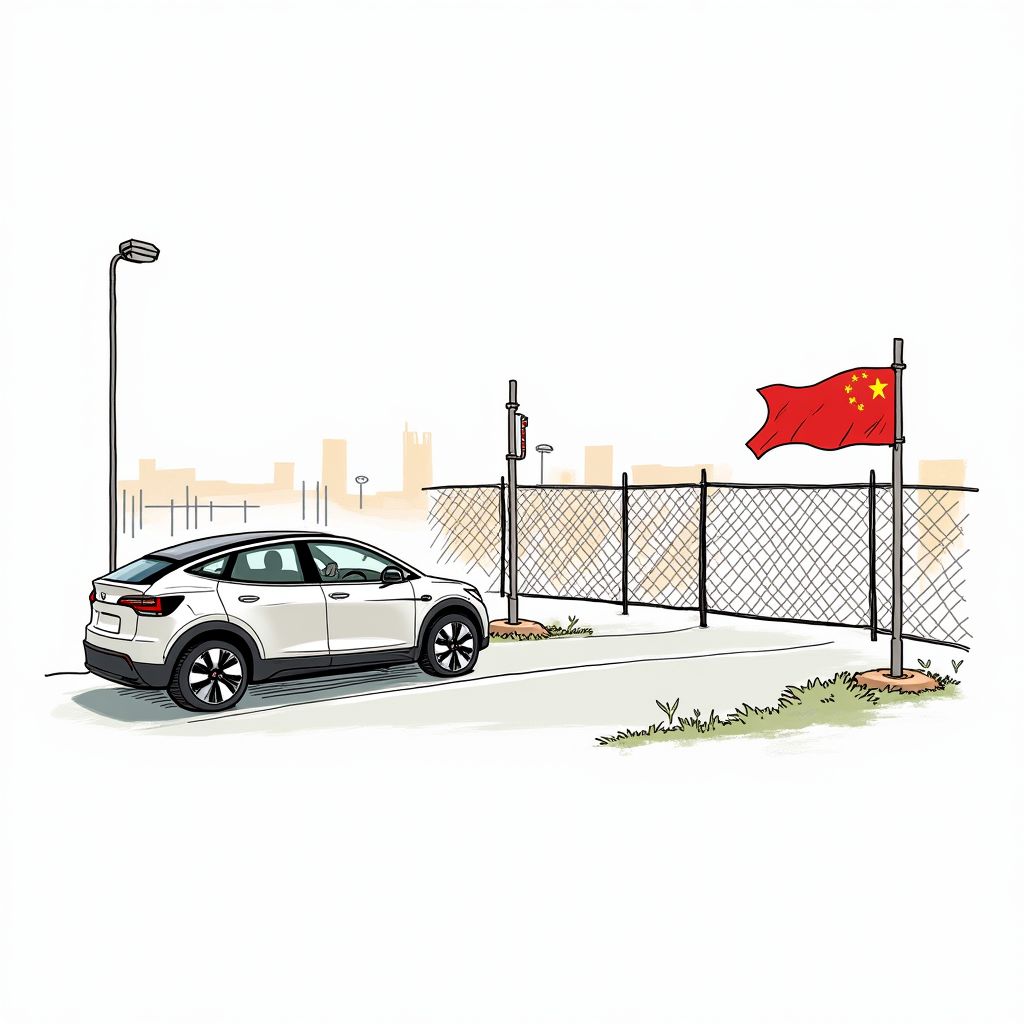
Despite Canada allowing 49,000 Chinese electric vehicles into its market this year, the United States is strictly blocking these cars from crossing its border over severe data security concerns.
Drawing a Hard Line on National Security
U.S. Ambassador to Canada Pete Hoekstra made it unequivocally clear in late March and early April 2026 that Chinese-manufactured electric vehicles (EVs) will not be permitted to cross the southern Canadian border into the United States [2][3][5]. Speaking on the evolving trade dynamics, Hoekstra emphasized that while Canada is free to import these vehicles under its new policies, the U.S. will not “open the floodgates” to Chinese cars [2]. The core of the American blockade is rooted in national security, specifically the severe risks associated with data collection and transmission capabilities embedded in modern connected vehicles [2][3][5].
Canada’s Strategic Pivot and the 2026 Trade Agreement
The current geopolitical friction stems from a pivotal trade agreement brokered by Canadian Prime Minister Mark Carney and Chinese President Xi Jinping in January 2026 [5]. Reversing a previous alignment with U.S. policy that saw Canada impose a 100 percent tariff on Chinese EVs in 2024, Ottawa agreed to drastically reduce the import tax [1][2]. Under the new framework, which officially activated on March 1, 2026, Canada is allowing an initial quota of 49,000 Chinese EVs to enter the country at a significantly reduced tariff rate of 6.1 percent [1][4][5]. This represents a massive tariff reduction of 93.9 percentage points.
Economic Drivers and Manufacturing Might
Canada’s willingness to break ranks with the United States is largely driven by domestic consumer economics. High purchase prices remain a significant barrier to EV adoption across North America, with 59 percent of interested Canadians citing cost as a major concern [4]. Consequently, 56 percent of EV-curious buyers in Canada are now willing to consider a Chinese-made model [4]. In the U.S., affordable options remain limited to a handful of models like the Nissan Leaf and Chevrolet Bolt EV, both starting under $30,000, though the latter faces production constraints [3].
Looming USMCA Tensions
Major Chinese players, including BYD, Chery, and Geely, are actively preparing to launch lower-cost, mass-market EVs in Canada as early as late 2026 [5]. BYD, which has already surpassed Tesla in global EV sales, is at the forefront of this expansion [3]. However, these vehicles will not qualify for preferential trade treatment under the United States-Mexico-Canada Agreement (USMCA), effectively nullifying any tariff advantages they might have gained by entering through Canada [5]. Furthermore, Chinese vehicles face combined U.S. tariffs that exceed 100 percent of their value [5].