Strike Looms at BP’s Largest Midwest Refinery Following Failed Negotiations
Whiting, Friday, 6 February 2026.
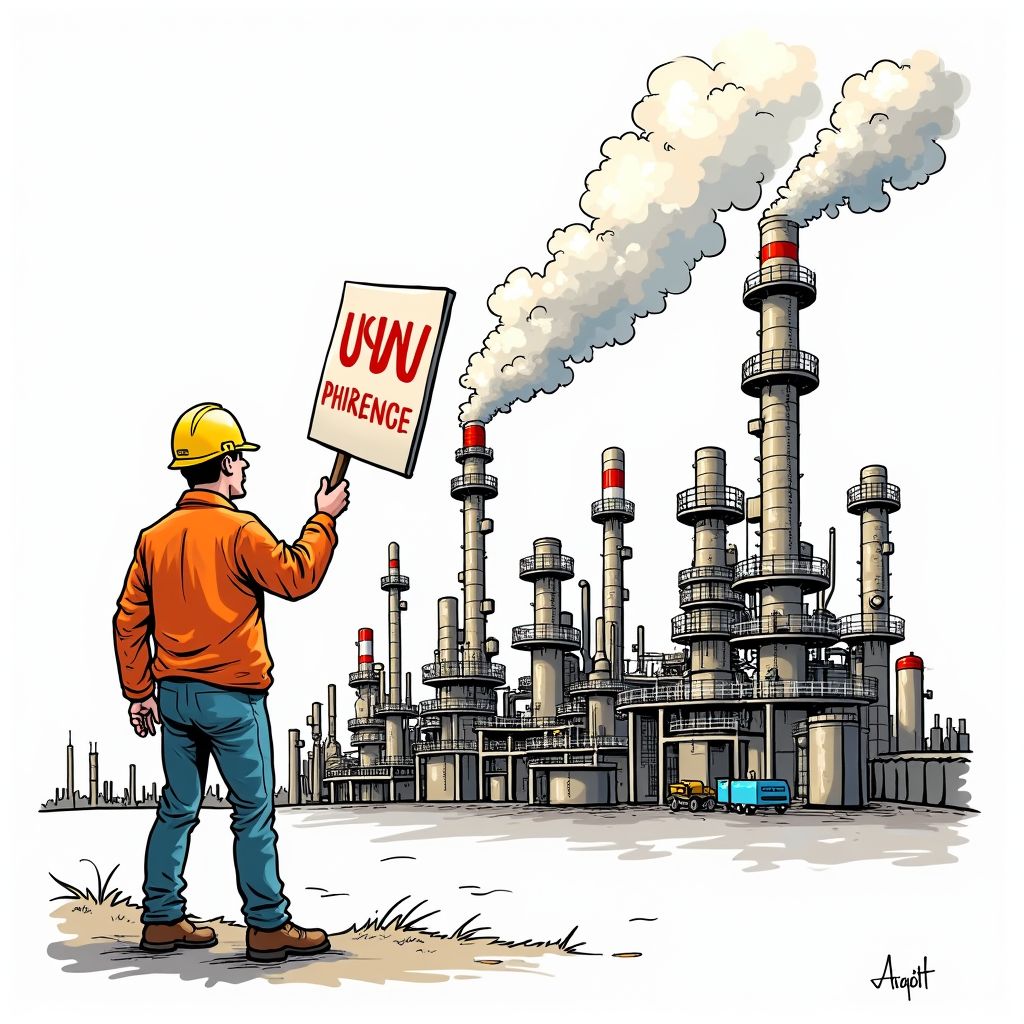
As of February 5, 2026, the United Steelworkers union has advised employees at BP’s Whiting, Indiana refinery—the largest in the Midwest—to prepare for a potential strike or lockout. Following a decisive 98% strike authorization vote, negotiations stalled over contentious proposals involving AI surveillance and significant job cuts. With the facility processing 440,000 barrels per day, a work stoppage threatens to severely disrupt regional fuel supplies, marking a critical escalation in the standoff between labor and the British energy major.
Negotiations Collapse Amidst Surveillance and Staffing Disputes
The standoff at the Whiting refinery, a critical hub for the Midwest’s energy infrastructure, intensified on Thursday when United Steelworkers (USW) Local 7-1 formally instructed its membership to prepare for a work stoppage [1][3]. This directive follows a negotiation session on Wednesday that concluded without progress, leaving the two parties at an impasse despite the expiration of their previous collective bargaining agreement on January 31 [1][3]. While the union and BP (BP) have agreed to rolling 24-hour contract extensions to maintain operations temporarily, the local union membership has already rejected a longer 28-day extension proposal, signaling a desire for immediate resolution rather than prolonged uncertainty [3][5].
National Implications and Operational Contingencies
The labor unrest at Whiting is occurring against the backdrop of broader National Oil Bargaining Program talks led by Marathon Petroleum, which cover approximately 30,000 refinery workers and two-thirds of U.S. refining capacity [8]. A significant gap remains in wage expectations at the national level; while Marathon has offered a 15% wage increase spread over four years, workers have demanded a 25% increase, resulting in a 10 percentage point disparity between the offer and the demand [6][8]. The specific friction at Whiting, however, threatens to decouple the local facility from these national patterns due to the unique intensity of the disputes over staffing levels and AI implementation [6].
Sources
- www.reuters.com
- boereport.com
- www.insideindianabusiness.com
- nwitimes.com
- inspectioneering.com
- www.wsws.org
- www.healthandsafetyinternational.com
- www.madicorp.com