Washington State Bans Police and Federal Agents from Concealing Their Faces
Olympia, Saturday, 21 March 2026.
Washington state now prohibits all law enforcement, including federal agents, from wearing masks on duty. Notably, the legislation empowers individuals detained by illegally masked officers to sue for damages.
Legislative Mechanics and the Push for Transparency
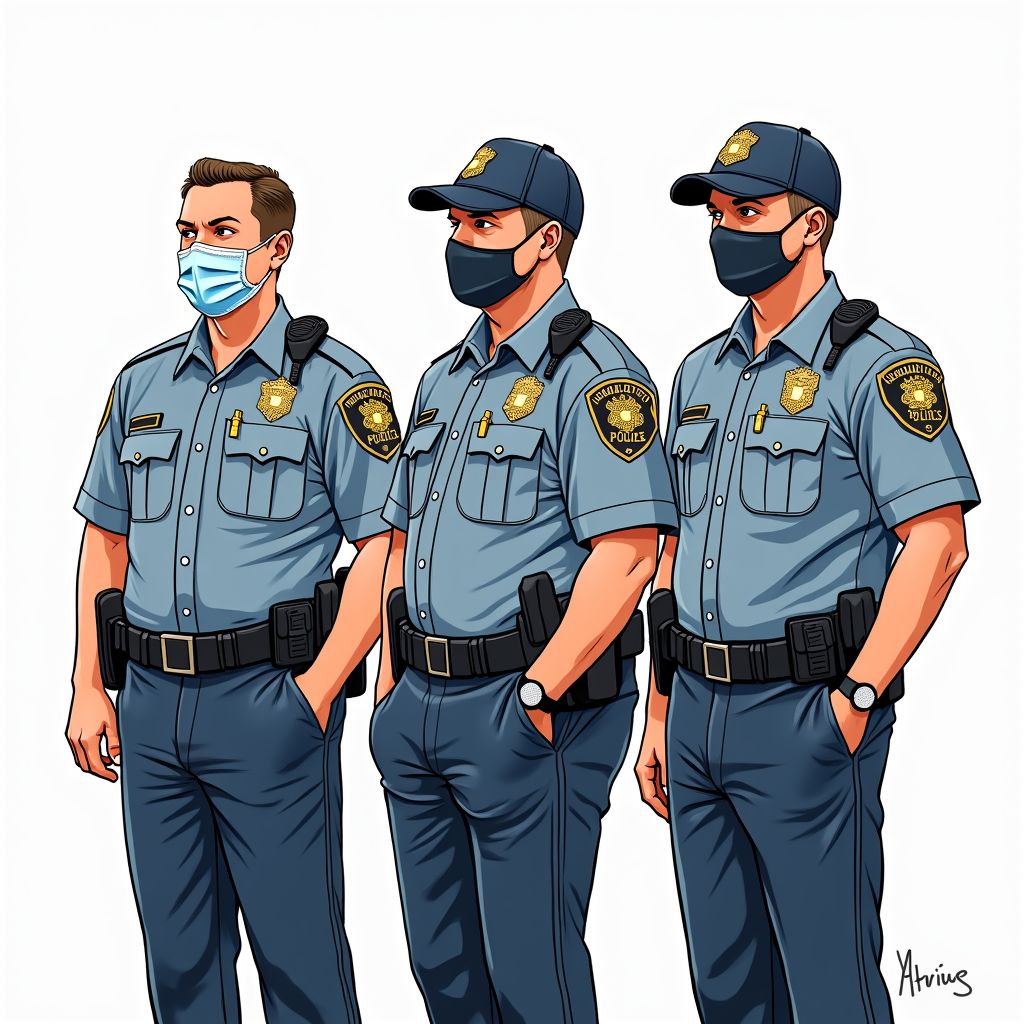
On Thursday, March 19, 2026, Democratic Governor Bob Ferguson signed Senate Bill 5855 into law during a ceremony at El Centro de la Raza in Seattle [4]. The legislation, which cleared the state House by a margin of 56 to 37 earlier in the month—representing approval from approximately 60.215 percent of voting representatives—strictly prohibits local, state, and federal law enforcement officers from wearing face coverings that obscure their identities while interacting with the public [4][5]. Under the new mandate, non-transparent face coverings such as balaclavas, tactical masks, ski masks, and gaiters are explicitly banned [1]. Lawmakers did carve out specific operational exemptions, permitting masks for undercover assignments, SWAT deployments, extreme weather conditions, medical necessities, and religious observances [1][3][4][6].
The Catalyst: Federal Immigration Operations
The legislative push in Washington is a direct response to a nationwide immigration crackdown initiated following Donald Trump’s return to office [1]. As federal authorities ramped up deportation operations, agents with face coverings were deployed to major cities, including Los Angeles, Chicago, and Minneapolis [1]. The practice of federal agents concealing their faces began in April 2025, a protocol Immigration and Customs Enforcement (ICE) adopted following a reported increase in threats against their personnel [1]. However, the deployment of unidentified officers quickly generated severe public backlash, particularly after masked agents fatally shot two American citizens in Minneapolis [1]. Tensions were further inflamed on January 7, 2026, when Border Patrol and ICE agents detained an individual near Roosevelt High School in Minneapolis, an event that triggered widespread protests [6].
Republican Pushback and Constitutional Clashes
The ban has not been universally embraced, drawing sharp criticism from Republican legislators who argue the measure jeopardizes officer safety and oversteps state authority. Republican Representative Matt Marshall highlighted that federal agents and their families have been subjected to doxxing and death threats, necessitating protective face coverings like gaiters [2][5]. Representative Jeremie Dufault dismissed the legislation as a “do-nothing political statement,” arguing it creates an arbitrary distinction between acceptable and unacceptable masks at the expense of law enforcement privacy and safety [5].
Legal Recourse and Ongoing Community Concerns
One of the most potent enforcement mechanisms within Senate Bill 5855 is the creation of a private right of action. Individuals who are detained by officers unlawfully concealing their identities are now empowered to sue those officers in their official capacity [2][6]. Successful plaintiffs can recover monetary damages, attorneys’ fees, and other forms of legal relief [6]. Governor Ferguson, a former three-term state attorney general, expressed strong confidence in the state’s ability to uphold the law against inevitable federal challenges. “The one thing I know is when the AG’s office in Washington state defends laws that we do related to the federal government, we win just about every single time,” Ferguson remarked, noting the law was meticulously structured to be legally defensible [2].
Sources
- www.independent.co.uk
- washingtonstatestandard.com
- www.king5.com
- komonews.com
- mynorthwest.com
- www.nbcrightnow.com