China’s Clean Energy Sector Now Rivals Leading Global Economies in Scale
Beijing, Thursday, 5 February 2026.
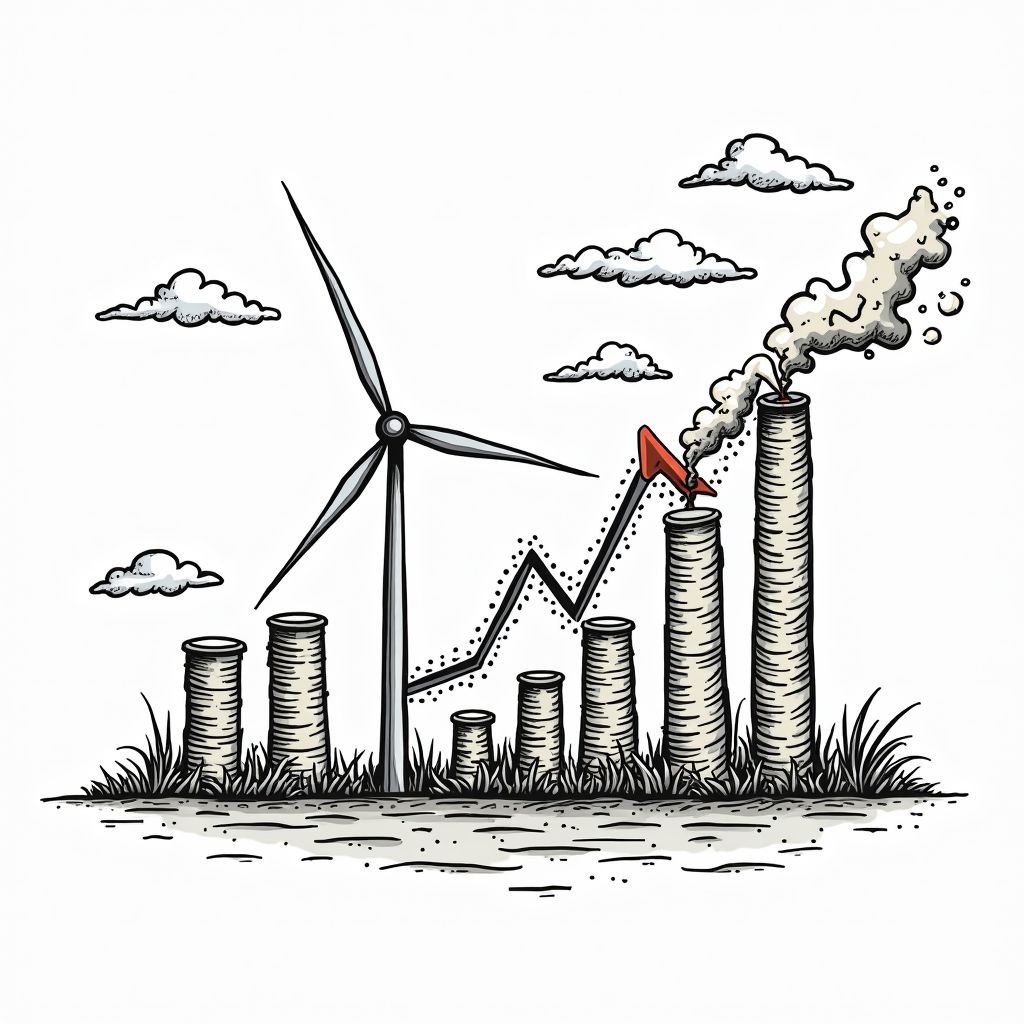
In 2025, clean energy fueled over 90 percent of China’s investment growth, creating an industry sector larger than the entire economies of all but seven nations worldwide.
Economic Dominance by the Numbers
Recent data confirms that China’s pivot to green technology is no longer just an environmental strategy but the primary driver of its macroeconomic stability. In 2025, the clean energy sector generated 15.4 trillion yuan ($2.1 trillion to $2.2 trillion), accounting for 11.4 percent of the nation’s entire Gross Domestic Product [1][4]. To put this into perspective, the sheer size of this industry is now comparable to the total economic output of major nations like Brazil or Canada [4]. The sector’s influence was so profound that without it, China’s reported GDP growth of 5.0 percent for 2025 would have plummeted to just 3.5 percent, causing the nation to miss its government target [4]. Investment flows mirror this dependency; while the country poured 7.2 trillion yuan ($1.0 trillion) into clean energy infrastructure, this figure was approximately four times the amount invested in fossil fuel extraction and coal power combined [4].
The Trinity of Growth: Solar, EVs, and Batteries
The surge is underpinned by a massive expansion in solar power, electric vehicles (EVs), and battery storage, which together generated two-thirds of the sector’s value added [4]. In 2025 alone, China installed 315 gigawatts (GW) of solar capacity and 119 GW of wind capacity [3]. This aggressive rollout pushed the country past a historic milestone, becoming the first nation to surpass 1,000 GW of total installed solar power—a figure that represents roughly half of the world’s solar capacity [5]. The manufacturing output is equally staggering; by late 2025, solar manufacturing capacity reached an estimated 1,200 GW per year, which exceeded the global capacity additions of roughly 650 GW for that year [4].
The Coal Paradox: Security vs. Sustainability
Despite the unprecedented growth in renewables, China continues to expand its coal infrastructure, creating a complex dual-track energy strategy. In 2025, the country commissioned more than 50 large coal units—defined as 1 GW or more—bringing 78 GW of new coal power capacity online [3]. This buildout represents a sharp increase from the previous decade, where fewer than 20 such units were commissioned annually [3]. The total capacity of coal projects currently permitted or under construction stands at approximately 290 GW [1]. Analysts suggest this expansion is a response to power shortages experienced in 2021 and 2022, with the government now positioning coal not as a primary baseload provider but as a “high-tech insurance policy” to ensure grid stability against the intermittency of renewables [3][7].
Future Trajectory and Infrastructure
Looking ahead, the integration of these vast renewable resources requires immense infrastructure upgrades. Investment in power grids grew by 6 percent in 2025, reaching $90 billion, while the country added 66 GW of battery storage capacity—a 52 percent year-on-year increase [4]. The geographic distribution of resources poses its own challenges; for instance, while Tibet holds a theoretical solar potential of 10,000 GW, ecological fragility and the need for massive transmission infrastructure to reach urban centers limit immediate exploitation [5]. The world now looks to March 2026, when the Chinese government is scheduled to unveil its next five-year plan, which will likely determine whether the “clean energy” engine continues to accelerate or if the coal “safety net” tightens its grip on the economy [1][3].
Sources
- www.theguardian.com
- www.reddit.com
- www.euronews.com
- www.carbonbrief.org
- www.scmp.com
- www.facebook.com
- www.chinadaily.com.cn
- podcasts.apple.com