Rising Energy Costs Highlight Growing Gap Between Government Claims and Household Budgets
Washington, Wednesday, 12 August 2026.
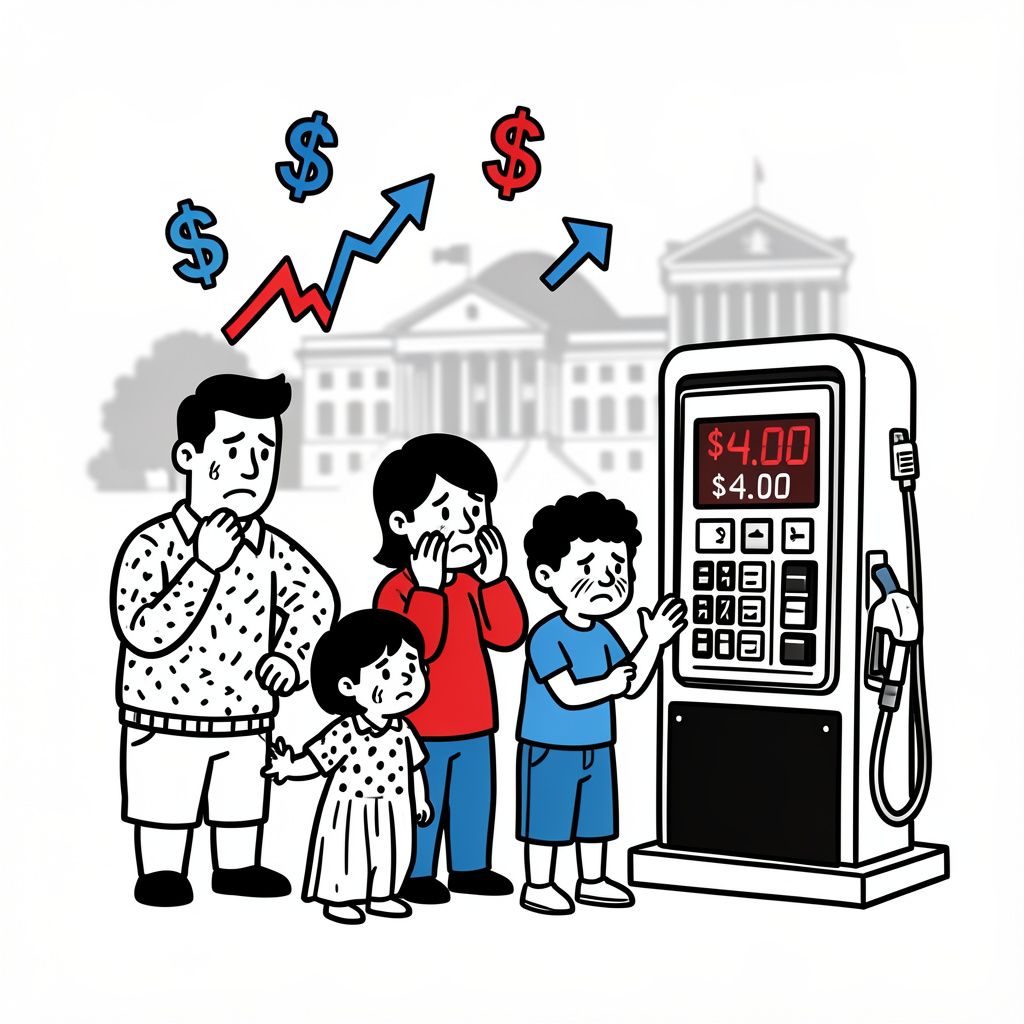
Despite White House claims of increased affordability, national gasoline prices exceeding $4.00 per gallon and elevated inflation continue to stretch American household budgets ahead of crucial elections.
Administrative Claims Versus Market Reality
On Monday, 10 August 2026, White House Press Secretary Karoline Leavitt appeared on Fox News’ “Hannity” to assert that the United States is “more affordable” and “safer” under President Donald Trump [1]. This statement contrasts sharply with market data indicating regular gasoline prices exceed $4.00 per gallon, a level nearly one dollar per gallon higher than the previous year [1][2]. While the administration cites common sense policies for economic stability, consumers face regular unleaded averages reaching $4.04 per gallon as of 5 August 2026 [3].
Inflation Metrics and Consumer Sentiment
Labor Department data released on 5 August 2026 shows July year-over-year consumer price inflation at 3.4%, a slight decrease from June’s 3.5% rate [3]. The difference between the two monthly reports is 0.1 percentage points, yet overall costs remain elevated above the pre-war level of 2.4% recorded in February 2026 [3]. Public perception reflects this strain, with a Marquette Law School poll indicating only 33% of respondents feel they are living comfortably, a 10-percentage-point decrease since January 2026 [1]. Furthermore, a Reuters/Ipsos poll from 3 August 2026 suggests 37% of registered voters believe the Democratic Party has a superior economic approach [1].
Political Implications and Future Costs
Political analysts identify voter frustration with power bills and fuel costs as critical factors for the November 2026 elections [1]. The Democratic National Committee highlights that Americans have spent $60 billion more on gas since the onset of conflict involving Iran, estimating an additional $1,100 per household since the war began [4]. Looking ahead, major corporations like Sherwin-Williams plan an 8% price increase effective 1 September 2026 to offset raw material costs, signaling continued pressure on household budgets [3]. Federal Reserve officials maintain the key interest rate at approximately 3.6% while debating further action to manage inflationary pressures [3].