Chinese Banks and Telecom Carriers Transform AI Tokens Into Consumer Rewards and Business Loans
Guangzhou, Saturday, 5 September 2026.
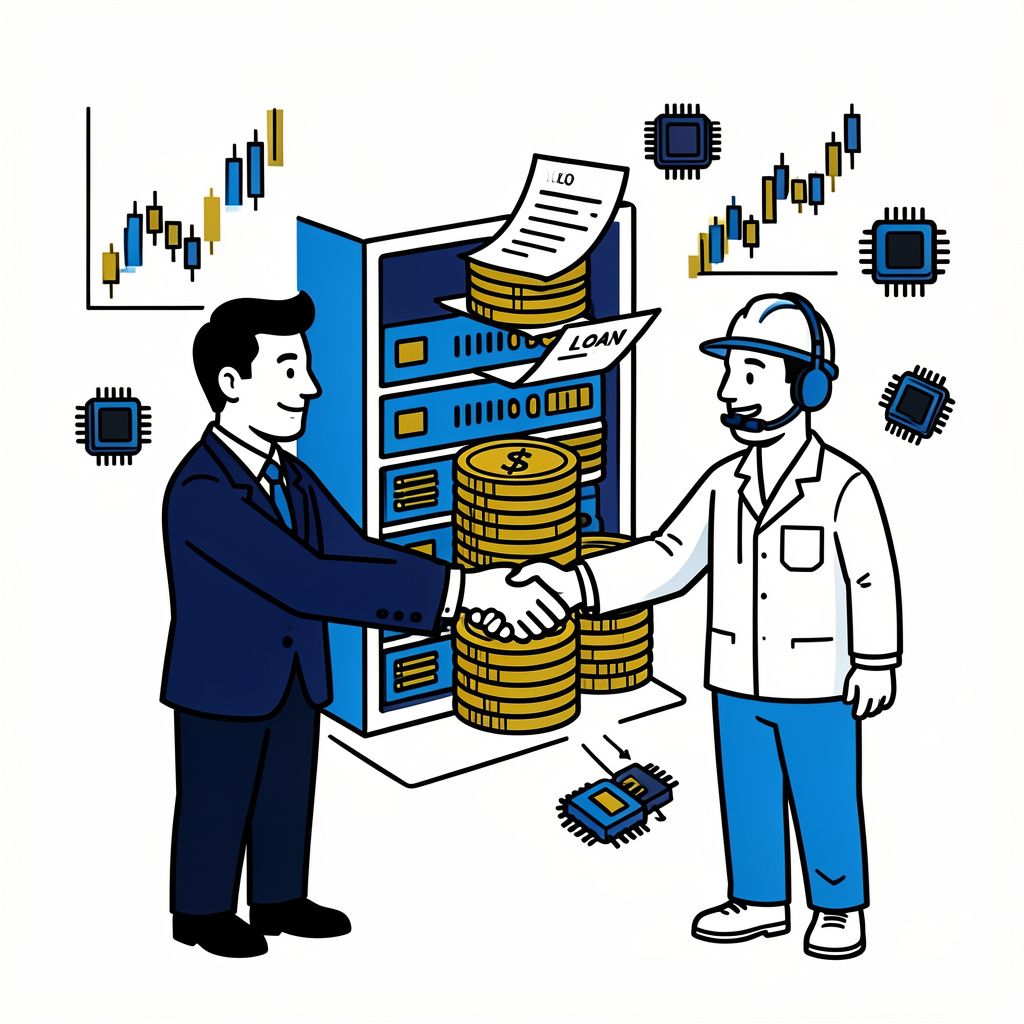
Chinese financial institutions and telecom carriers are turning AI computing tokens into consumer rewards and business loan collateral, establishing compute capacity as a novel financial asset class.
Chinese Financial Institutions Integrate AI Tokens
Major Chinese state-owned carriers and financial institutions have begun converting artificial intelligence compute tokens into structured consumer rewards, monthly telecom subscriptions, and loan collateral [1]. Municipal initiatives, including programs in Guangzhou’s Haizhu district, highlight a growing domestic effort to turn compute capacity into a standardized financial asset class [6]. This strategic monetization model signals China’s push to build a commercial ecosystem around AI infrastructure that directly links industrial compute power to retail banking and macroeconomic leverage [1].
Consumer Rewards and Telecom Plans
On July 10, 2026, Moonshot AI and the Agricultural Bank of China launched the Kimi–American Express–ABC tri-party co-branded card in mainland China, integrating AI memberships and credits into a credit card rewards system [4]. First-time applicants who spend 5,888 yuan within three months receive a co-branded plush charm and two months of premium membership, limited to 1,000 people [1]. China Telecom initiated trial commercial AI token packages on May 17, 2026, bundling computing tokens with connectivity and security services for developers, small businesses, and households [4].
Consumer Rewards and Telecom Plans
Individual customers accessing these telecom packages receive the carrier’s Xingchen model and DeepSeek V3.2, with industry reporting putting the consumer entry tier at 9.9 yuan a month for 10 million tokens [1]. China Mobile offers 400,000 tokens for 1 yuan, while China Unicom provides enterprise plans supporting over 6,500 companies across 200+ AI models [3]. Daily AI token consumption in China surged from 100 billion in early 2024 to 500 trillion by mid-2026, representing a growth factor of 5000 [2].
Commercial Lending and Token Loans
The Haizhu district of Guangzhou released a Token Loan program in August 2026, alongside eight supporting measures to assist AI companies [1]. Rather than judging young AI companies on plant and equipment, banks bring token consumption, platform qualifications, and payment-collection progress into credit review [1]. The Bank of China’s Guangzhou branch can set a limit from a contract or a company’s token use, with the bank extending approximately RMB 28 million in credit under this scheme [5][6].
Commercial Lending and Token Loans
Other institutions including China Construction Bank, Agricultural Bank of China, Jiangsu Bank, Shanghai Rural Commercial Bank, and Zhangjiagang Rural Commercial Bank have also launched credit products incorporating computing power efficiency and token consumption into credit assessments [5]. In March 2026, national daily token call volume exceeded 140 trillion, a figure 1000 times higher than two years prior [7]. Haizhu District’s measures provide annual subsidies up to 2 million yuan for digital marketing and entertainment companies’ token consumption costs [4].
Valuation Challenges and Strategic Risks
A token is a strange unit to price by, as tokeniser fertility across 25 European languages ranges from 1.23 tokens per word in English to roughly 3.1 in Greek and Maltese [1]. Experts warn against 唯 Token 论 (token-only theory), noting that token consumption reflects business activity but does not equal cash flow or net profit [8]. Data integrity remains a hurdle, as token data currently lacks unified audit standards and relies on enterprise self-reporting or cloud service interfaces [7].
Valuation Challenges and Strategic Risks
Western executives and policymakers should track this strategic monetization model closely as it develops through late 2026 [1]. While some initiatives are experimental, the shift from viewing assets as hardware to viewing them as data and compute flow represents a significant重构 (reconstruction) of banking credit logic [7]. The success of this model depends on balancing innovation with risk control to ensure commercial sustainability beyond policy subsidies [8].
Sources
- thenextweb.com
- restofworld.org
- epocanegocios.globo.com
- www.unite.ai
- www.coinlive.com
- www.gdjr.gov.cn
- wap.eastmoney.com
- www.xhby.net