Davos 2026: Economic Confrontation and Trump's Return Define Global Agenda
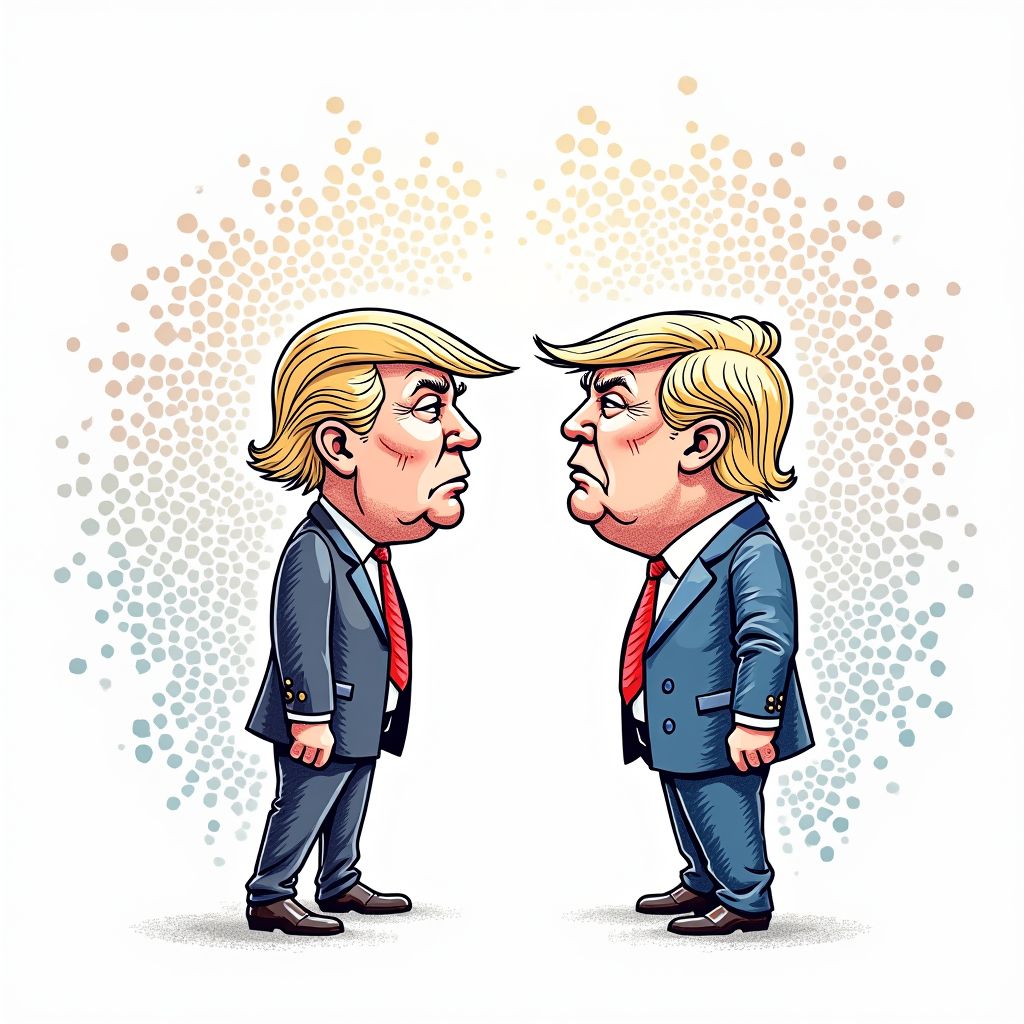
Davos, Saturday, 17 January 2026.
With economic confrontation identified as 2026’s top global risk, the Davos summit becomes a critical testing ground as President Trump returns to the world stage with a record-breaking US delegation.
The Shadow of Geoeconomic Fragmentation
The 56th Annual Meeting of the World Economic Forum, set to convene in Davos-Klosters on Monday, January 19, 2026, faces a geopolitical landscape defined by fracture rather than unity [1]. Just days prior to the summit, the Forum released its Global Risks Report 2026, which explicitly identifies economic confrontation between major powers as the single greatest threat to global stability this year [2][3]. The data, drawn from a survey of over 1,300 experts, paints a stark picture: 18% of respondents pinpoint geoeconomic confrontation—ranging from sanctions to tariffs—as the primary trigger for a potential global crisis in 2026, while a significant 68% anticipate a “multipolar or fragmented order” taking hold over the next decade [3]. This atmosphere of contestation challenges the very premise of the summit’s theme, “A Spirit of Dialogue,” as the 3,000 anticipated leaders from government and business attempt to find common ground amidst eroding trust and strained alliances [1][3].
A High-Stakes American Return
Amplifying the geopolitical weight of this year’s forum is the return of US President Donald Trump, who is attending for the first time since 2020 [4]. His presence signals a concerted effort to reassert American influence, underscored by the largest US delegation in the event’s history, which includes five cabinet secretaries and key advisors [5]. In a visible symbol of this engagement, a “USA House” will appear on the Davos Promenade for the first time, serving as a hub for US officials to host events and network [5]. President Trump is expected to utilize this platform to address the conflict in Ukraine; reports indicate he will meet with Ukrainian President Volodymyr Zelenskyy and G7 leaders to discuss security guarantees, potentially attempting to replicate the diplomatic framework recently used to broker a cease-fire between Israel and Hamas [4][5].
Technological Disruption and Economic Fragility
Beyond the immediate geopolitical maneuvering, the agenda is heavily weighted toward the intersection of economic fragility and rapid technological change. While global growth is projected at 3.1% for 2026, the economic outlook is clouded by global debt levels that have climbed to heights not seen since World War II, with the situation in several African nations becoming particularly concerning [5]. Simultaneously, artificial intelligence remains a dominant focus, with industry heavyweights such as Microsoft’s Satya Nadella and Nvidia’s Jensen Huang scheduled to participate [5]. However, the optimism surrounding AI is tempered by risk assessment; the Global Risks Report notes that adverse outcomes from AI have climbed to the fifth-largest risk over the ten-year horizon, while misinformation and disinformation constitute the second-highest risk in the immediate two-year outlook [3].
Leadership in an Age of Competition
This year’s gathering also marks a pivotal transition in the Forum’s own governance following the resignation of founder Klaus Schwab in April 2025 [5]. Interim co-chairs Larry Fink of BlackRock and Andre Hoffmann of Roche Holdings will preside over an event that must navigate what the report describes as a new “age of competition” [5][6]. As Managing Director Saadia Zahidi observes, the compounding risks—from geoeconomic confrontation to unchecked technology—require a collective capacity to manage them that is currently under threat [3]. With over 200 livestreamed sessions and participation from key figures like UN Secretary-General António Guterres and European Commission President Ursula von der Leyen, the coming week will serve as a critical barometer for whether international cooperation can be renewed in a fragmented world [1][3].