Italy Cites Constitutional Conflicts in Refusal to Join Trump’s Board of Peace
Rome, Sunday, 8 February 2026.
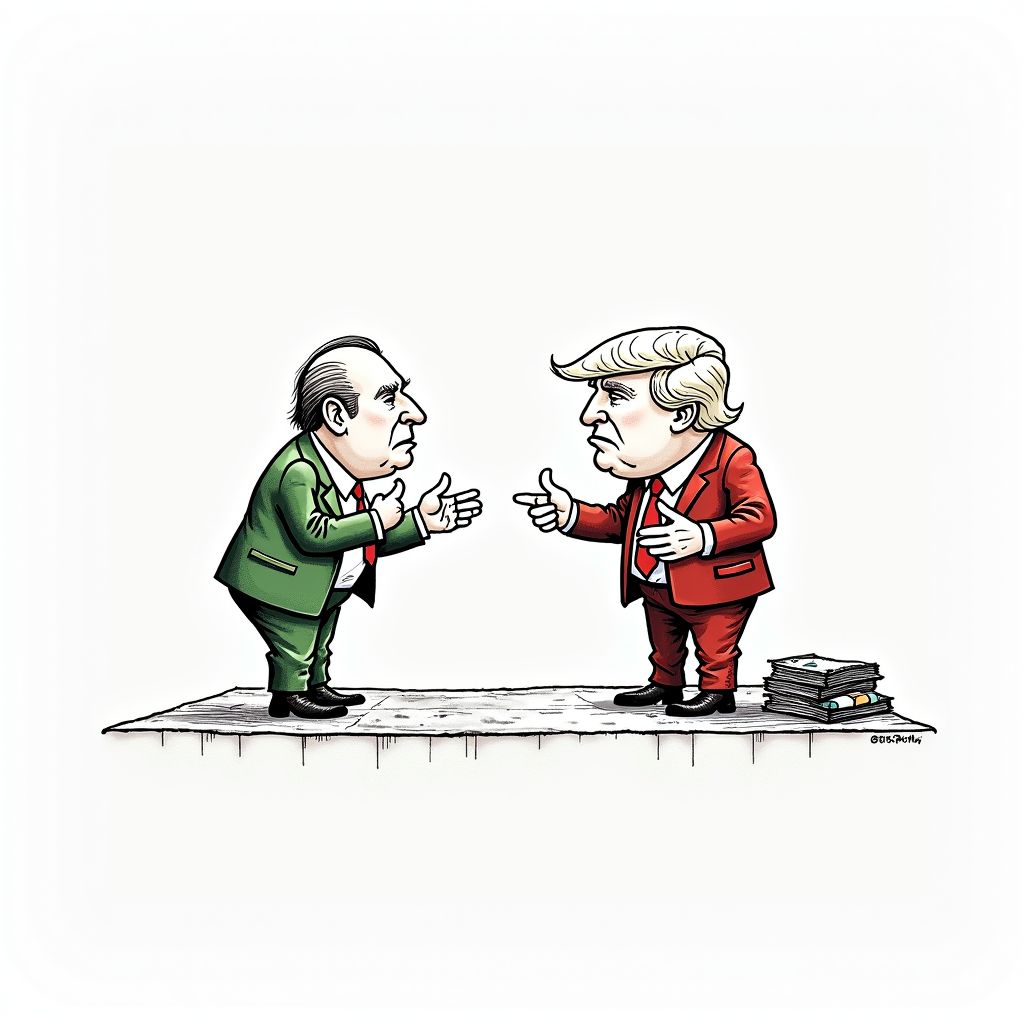
Rome formally rejected the invitation due to ‘insurmountable’ constitutional conflicts regarding state equality, marking a significant diplomatic setback as the administration prepares for the board’s inaugural February 19 summit.
Constitutional Barriers and European Hesitancy
The Italian government’s refusal to join the initiative is rooted in a fundamental clash between the proposed governance structure of the Board of Peace and the Italian Constitution. On Saturday, February 7, 2026, Foreign Minister Antonio Tajani declared that the conflict between the Board’s charter and Italian law was “insurmountable from a legal standpoint” [1]. Specifically, Rome cited Article 11 of its constitution, which only permits the country to join international organizations under “conditions of equality with other states” [1]. The Board’s framework, which critics argue positions President Trump as a leader standing above other members with potential veto power, fails to meet this requirement for sovereign equality [1][4]. Italy now joins a growing list of major European allies, including France, Germany, and the United Kingdom, that have opted not to participate in the body [1][4].
Operational Support Versus Governance
Despite declining membership in the governing body, Italy has signaled it will not entirely disengage from the stabilization efforts in the region. Following a meeting with U.S. Secretary of State Marco Rubio and Vice President JD Vance on February 6, Tajani clarified that Italy remains “ready to do our part in Gaza by training the police” [1]. This distinction highlights a diplomatic nuance: European allies appear willing to support operational logistics on the ground while rejecting the political architecture President Trump is attempting to establish outside the United Nations framework [1][5]. The Board, which was greenlit by the UN in 2025 as a transitional body, has faced criticism for allegedly functioning as a colonial administrative authority rather than a representative international institution [1][2].
Pay-to-Play Allegations and Structural Controversies
Beyond constitutional concerns, the financial prerequisites for joining the Board have drawn significant scrutiny. Reports indicate that the administration has demanded a contribution of $1 billion from nations seeking a permanent seat on the Board [1][7]. This pay-to-play model has contributed to the skepticism among Western allies, who view the initiative as an attempt to sideline the UN Security Council [5][6]. While the Board was originally conceived to oversee the reconstruction and temporary governance of Gaza, its mandate was later expanded by President Trump to address global conflicts, further complicating its reception among traditional diplomatic partners [7]. The official website listed 26 member countries as of January 2026, including regional mediators Qatar and Egypt, but notably lacks participation from most G7 nations [1].
Upcoming Summit at Seized Venue
The diplomatic rejection from Rome comes as the administration finalizes preparations for the Board’s first leader-level meeting, scheduled for February 19, 2026, in Washington, D.C. [2][7]. The summit will focus on fundraising for Gaza’s reconstruction and discussing the next stages of the ceasefire [3][5]. In a move symbolic of the administration’s aggressive overhaul of institutions, the meeting will be hosted at the former U.S. Institute of Peace, which was seized by the administration last year and rebranded as the “Donald J. Trump U.S. Institute of Peace” following the firing of its staff [5][6]. While Western European leaders are abstaining, Hungarian Prime Minister Viktor Orban confirmed on February 7 that he would travel to Washington for the event, aligning himself with the initiative [1][7].
Fragile Security Context
The political maneuvering in Washington contrasts with the volatile reality on the ground in Gaza. The February 19 gathering is scheduled to take place just one day after a planned meeting between President Trump and Israeli Prime Minister Benjamin Netanyahu regarding Iran [3]. Meanwhile, the ceasefire brokered in October 2025 remains tenuous; since its implementation, over 550 Palestinians have been killed by Israeli strikes, and four Israeli soldiers have died due to violations of the truce [3][7]. The Board is tasked with establishing an international stabilization force, yet rights experts continue to criticize the body for treating the political rights of Palestinians as an afterthought in favor of economic development [2][7].
Sources
- www.aljazeera.com
- www.aljazeera.com
- time.com
- www.nytimes.com
- www.theglobeandmail.com
- www.pbs.org
- www.reuters.com