Why Energy Powerhouse Qatar Is Now Buying American Natural Gas
Doha, Friday, 23 October 2026.
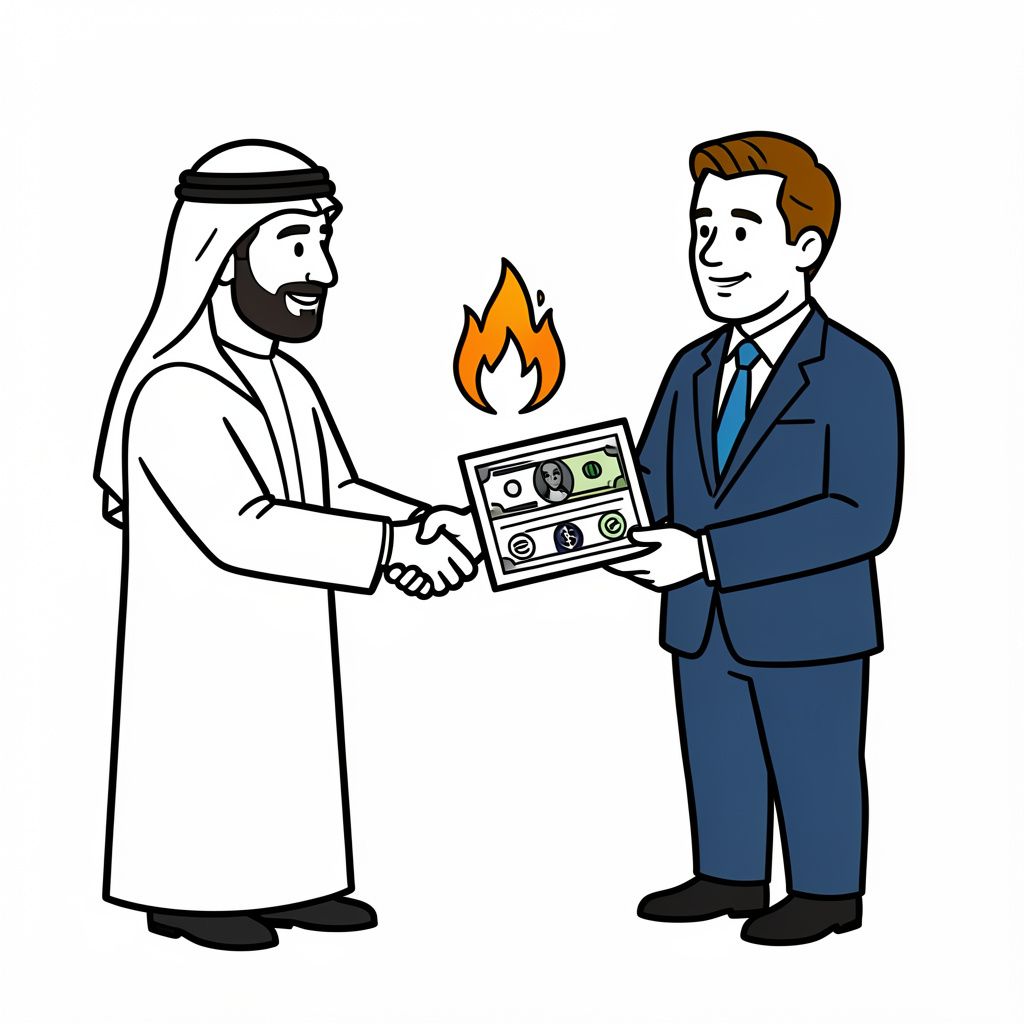
In a historic role reversal, export giant Qatar contracted American natural gas through 2054 after regional warfare severely damaged domestic facilities and blocked critical Persian Gulf shipping routes.
The Iran War’s Impact on Qatar’s Energy Infrastructure
The October 2026 agreement between Qatar Energy and U.S. producers, finalized on October 22, 2026, underscores the seismic shifts in global energy markets triggered by the Iran war, now in its eighth month [1][2][10]. The conflict has devastated Qatar’s liquefied natural gas (LNG) export capacity, with Iranian airstrikes on the Ras Laffan facility in March 2026 crippling two production lines and eliminating 17% of the country’s LNG output [1][2][10]. The damage occurred just weeks after the war’s escalation, which began with Israeli strikes on Iranian targets in late February 2026, followed by Iran’s retaliatory missile strikes on Gulf infrastructure [10]. These attacks compounded the blockade of the Strait of Hormuz, a critical chokepoint for LNG shipments, forcing QatarEnergy to declare force majeure monthly since March 2026 [1][2]. As Saad Sherida Al-Kaabi, Qatar’s energy minister, noted, ‘It did give us a big blow, if you will, for our production capability for the next few years’ [1][2].
Qatar’s Strategic Pivot to U.S. LNG Suppliers
Facing severe disruptions to its traditional supply routes, Qatar Energy turned to U.S. LNG exporters to secure long-term reserves. On October 22, 2026, QatarEnergy finalized a landmark 28-year agreement with Cheniere Energy to purchase 4 million metric tons of LNG annually through 2054, with deliveries expected to commence in the 2030s [1][2][5][6]. The agreement, priced at Henry Hub plus a fixed fee, marks Qatar’s first major U.S. LNG offtake deal and reflects a broader shift in global energy trade dynamics [1][2][5][6]. Analysts such as Alex Munton of Rapidan Energy described the deal as ‘about as big as you see in the U.S.’ in terms of individual transactions [1][2]. The pivot to U.S. suppliers is further evidenced by QatarEnergy’s $3 billion loan from Chinese banks in early October 2026, specifically aimed at financing additional U.S. LNG purchases [1][10].
Broader Market Repercussions for U.S. and Global LNG
The Qatar-Cheniere deal is a bellwether for the U.S. LNG sector, which has seen its market share expand disproportionately amid the Iran war. Since the conflict’s onset, shares of U.S. LNG producers have surged, with Cheniere and Venture Global gaining 26% and 40%, respectively [1][2]. UBS has set a price target of $340 for Cheniere, representing an 18% upside from its October 22, 2026, closing price, while nearly 90% of equity analysts rate the company a ‘buy’ [1][2]. Venture Global, another key beneficiary of Qatar’s pivot, has seen 60% of analysts recommend it as a ‘buy,’ with an average price target of $17, a 35% upside [1][2]. As Munton noted, ‘The U.S. once again is being called on by buyers to diversify supply. So much is under construction in the U.S. that you get to the point where now the U.S. is becoming disproportionately big in terms of global [LNG] market share’ [1][2].
Timeline and Future Outlook for Recovery and Deliveries
QatarEnergy’s damaged liquefaction trains at Ras Laffan are expected to remain offline for three to five years, with repairs tentatively scheduled for completion by 2031 [10]. The first cargo from Cheniere’s Sabine Pass and Corpus Christi facilities is not anticipated until the 2030s, aligning with the phased recovery of Qatar’s domestic production [1][2][5][6][10]. In the interim, Qatar has relied on spot market purchases, including 33 cargoes totaling approximately $1 billion, primarily from Venture Global, to meet customer commitments [10]. The Pearl GTL plant, also damaged in the March 2026 strikes, is expected to resume operations in the first quarter of 2027 [10]. Despite these challenges, QatarEnergy’s long-term agreements with U.S. producers signal a strategic realignment that could reshape global LNG trade for decades to come.
Sources
- www.cnbc.com
- www.cnbc.com
- www.bloomberg.com
- www.lngindustry.com
- ahmedeldin.substack.com
- www.facebook.com