Saudi Wealth Fund Pivots to Domestic Projects as $763 Billion Spending Spree Drains Cash
Riyadh, Sunday, 5 April 2026.
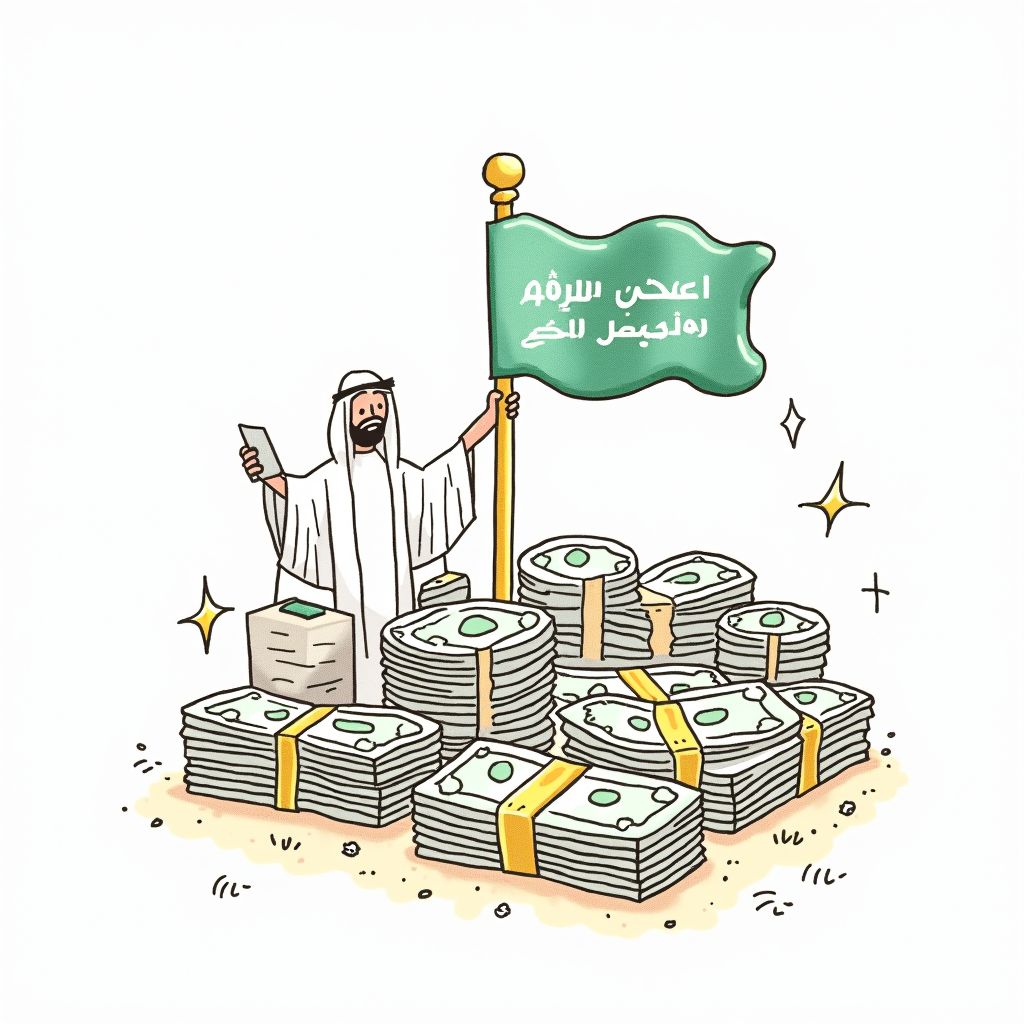
After spending $763 billion reshaping global markets by 2024, Saudi Arabia’s wealth fund faces severe cash constraints, forcing a strategic pivot toward domestic mega-projects and local economic stability.
The Liquidity Crunch and a Strategic Pivot
Since Crown Prince Mohammed bin Salman assumed control in March 2015, Saudi Arabia’s Public Investment Fund (PIF) has undergone a radical transformation [1]. Originally established in 1971 to support domestic projects, the fund was repurposed into a vehicle for sweeping global influence [1]. By 2024, the Crown Prince had directed an astonishing $763 billion into global capital markets [1]. However, this unprecedented outlay has culminated in a severe cash squeeze [1]. To generate necessary liquidity and monetize assets, the PIF has even explored selling portions of its stake in the Saudi Telecom Company [2]. This marks a stark departure from an era of unchecked expansion, signaling a new phase of financial pragmatism [GPT].
The Liquidity Crunch and a Strategic Pivot
The fund’s massive growth was largely catalyzed by the transfer of roughly 16% of Saudi Aramco—a corporate giant boasting a $2 trillion market capitalization—between 2022 and 2024 [1]. These shares alone were valued at over $300 billion [1]. Despite managing total assets that now exceed $1 trillion under the oversight of Yasir Al-Rumayyan [4], the PIF’s actual liquid capital remains highly constrained [1]. Consequently, between 2024 and 2025, the fund’s investment pace decelerated noticeably; select international positions were reduced, and capital allocation became far more stringent [1]. Geopolitical developments, particularly tensions involving Iran, have further reduced regional risk appetite, prompting Gulf sovereign wealth funds to redirect capital toward local priorities [4].
Reining in Global Ambitions
Historically, the PIF embraced the role of an aggressive global dealmaker [1]. Its high-profile international portfolio includes a massive $45 billion commitment to SoftBank’s Vision Fund, a $3.5 billion stake in Uber, and majority ownership of electric vehicle manufacturer Lucid Motors [1]. The fund also sent shockwaves through the sports world by acquiring Newcastle United for $415 million and pouring billions into the controversial LIV Golf league [1]. For years, international markets and United States businesses viewed the PIF as an indispensable, highly reliable source of venture capital and liquidity [4].
Reining in Global Ambitions
However, this era of unrestrained international spending is definitively cooling. The PIF is transitioning away from global dealmaking to become a “strategic national development engine” [1]. This pivot is designed to focus resources on domestic infrastructure, tourism, industry, mining, and the energy transition [1]. For international venture capital firms, sports franchises, and technology startups, this shift signals a potential contraction in a once-reliable funding source, altering global capital flow dynamics as the fund prioritizes risk aversion [1].
Doubling Down on Domestic Mega-Projects
The reallocation of capital is heavily directed toward “Vision 2030,” the Kingdom’s official mandate to build new industries, create jobs, and diversify the economy away from fossil fuels [1]. A centerpiece of this domestic focus is NEOM, a futuristic city project to which the PIF has committed tens of billions of dollars [1]. Yet, even with massive funding, the realities of construction and capital constraints have forced timelines to be pushed back and the project’s overall scale to be adjusted [1]. The broader economic goal is staggering: Saudi Arabia aims to increase the PIF’s total assets to over 7 trillion riyals to fully realize the Vision 2030 objectives [3].
Doubling Down on Domestic Mega-Projects
Other localized mega-projects are simultaneously absorbing vast amounts of capital. The Jeddah Central development, launched by the Crown Prince, requires a total investment of 75 billion riyals ($20 billion) to overhaul 5.7 million square meters of the coastal city [5]. Financed heavily by the PIF alongside other domestic and international investors, this project alone is projected to add 47 billion riyals to the Saudi economy by 2030 [5]. These massive domestic investments underscore the fund’s shifting mandate, prioritizing the transformation of local urban landscapes over foreign acquisitions [1][5].
The Broader Economic Realities
The fundamental paradox of the PIF’s strategy is its reliance on petroleum revenues to finance a post-oil future [1]. The vulnerability of this model was starkly visible in 2020, when actual oil revenues fell to approximately 410 billion riyals, well below the expected 513 billion riyals [3]. This represented a budgetary shortfall of -20.078 percent in oil income for that year. Despite these fluctuations, the government has maintained its capital expenditures and pushed forward with expanding the non-oil GDP, which stood at an estimated 1.8 trillion riyals in 2016 [3]. To supplement state revenues, the Kingdom has also relied on domestic crackdowns; over a recent three-year period, settlements from an anti-corruption campaign totaled 247 billion riyals, representing 20% of total non-oil revenues [3].
The Broader Economic Realities
Ultimately, the Crown Prince’s strategy prioritizes domestic stability over international financial adventurism [1]. Efforts to improve the local economy have shown tangible results: the national unemployment rate decreased from approximately 13% in 2018 to 11.8% by early 2020, and the housing ownership rate reached 60%, surpassing the 2020 target of 52% [3]. As the PIF navigates its current cash constraints in 2026, its long-term success will depend entirely on balancing the immense capital requirements of its domestic mega-projects with the volatile realities of global energy markets [alert! ‘Future economic stability depends on unpredictable global oil prices and successful project execution’] [GPT].