Ukrainian Drone Strike Targets Russian Warship in the Baltic Sea
Helsinki, Thursday, 12 November 2026.
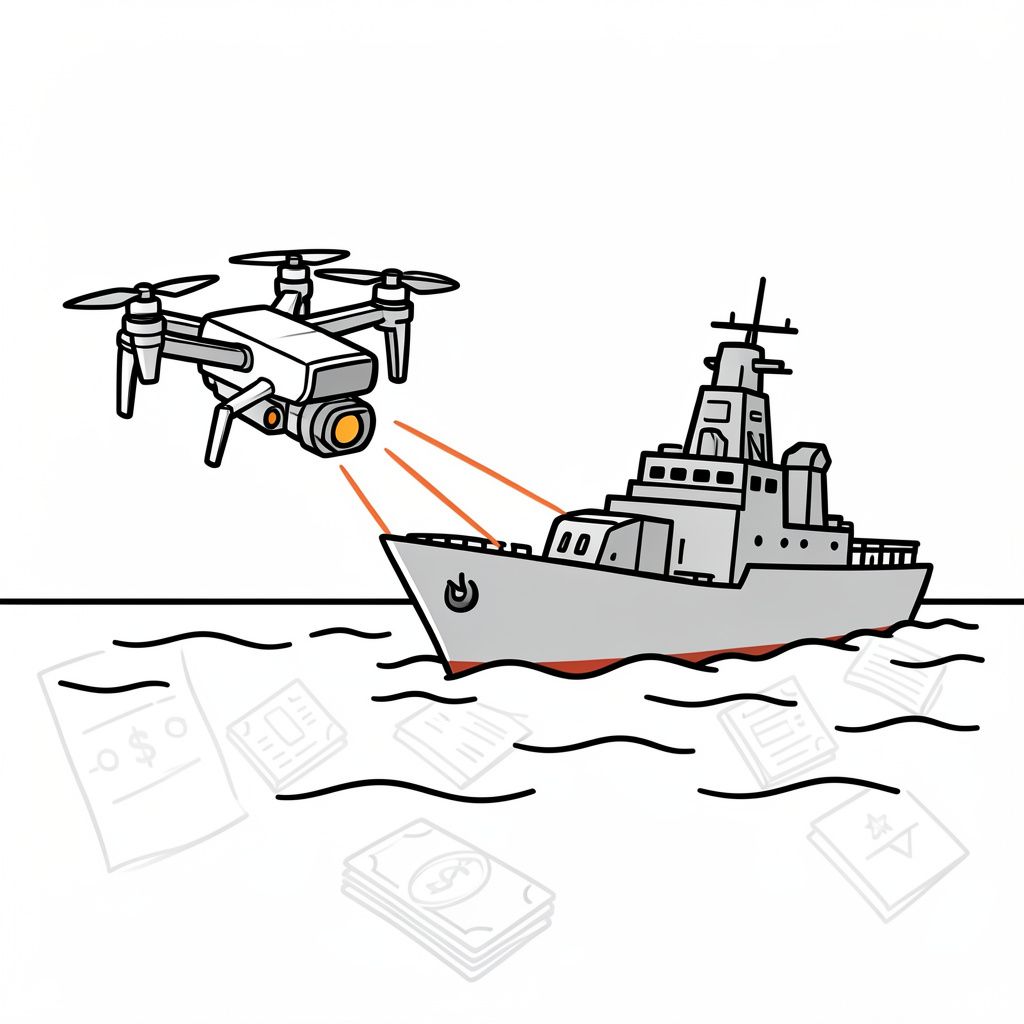
Finland detected a Ukrainian drone attack on a Russian missile corvette in the Baltic Sea, marking an unprecedented geographical expansion of maritime warfare into critical northern shipping corridors.
Finnish Military Confirms Strike on Russian Warship
On Thursday, 12 November 2026, Finland’s military confirmed detecting a strike on a Russian warship in the Gulf of Finland, a narrow arm of the Baltic Sea separating Finland and Estonia [2][3]. The Finnish Defence Forces reported monitoring the situation but declined to provide further details regarding the vessel’s identity, location, or the nature of the strike [2][3]. Finnish authorities emphasized that the security situation in the area remained stable, though they acknowledged the unprecedented nature of the incident in waters near St. Petersburg and critical Nordic-Baltic trade lanes [2][3].
Ukrainian Operation Targets Russian Corvette
Finnish Brigadier General Markku Viitasaari, head of the national defence unit at the Ministry of Defence, confirmed an explosion on a Russian Buyan-M class corvette in the Gulf of Finland on Wednesday, 11 November 2026, southeast of Pellinki—approximately 50 kilometers from Helsinki [5]. The targeted vessel, identified as the Naro-Fominsk, is equipped with Kalibr and Onyx cruise missiles, making it a strategic asset for Russia’s Baltic Fleet [7]. Ukrainian military sources, including the Security Service of Ukraine (SBU), acknowledged responsibility for the strike, stating it was part of a pre-planned operation targeting the Russian warship and nearby infrastructure in the Leningrad region [1][5][7].
Geopolitical and Economic Implications
The strike near Suursaari (Hogland), a strategically located island in the Gulf of Finland, follows a series of Ukrainian drone attacks on Russian oil terminals and military assets in the region [8][9]. On 9 November 2026, Ukrainian drones targeted the Ust-Luga (Laukaansuu) oil export depot, causing fires and explosions visible from Estonia [9]. The escalation has heightened concerns among NATO allies, particularly Estonia, Latvia, and Lithuania, where airspace violations and drone incursions prompted public shelter warnings and NATO scrambles of warplanes [2][4][9]. While Finnish officials downplayed immediate risks to domestic security, experts warn of the potential for environmental disasters and disrupted maritime logistics, which could drive up insurance premiums for commercial shipping in the Baltic Sea [5][8].
Russia’s Baltic Fleet Vulnerabilities and Ukraine’s Strategic Shift
The Naro-Fominsk corvette, commissioned in 2023, has been a cornerstone of Russia’s Baltic Fleet, tasked with projecting power through its missile arsenal [7]. Analysts suggest the strike exploits vulnerabilities in Russia’s air defence systems, particularly the Buyan-M class’s reliance on AK-630M-2 close-in weapon systems and Igla surface-to-air missiles, which have proven insufficient against Ukrainian drone swarms [7][alert! ‘expert assessment based on open-source analysis’]. Emil Kastehelmi, a military analyst and co-founder of the Black Bird Group, noted that the Baltic Sea fleet had remained largely untouched until this incident, indicating a potential shift in Ukraine’s asymmetric warfare strategy [1][alert! ‘expert assessment based on open-source analysis’]. Kastehelmi added that if Ukraine identifies further exploitable weaknesses, similar strikes could become more frequent, further destabilizing the region [6][alert! ‘expert assessment based on open-source analysis’].
Regional Responses and Future Risks
In response to the escalating drone activity, Finland temporarily restricted airspace and maritime traffic in the eastern Gulf of Finland on 10–11 November 2026, lifting the measures after confirming no immediate threats [8]. Estonia, Latvia, and Lithuania also issued public warnings and scrambled NATO aircraft to patrol their airspaces following incursions by Ukrainian drones, which inadvertently violated Finnish airspace for brief periods [2][4][9]. Russian authorities have yet to officially comment on the strike, though local reports suggest the Naro-Fominsk returned to St. Petersburg under its own power, albeit with unspecified damage [1][3]. Military analysts caution that the incident underscores the blurring lines between warfare and civilian infrastructure risks, including potential oil spills from attacks on Russia’s so-called ‘shadow fleet’ tankers in the region [5][alert! ‘expert assessment based on open-source analysis’].
Sources
- www.bbc.com
- www.defensenews.com
- www.themoscowtimes.com
- www.mtvuutiset.fi
- www.hs.fi
- yle.fi
- www.is.fi
- www.lapinkansa.fi