Fox's $22 Billion Roku Deal Reshapes Streaming's Future
Los Angeles, Monday, 15 June 2026.
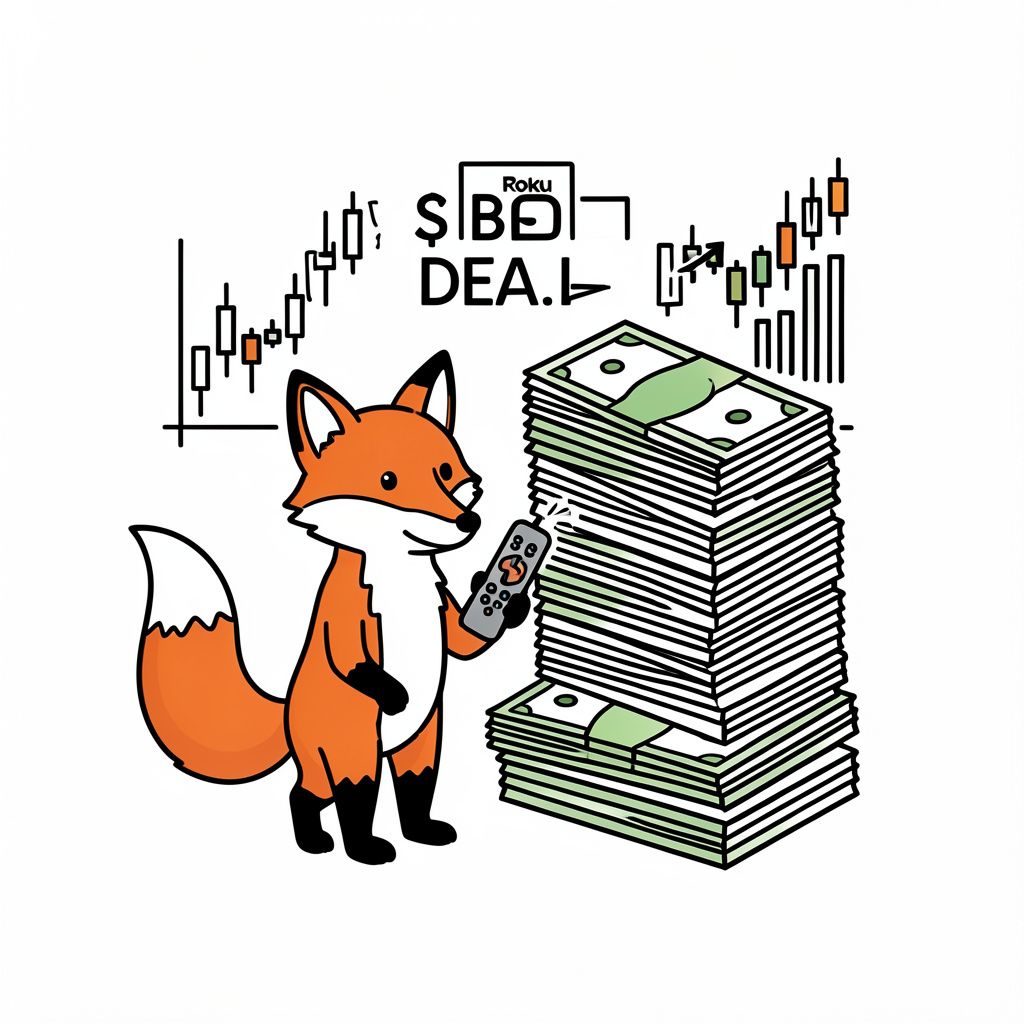
Fox’s acquisition of Roku for $22 billion marks the largest streaming consolidation in history, uniting 100 million global households with Fox’s live sports and news empire. The deal could redefine advertising, as Roku’s ad-supported platform merges with Fox’s content dominance.
A Strategic Power Play in the Streaming Wars
On June 14, 2026, Fox Corporation (NASDAQ: FOXA, FOX) announced a definitive agreement to acquire Roku Inc. (NASDAQ: ROKU) in a landmark $22 billion enterprise value transaction [1][2][3]. The deal, structured as a cash-and-stock offer, values Roku at $160.00 per share, comprising $96.00 in cash and 0.9693 shares of Fox Class A common stock per Roku share [4]. This valuation represents a significant premium, reflecting Roku’s dominant position in the connected TV (CTV) market, where it commands a 44% share of U.S. CTV viewing hours as of Q4 2025 [4]. The acquisition is poised to create the third-largest U.S. television player by viewing share, uniting Fox’s live sports, news, and entertainment portfolio with Roku’s platform of over 100 million global streaming households [1][2].
Financial Engineering and Market Implications
Fox has secured $12.0 billion in bridge financing from Morgan Stanley Senior Funding, Inc. to fund the cash portion of the acquisition, with the remainder covered by stock issuance [4]. The transaction is expected to result in Fox shareholders owning approximately 73% of the combined company, while Roku shareholders will hold the remaining 27% [4]. Pro forma net leverage is projected at 2.8x, incorporating 50% credit for $400 million in annual run-rate cost synergies [4]. The deal is anticipated to be accretive to free cash flow per share by 2029, the second full year post-close [4]. Roku’s financial trajectory underscores the strategic rationale: the company reported its first full-year profit in 2025, with net income of $88.4 million on $4.74 billion in revenue, a 15% year-over-year increase [3]. As of March 31, 2026, Roku’s last twelve months (LTM) revenue reached $5.0 billion, split across advertising ($2.5 billion), subscriptions ($1.9 billion), and devices ($0.6 billion), with a gross margin of 44% [4].
The Advertising Goldmine: Roku’s Data and Fox’s Content
The merger is set to reshape the advertising landscape, combining Roku’s first-party data and ad-supported platform with Fox’s high-value live content. Roku’s platform, which includes The Roku Channel and its proprietary operating system, reaches over 100 million monthly active users, while Fox’s portfolio encompasses marquee sports rights, including the NFL, MLB, NASCAR, Big Ten, and FIFA World Cup, alongside its 24-hour news networks, FOX News and FOX Business [1][2]. The combined entity’s pro forma revenue for the LTM ending March 31, 2026, stands at $21 billion, with Fox (excluding Tubi) contributing 70% and Tubi plus Roku accounting for the remaining 30% [4]. Industry projections suggest U.S. connected TV ad spend will reach $60 billion by 2030, while streaming subscription spend is expected to hit $85 billion, positioning the merged company to capture a significant share of these growing markets [4].
Regulatory Hurdles and Timeline
The transaction, unanimously approved by both companies’ boards, is subject to regulatory approvals and shareholder consent, with an expected closing date in the first half of 2027 [1][2][4]. Fox plans to file a registration statement on Form S-4 with the Securities and Exchange Commission (SEC), which will include a joint proxy statement and prospectus [4]. While the deal faces potential antitrust scrutiny, industry analysts suggest the vertical integration of content and distribution may mitigate regulatory concerns [alert! ‘regulatory outcomes are uncertain’]. Fox has emphasized its commitment to maintaining an investment-grade balance sheet and continuing its shareholder capital return program, including share buybacks and dividends [1]. The acquisition marks a pivotal moment in Fox’s strategic evolution, following its 2019 reorientation around live news and sports and its 2020 acquisition of Tubi for $440 million, which has since grown into a leading ad-supported streaming service with over 100 million monthly users [1][3].
Leadership Perspectives and Industry Reactions
Lachlan Murdoch, Executive Chair and CEO of Fox Corporation, described the acquisition as ‘a defining moment for FOX’ and a natural extension of the company’s decade-long strategy [1][4]. ‘In 2019, we reoriented the company around live news and sports. In 2020, we acquired Tubi and under our stewardship it has become one of the most successful businesses in streaming. Today, we take the next step: bringing together the most valuable live content portfolio in video consumption with the preeminent streaming platform through which America watches it,’ Murdoch stated [4]. Anthony Wood, Roku’s Founder, Chairman, and CEO, echoed this sentiment, highlighting the opportunity to accelerate Roku’s vision: ‘Over the past two decades, we’ve built Roku into the leading TV streaming platform, reaching more than 100 million households globally and reshaping how people discover and enjoy entertainment. […] The combination with FOX is an extraordinary opportunity to scale faster and innovate more aggressively for viewers, partners and advertisers’ [4]. Industry analysts have noted the deal’s potential to disrupt the streaming ecosystem, particularly in the ad-supported space, where Roku’s platform and Fox’s content could create a formidable competitor to industry giants like Disney, Warner Bros. Discovery, and Comcast [1][3].
Sources
- www.cnbc.com
- www.hollywoodreporter.com
- variety.com
- www.stocktitan.net
- www.prnewswire.com
- deadline.com