GPS Jamming Disrupts Caribbean Aviation as Naval Tensions Mount
Caracas, Saturday, 20 December 2025.
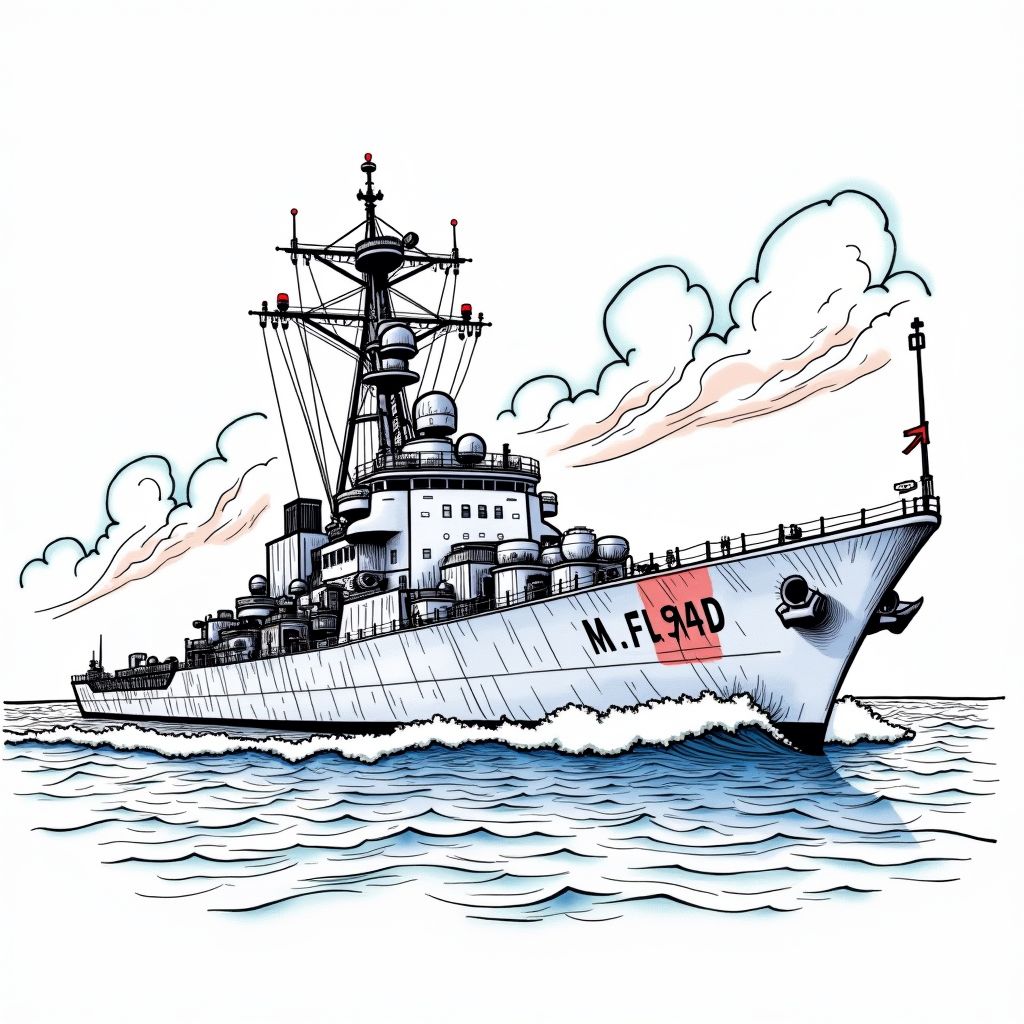
As of December 20, 2025, escalating electronic warfare between the United States and Venezuela has degraded GPS reliability across the Caribbean, forcing the FAA to issue critical flight warnings. While Washington characterizes this naval buildup—including the deployment of the U.S.S. Gerald R. Ford—as a counternarcotics operation, analysts suggest a deeper strategic motive: countering Russian-enabled asymmetric threats. The jamming, which Venezuela employs to shield infrastructure, inadvertently endangers commercial aviation. Most alarmingly, defense experts argue this represents the most significant U.S. naval concentration in the region since the Cuban Missile Crisis, likely aimed at neutralizing potential autonomous underwater vehicles threatening Gulf Coast shipping lanes.
Civilian Skies in the Crossfire
The immediate impact of this electronic warfare is being felt acutely in the aviation sector. The Federal Aviation Administration (FAA) has issued warnings to all aircraft operating at Maiquetia International Airport in Caracas, citing the degradation of navigation signals [1]. This interference is not merely a technical nuisance; it has precipitated dangerous encounters in the crowded airspace of the southern Caribbean. Between December 11 and December 18, 2025, there were reports of close calls involving civilian airliners and military aircraft operating without active transponders in Curaçao’s airspace [2]. While the Venezuelan armed forces are jamming signals to shield critical infrastructure—such as oil refineries, military bases, and power plants—from potential drone attacks [1], these defensive measures are bleeding into commercial corridors, creating a precarious environment for international travel [4].
A Thinly Veiled Counternarcotics Operation
Although the Trump administration publicly asserts that the deployment of U.S. warships, including the U.S.S. Gerald R. Ford, is intended to target drug trafficking orchestrated by the Venezuelan government [1], the military composition suggests a far more aggressive objective. Defense analysts note that the current force package includes F-35 fighters deployed to Puerto Rico and an Amphibious Ready Group with a Marine Expeditionary Unit (ARG/MEU) [5]. This specific configuration is optimized for rapid ashore operations and striking defended targets in contested airspace, capabilities that far exceed the requirements of standard counternarcotics missions [5]. Under Secretary of War Elbridge Colby’s approval of this deployment signals a high-level threat assessment that prioritizes the Western Hemisphere, potentially overriding other global commitments [5].
The Silent Underwater Threat
The strategic anxiety driving this naval concentration likely centers on a threat lurking beneath the surface: Russian-enabled Unmanned Underwater Vehicles (UUVs). Intelligence suggests that Russia, seeking leverage against Washington without resorting to nuclear escalation, is utilizing the Caribbean to pressure the United States [5]. The specific concern is that Venezuela could serve as a host for autonomous underwater systems capable of disrupting the critical shipping lanes of the Florida Straits and the Yucatán Channel [5]. These waterways are vital economic arteries; at least half of all U.S. imports and exports transit through Gulf Coast ports [5]. A small number of these autonomous vehicles could effectively act as mobile minefields, severing undersea cables or halting commercial traffic, a capability the administration views as intolerable near U.S. shores [5].
Escalating Brinkmanship
Diplomatic relations have deteriorated in tandem with the military buildup. On December 16, 2025, President Nicolás Maduro ordered the Venezuelan navy to escort tankers sailing toward Asia, a move the New York Times reported has increased the likelihood of violent conflict [3]. The rhetoric from the White House has been equally bellicose; on December 17, Chief of Staff Susie Wiles reportedly stated that the President intends to “keep on blowing boats up until Maduro cries uncle” [3]. This volatile environment is further complicated by Venezuela’s domestic military production; the nation is now manufacturing Iranian-designed Mohajer-2 drones at the CAVIM arms factory near El Libertador Air Base [5]. As the Council on Foreign Relations ranks a direct U.S.-Venezuela clash as a high-likelihood contingency for 2026 [3], the region faces a delicate balance between defensive posturing and open warfare.