China's Factory Activity Contracts as Export Demand Weakens
Beijing, Sunday, 1 November 2026.
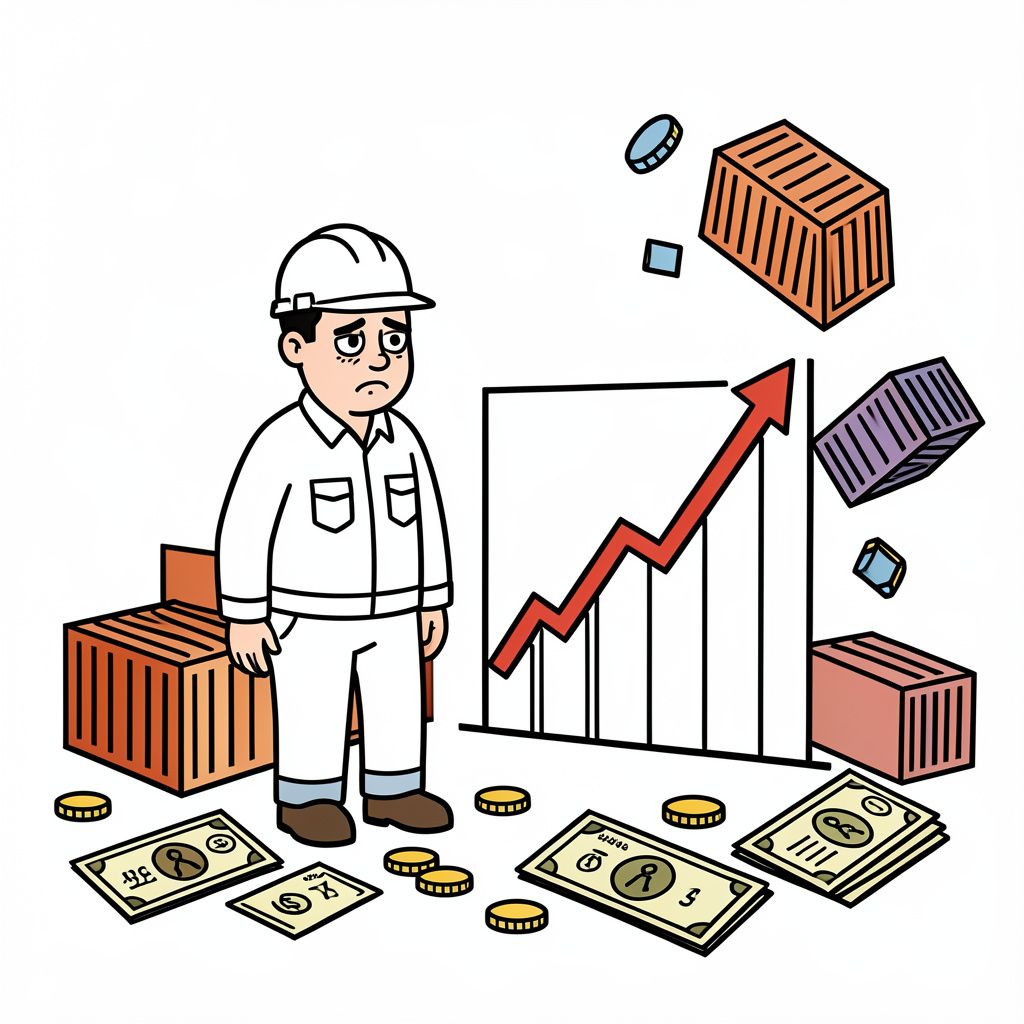
China’s manufacturing slipped back into contraction in October 2026 as export orders slumped, even while its annual trade surplus heads toward a record $1.2 trillion.
October Manufacturing PMI Signals Contraction
China’s manufacturing sector officially entered contraction territory in October 2026, with the National Bureau of Statistics’ official Purchasing Managers’ Index (PMI) dropping to 49.3 from 50.1 in September 2026 [1][2][3][5]. This marks the first contraction in three months and reverses a brief rebound observed in September. The decline was driven primarily by a sharp fall in new export orders, which dropped to 48.7 from 50.0 in the prior month [1][2][3][5]. The production subindex also fell to 49.8 from 51.7, indicating a broad-based slowdown across manufacturing activity [1][2][3][5]. According to the National Bureau of Statistics’ chief statistician, the contraction was influenced by pre-holiday demand pull-forward and volatile external conditions [1][2][3][5].
Export Slowdown Highlights Structural Trade Pressures
The decline in new export orders is particularly concerning as it reflects weakening global demand and intensifying trade friction. The European Union has already reported an unsustainable daily trade deficit with China of $1.1 billion in 2025, and leading economists project that China’s 2026 trade surplus could surpass the previous year’s record $1.2 trillion [1][2][6]. The European Commission has responded by negotiating limits on imports of Chinese hybrid vehicles, signaling a coordinated push for trade rebalancing [2][6]. Meanwhile, U.S. tariffs on Chinese goods, implemented in 2025, have redirected some Chinese exports to Europe, Southeast Asia, and Latin America, further straining trade relations [2][6]. This shift has raised concerns among Western policymakers about over-reliance on Chinese supply chains and the distortionary impact of low-cost imports on domestic industries [2][6].
Domestic Demand Remains Weak Amid Property Sector Slump
While exports weakened, domestic demand has been constrained by a protracted real estate crisis. China’s property sector, a key driver of domestic consumption, has remained depressed for over two years, suppressing household spending and business investment [1][2][3][5]. The official PMI data showed that small and medium-sized enterprises (SMEs)—which are more exposed to domestic markets—recorded PMIs of 48.4 and 47.5 respectively in October 2026, both firmly in contraction territory [2][3][5]. In contrast, large enterprises maintained a PMI of 50.2, supported by state-linked infrastructure projects and export orders [2][3][5]. The divergence underscores the uneven recovery across China’s industrial landscape and the structural challenges facing private firms.
Policy Response Likely as Trade Tensions Mount
The renewed contraction in manufacturing, combined with rising external pressure over trade imbalances, increases the likelihood of further policy support from Beijing. During a high-profile visit to China on October 29–30, 2026, German President Frank-Walter Steinmeier emphasized the need for fair trade and warned that China’s pursuit of self-reliance should not come at the expense of growing dependence by other nations [2][6]. Steinmeier’s meetings with President Xi Jinping and Premier Li Qiang culminated in a pledge from Li to import more high-quality German goods, signaling a potential easing of tensions through targeted trade measures [2][6]. With U.S. President Donald Trump scheduled to meet Xi Jinping at the APEC summit in Shenzhen in mid-November 2026, trade issues are expected to dominate the agenda [2][6]. Analysts suggest that further fiscal stimulus or export incentives may be introduced to stabilize industrial output and mitigate the impact of soft global demand [1][2][3].
Sectoral and Regional Divergences Shape Outlook
Despite the broad-based slowdown, certain sectors continue to expand. High-tech manufacturing and equipment manufacturing recorded PMIs of 51.3 and 50.6 respectively in October, supported by strong demand for AI-enabled devices and electric vehicle components [1][3][5]. In contrast, traditional industries such as textiles, non-metallic minerals, and non-ferrous metals remained in contraction, reflecting weak end-market demand and inventory adjustments [1][3][5]. Regional data also reveal uneven performance: large coastal provinces with export-oriented clusters experienced sharper contractions than inland regions focused on domestic consumption [3][5]. The outlook for November remains clouded by seasonal factors, including the end of the Golden Week holiday effect and ongoing adjustments in base material sectors [1][3][5][7].
Sources
- finance.yahoo.com
- www.voachinese.com
- news.cctv.com
- finance.eastmoney.com
- finance.sina.com.cn
- www.dw.com
- news.online.sh.cn