95 Days Without Water: The Severe Infrastructure Collapse Paralyzing Cumaná
Cumaná, Tuesday, 2 June 2026.
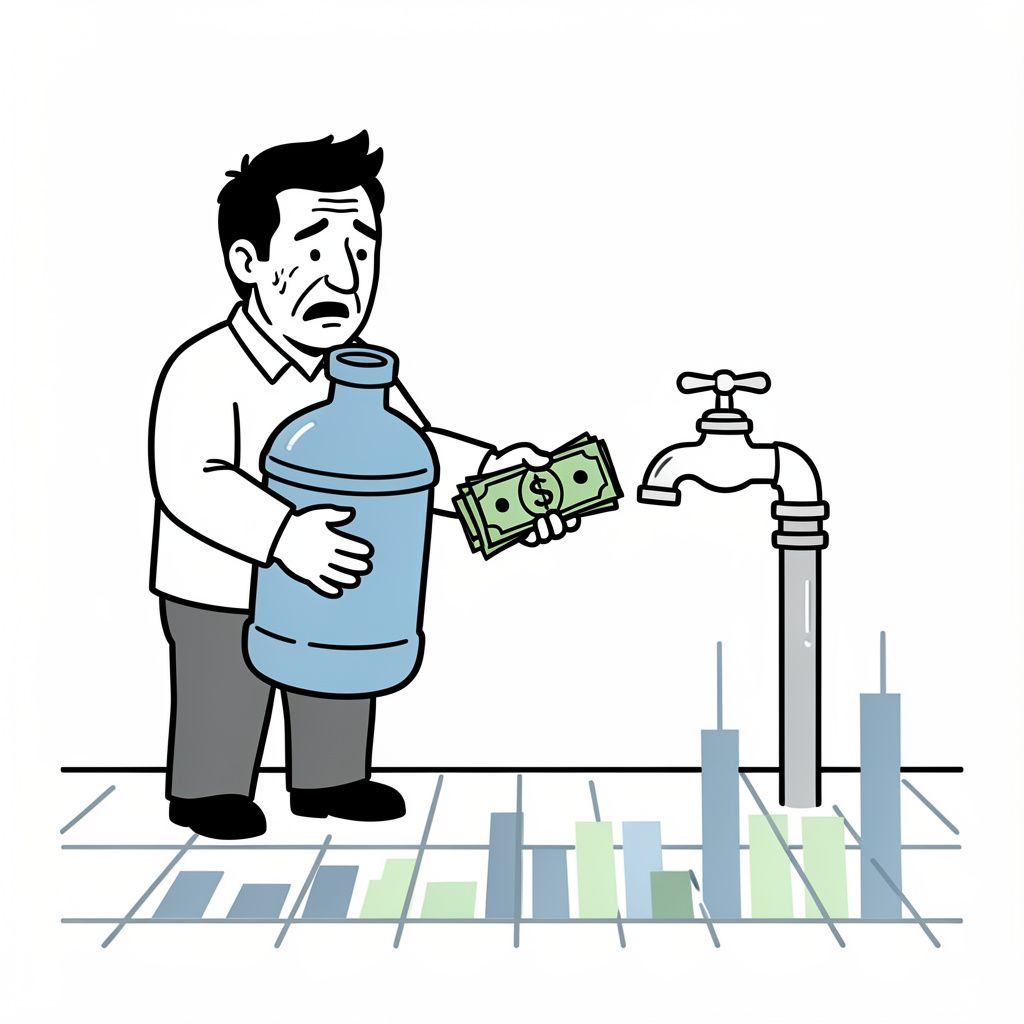
While Caracas sees a 2026 investment boom, Cumaná suffers a 95-day water outage, forcing residents to pay $8 for 20 liters amid a devastating regional economic collapse.
A Tale of Two Economies in Post-Maduro Venezuela
In January 2026, a seismic political shift occurred when United States military forces ousted and captured Venezuelan President Nicolás Maduro, leading to Vice President Delcy Rodríguez assuming power [1][2][3][4]. This geopolitical shockwave triggered an immediate influx of petroleum executives and cryptocurrency investors into Caracas, sparking a localized economic boom [1][2][3][4]. However, the capital’s speculative resurgence masks a profound economic devastation across the rest of the country [1][2][3]. A stark illustration of this dichotomy is Cumaná, a coastal city of 500,000 residents in Sucre state [1][2]. While Caracas experiences a renaissance, Cumaná remains trapped in a severe public service crisis, characterized by daily electrical blackouts and an extreme scarcity of potable water [1][2][3][4].
The 95-Day Drought and Infrastructure Collapse
The most acute symptom of Cumaná’s systemic failure is a catastrophic water shortage that reached its 95th consecutive day on May 30, 2026 [6]. The crisis began on February 25, 2026, following a massive failure in the transfer system of the Turimiquire reservoir [6]. While initial reports cited a rockfall in a reservoir tunnel [1][2], later statements from United Nations officials pointed to seismic activity occurring around late March or early April as a compounding factor [alert! ‘Sources conflict on the exact timeline and primary cause of the infrastructure failure, with some citing a February rockfall and others a subsequent earthquake’] [1][4]. Regardless of the immediate catalyst, the infrastructure collapse has severed the vital flow of over 5,000 liters of water per second, impacting more than 210,000 families across the Sucre, Bolívar, and Cruz Salmerón Acosta municipalities [6].
Deindustrialization and the Ghost of Expropriations
The current infrastructure paralysis is the culmination of a decades-long process of deindustrialization. Following the initiation of state expropriations by former President Hugo Chávez in 1999, Cumaná’s once-thriving private sector began to dismantle [1][2][4]. The city was historically the epicenter of the Caribbean fishing industry, processing and exporting tuna and sardines across South America [1][2][4]. Today, the canning plants in the Caigüire neighborhood sit abandoned, victims of nationalization policies and a severe shortage of metal cans [2][4]. The industrial death knell sounded approximately a decade ago in 2016, when hyperinflation and labor strikes forced the permanent closure of the city’s Toyota assembly plant, which formerly produced Land Cruisers [1][2].
The Generational Cost of Economic Devastation
The erosion of Cumaná extends beyond physical infrastructure and industrial output; it has fundamentally degraded the region’s human capital. The Universidad de Oriente, founded in 1958, serves as a grim monument to this decay [1]. Subjected to systematic looting tolerated by authorities since roughly 2016, and having suffered fires that destroyed its central library, the university’s student population has plummeted from over 15,000 to merely 2,000 by late May 2026 [1]. As scavengers pick through the ruins of the campus, the destruction of educational institutions ensures that the economic devastation will have generational consequences [1][2].
Sources
- www.nytimes.com
- lapatilla.com
- www.instagram.com
- elcooperante.com
- www.instagram.com
- www.instagram.com