Super Bowl LX Versus World Cup 2026: Analyzing the Massive Prize Money Disparity
Santa Clara, Monday, 9 February 2026.
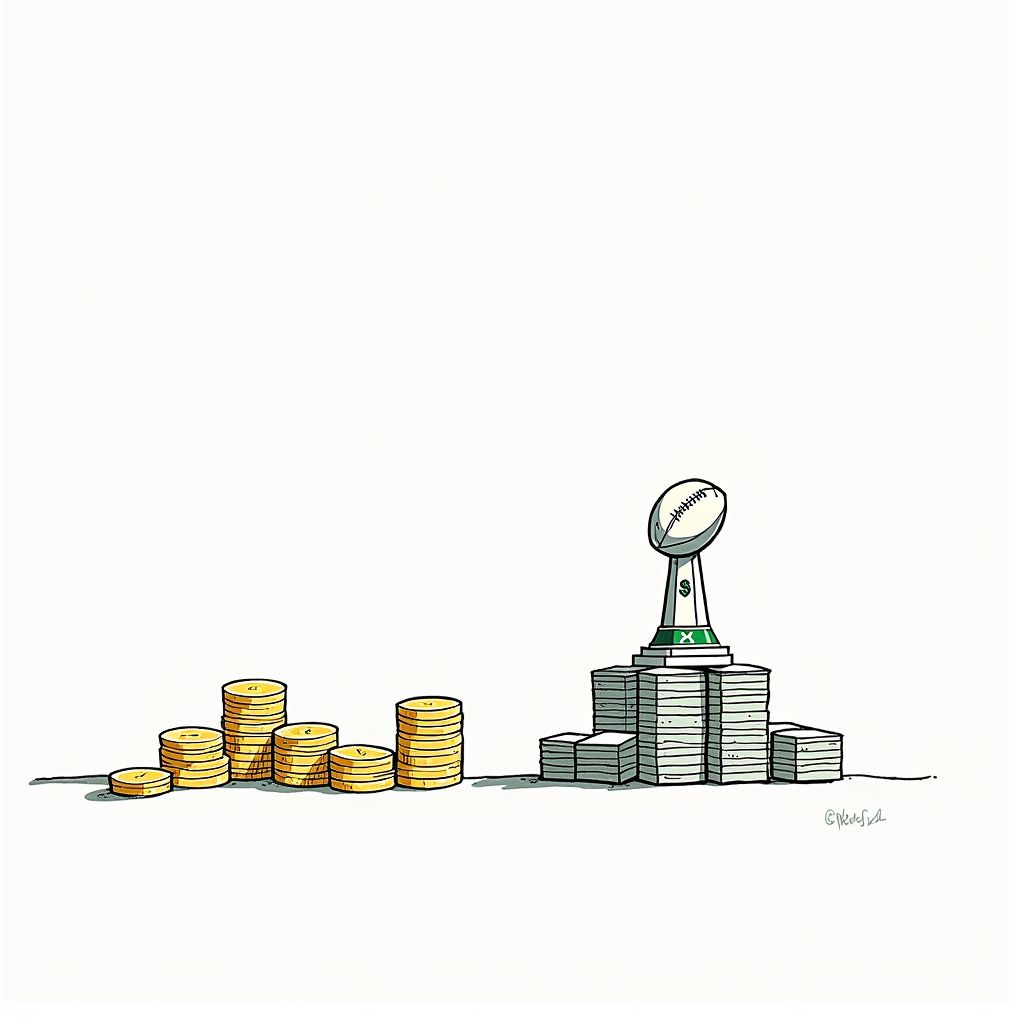
While Super Bowl LX champions earned $178,000, 2026 World Cup winners could net nearly $1 million each, exposing a massive financial disparity between domestic dominance and global scale.
The Economics of Victory
Following the conclusion of Super Bowl LX at Levi’s Stadium in Santa Clara yesterday, February 8, the financial rewards for the NFL’s newest champions have been finalized [8]. Each member of the winning roster has secured a bonus of $178,000, while players on the losing side will take home $103,000 [1][2][6]. This year’s payout represents a modest year-over-year increase of $7,000 compared to the previous season [1][2]. While these figures are significant for a single game, they pale in comparison to the financial structure of the upcoming 2026 FIFA World Cup. Reports indicate that the national team winning the World Cup will receive a staggering $50 million team prize, with individual players estimated to earn between $500,000 and $1 million each depending on their federation’s distribution agreements [1].
Analyzing the Payout Structure
The disparity highlights the economic differences between a domestic league, albeit a massive one, and a global tournament. While the Super Bowl bonus is a fixed sum under the NFL’s Collective Bargaining Agreement [2], the World Cup prize money is derived from a global pool that rewards the runner-up team alone with $33 million [1]. For NFL players, the financial incentives extend beyond the Super Bowl game itself. A player on the winning team who participated in every round of the postseason could earn a cumulative total of up to $376,000 in bonuses [5][6][8]. Additionally, the tangible legacy of the victory—the championship ring—holds an estimated value of between $35,000 and $50,000 [5][6].
Eligibility and Historical Context
Not every player on the roster receives the full financial windfall; the NFL enforces strict eligibility criteria based on game participation. To qualify for the full $178,000 bonus, a player must have been on the active or inactive list for at least three regular-season or playoff games [2]. Conversely, players who appeared in fewer than three games, or first-year players injured during the season, are entitled to only 50% of the bonus [2]. This structured payout system has evolved significantly since the league’s inception. In 1967, the winners of Super Bowl I earned just $15,000, a figure that, even when adjusted for inflation to roughly $147,744 in modern purchasing power, remains lower than today’s check [3]. The current winner’s share has risen by more than 1,000% in nominal terms since that inaugural game [3].
Sources
- bolavip.com
- www.timesnownews.com
- www.kare11.com
- thesportsrush.com
- sports.yahoo.com
- www.walesonline.co.uk