Donald Trump Appeals $83.3 Million Defamation Penalty to the Supreme Court
Washington, Wednesday, 29 July 2026.
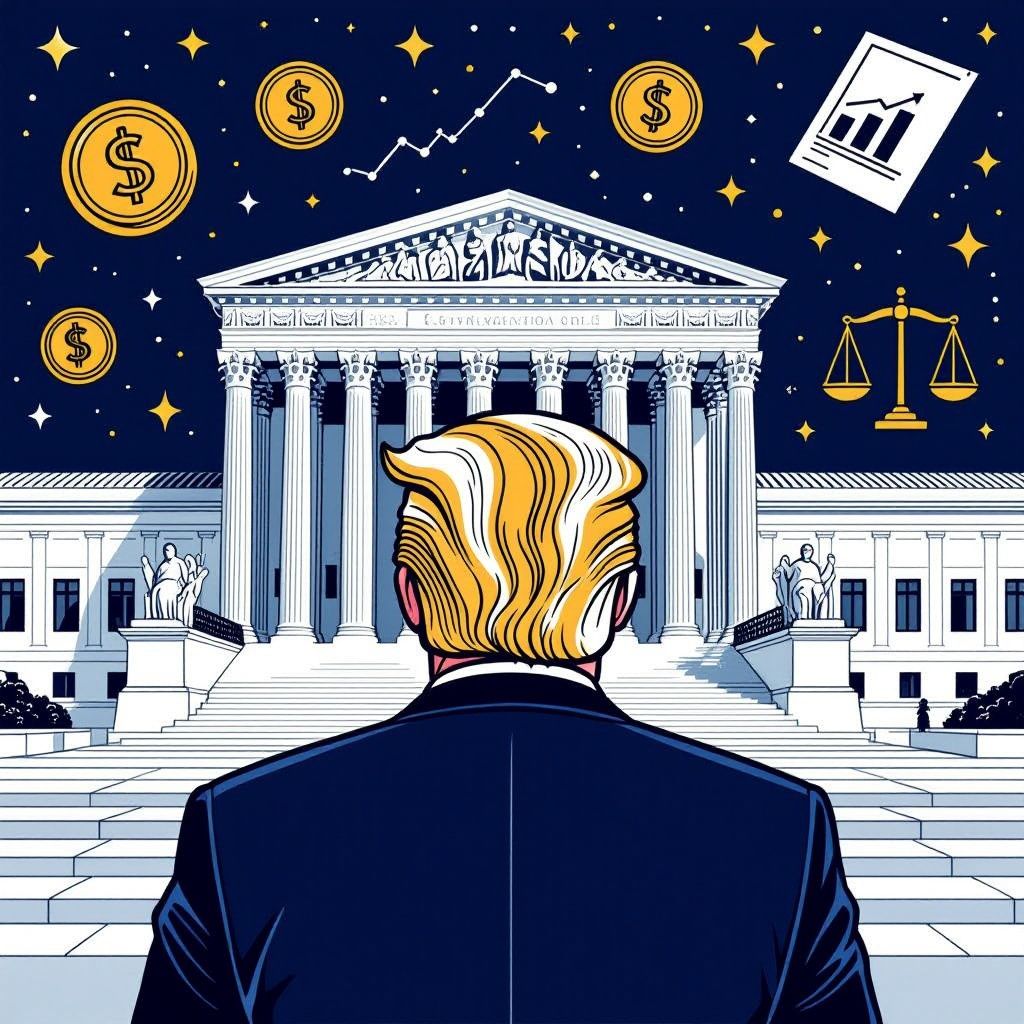
Donald Trump has petitioned the Supreme Court to overturn his $83.3 million defamation judgment, arguing his presidential immunity shields him from liability for statements made while in office.
The Constitutional Argument for Presidential Immunity
On Tuesday, July 28, 2026, former President Donald Trump, representing the Republican Party [GPT], officially petitioned the U.S. Supreme Court to review and overturn the $83.3 million defamation judgment awarded to writer E. Jean Carroll [1][2]. In their filing, Trump’s defense attorneys, Robert J. Giuffra and Michael C. Martinich-Sauter, argued that the remarks in question were protected by presidential immunity [2]. They asserted that because Trump made these statements in 2019 while serving as president in response to reporters’ questions regarding his fitness for office, he should be shielded from civil liability [2].
A History of Litigation and Financial Stakes
The legal battle between Trump and Carroll dates back to 2019, when Carroll publicly accused him of sexually assaulting her in a Manhattan department store dressing room in the mid-1990s [1][2]. Trump’s subsequent public denials and attacks on her credibility sparked years of intense defamation litigation [2]. The financial consequences of these disputes are substantial; across two separate civil trials, juries have awarded Carroll a combined total of 88.3 million in damages [1][2]. This total comprises a $5 million award from a May 2023 trial for sexual abuse and defamation, and the larger $83.3 million award handed down in January 2024 specifically for Trump’s 2019 statements [2].
Political and Legal Implications
This high-profile appeal is not merely a private legal dispute but a highly politicized battle carrying significant implications for Trump’s political standing and the broader executive office [GPT]. Trump’s attorneys argue that the case represents the first time in American history that a court has imposed damages liability on a president for conduct performed while in office [1]. For political strategists and constitutional scholars, the Supreme Court’s upcoming decision on whether to grant certiorari will serve as a crucial test of the practical boundaries of presidential immunity in civil contexts [GPT].