Rising National Debt Threatens Future United States Economic Growth
New York, Tuesday, 20 October 2026.
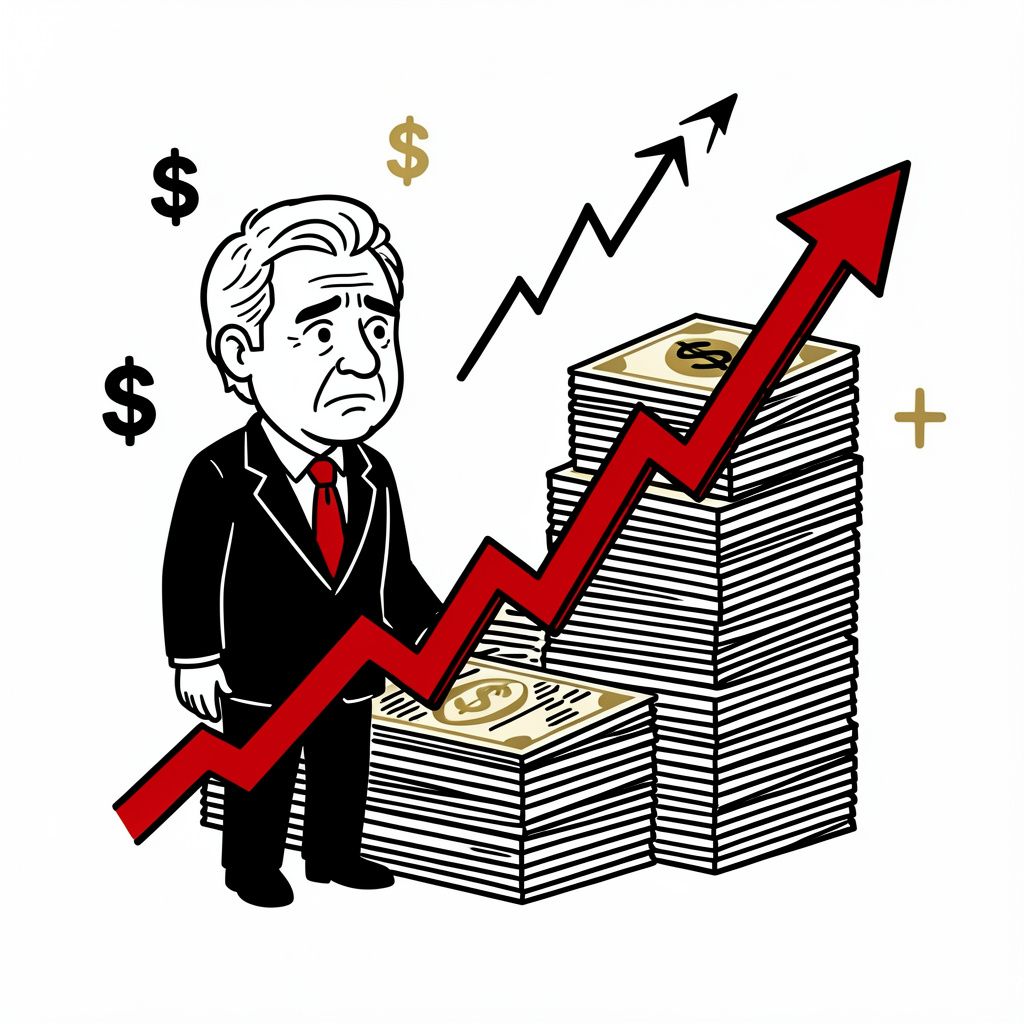
JPMorgan CEO Jamie Dimon warns that despite current economic strength, a near $2 trillion fiscal deficit and persistent inflation threaten long-term stability and force tighter interest rate policies.
Economic Resilience Meingful Macro Risks
JPMorgan Chase Chief Executive Officer Jamie Dimon issued a stern warning regarding the long-term outlook for the United States economy on 18 October 2026, identifying massive government fiscal deficits, sticky inflation, and geopolitical conditions as critical underlying risks [1][3]. Despite current economic resilience characterized by strong business investment and ongoing consumer spending, these cumulative macroeconomic pressure points pose a significant threat to sustainable growth [1]. Dimon stressed that while the American economy is currently booming with corporate profits way up, the confluence of government spending and inflationary pressures could lead to a hard landing or stagflationary environment [2][3]. The Federal Reserve has monetary policy meetings scheduled for late October 2026 and mid-December 2026 to address inflation levels currently above the 2% target rate [1].
Inflationary Trends and Consumer Impact
The Bureau of Labor Statistics released September 2026 Consumer Price Index (CPI) data on 14 October 2026, showing headline CPI rose 3.7% year-over-year, exceeding the 3.6% estimate [1]. This represents a notable increase from the 3.4% inflation rate recorded in August 2026, calculated as 8.824 percent growth in the inflation rate over one month [3]. Core CPI rose 2.6% year-over-year, also exceeding the 2.5% estimate, indicating persistent price pressures in key sectors [1]. Real average hourly earnings declined 0.7% between September 2025 and September 2026, suggesting that wage growth is not fully outpacing price increases for workers [3]. Dimon noted that while unemployment remains low at 4.2% in September 2026, inflationary events remain a primary concern for long-term stability [3][4].
Fiscal Deficits and Inflationary Pressures
The U.S. federal government concluded fiscal year 2026 with a $2 trillion shortfall, with the nonpartisan Congressional Budget Office reporting preliminary data showing a $1.993 trillion deficit for the period ending 30 September 2026 [1]. Dimon emphasized that the fiscal deficit is the most predictable crisis faced by the economy, exacerbated by a lack of discipline in Washington that ignores long-term inflationary consequences [3]. Primary drivers of the 2026 fiscal year deficit identified by the CBO include increased government spending on debt servicing [1]. Economic risks threatening U.S. growth include rising interest rates driven by global fiscal deficits and increased corporate bond issuance to fund artificial intelligence infrastructure and other investments [1]. Investors are demanding higher yields in exchange for purchasing bonds, contributing to upward pressure on interest rates [1].
Geopolitical Risks and Market Stability
Dimon identified the geopolitical situation as the most dangerous since 1945, with impacts on energy, food, and global supply chains remaining a volatile variable for the U.S. economy [3]. He highlighted two primary macroeconomic risks: the escalation of current wars causing disruption to populations and alliances, and the threat of cyber warfare targeting vulnerable infrastructure [4]. The recent surge in wholesale prices was attributed to elevated energy costs stemming from the U.S.-Iran and Russia-Ukraine conflicts, with annual CPI inflation rising following the start of the Iran conflict [3]. Dimon advocates for business involvement in public policy through organizations like the Business Roundtable to address national issues including taxation, regulation, and healthcare [4]. He noted that while corporations are not over-leveraged and consumers have low debt levels, global wars present uncontrollable risks [2][4].
Corporate Strategy and Future Outlook
JPMorgan Chase’s Security and Resilience Initiative marked its one-year anniversary as of 6 October 2026, focusing on 29 industries including energy, AI for military applications, and advanced manufacturing [4]. The bank has expanded its security and resilience investment scope beyond the U.S. to include Germany, Italy, France, the UK, Poland, Australia, Japan, and South Korea [4]. Dimon asserts that the American economy could achieve 3% growth, up from the 2% average observed over the last 20 years, by reforming immigration, education, and permitting processes without new spending or taxes [4]. JPMorgan Chase maintains institutional readiness for various economic outcomes, including stagflation and equity market declines of 40%, ensuring service continuity regardless of market environment [4]. The firm continues to process between $2 trillion and $3 trillion in securities daily across the first eight levels of its headquarters, reflecting the scale of current market operations [4].