Proposal Seeks to Standardize Labor Rights for America’s 1.5 Million Digital Creators
Washington D.C., Friday, 16 January 2026.
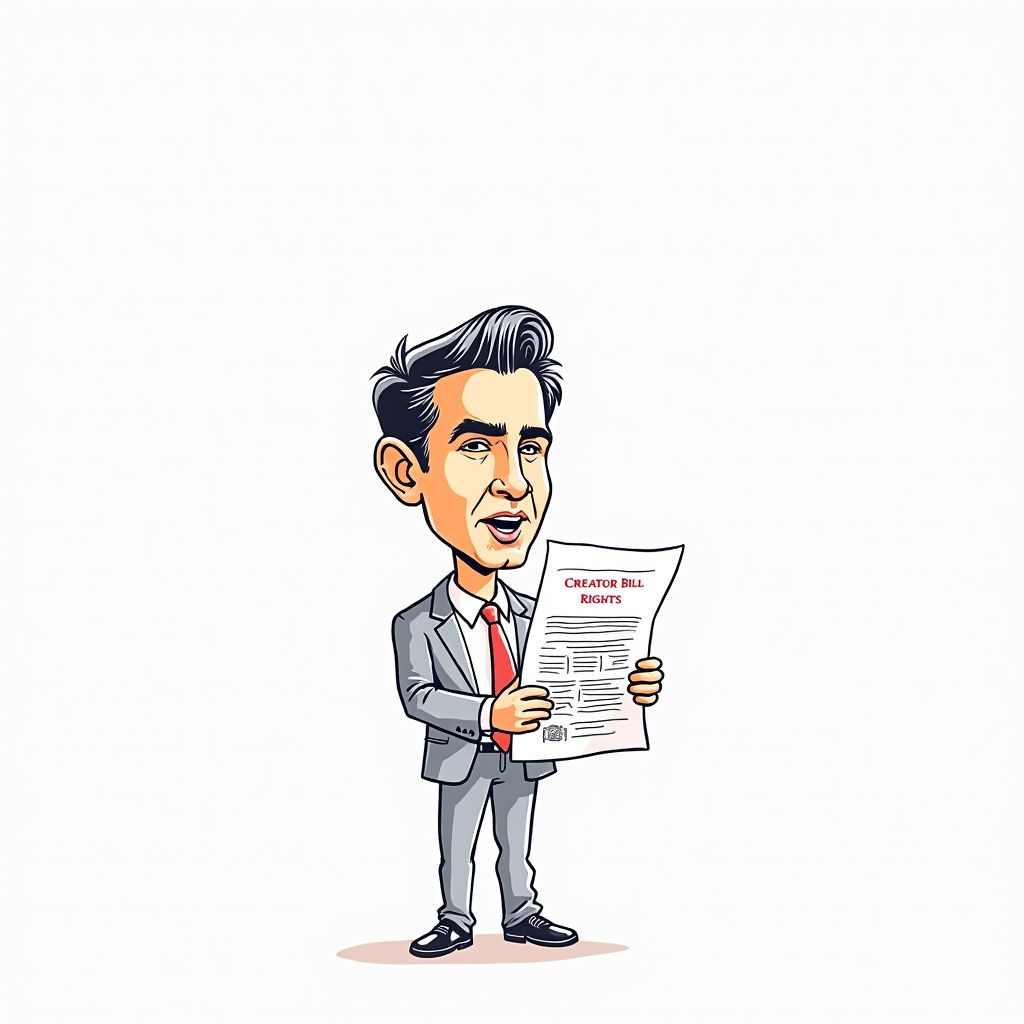
On January 16, 2026, Representative Ro Khanna introduced a legislative framework aimed at stabilizing the financial reality for the 1.5 million Americans working as full-time digital creators. This “Creator Bill of Rights” moves beyond simple acknowledgment to propose portable benefits—such as healthcare and retirement plans that travel with the worker rather than the platform—and demands transparency regarding the algorithms that dictate income. This resolution marks a critical step in redefining digital content creation from a gig-based anomaly to a regulated sector warranting federal labor protections.
Economic Context of the Digital Workforce
The introduction of this resolution arrives as the digital economy matures into a global industry valued at $250 billion [2]. While often dismissed by traditionalists, data indicates that approximately 1.5 million Americans now work as full-time digital creators [1]. This shift is particularly pronounced among younger demographics; a July 2025 report noted that just under half of Gen Z considers professional content creation their ideal career [1]. However, this workforce faces unique volatility, often operating without the safety nets afforded to traditional employees [3].
A Framework for Digital Labor
Representative Khanna’s “Creator Bill of Rights” outlines seven core principles designed to stabilize this precarious employment model [3]. Central to the proposal is the concept of “portable benefits,” which would allow essential protections like health insurance and retirement savings to follow the creator regardless of which platform they utilize [3]. The framework effectively treats creators as independent businesses, acknowledging the disparity between the value they generate for platforms and the risks they assume, such as sudden account suspensions or demonetization [3]. Additionally, the resolution calls for strict transparency regarding the use of artificial intelligence and synthetic media, ensuring creators retain control over their likeness and output [1][3].
Bridging the Healthcare Gap
A significant component of the proposal involves decoupling healthcare from specific employers. Representative Khanna has suggested that healthcare coverage for creators could be facilitated through a government-backed “Medicare-for-all” style program, while technology platforms would be responsible for carrying other associated costs [1][4]. This approach aims to remedy the current deficit where digital workers lack access to the workplace benefits standard in other sectors [1]. The initiative was developed in collaboration with Creators 4 Mental Health, highlighting the psychological toll of income instability on digital workers [2].
Algorithmic Transparency and Revenue
Beyond benefits, the resolution targets the financial opacity of the platform economy. It demands predictable revenue-sharing models and clear explanations of how algorithms impact content reach and, consequently, income [1][4]. Currently, creators often face income instability due to unannounced algorithm changes that can drastically reduce their audience engagement overnight [1]. The proposal argues that creators should effectively own their followers, advocating for an open social web where audiences are not locked into a single platform [4].
Legislative Outlook
While the “Creator Bill of Rights” is a “sense of the House” resolution—meaning it serves as a blueprint for future legislation rather than binding law immediately—it signals a pivot in how Washington views digital labor [3]. Representative Khanna noted that while many in Congress still view platforms like TikTok merely as “that song and dance” app, the demographic relying on these platforms for middle-class livelihoods requires serious legislative attention [1]. As the gig economy expands, this framework attempts to ensure that these evolving roles transform into “good jobs” with adequate protections [1].