Trading San Francisco for Singapore: The Financial Shift Driving Americans to Renounce Their Citizenship
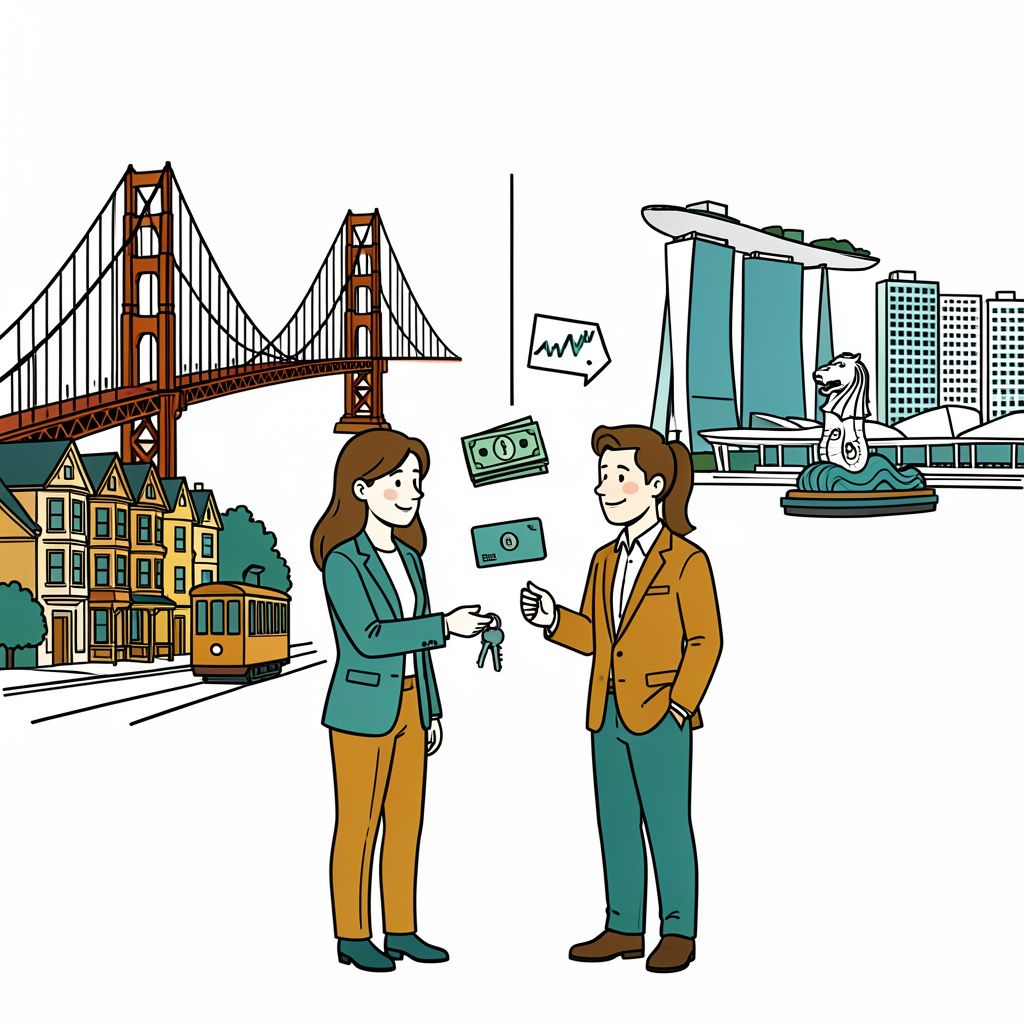
San Francisco, Tuesday, 28 April 2026.
Driven by exorbitant living costs, US professionals are relocating to Singapore. Strikingly, some are now renouncing their American citizenship to secure affordable homeownership and lower taxes.
The Economics of Relocation
The financial calculus for American expatriates often begins with the crushing housing costs in major US tech hubs. Take the case of Nick Burns, a 35-year-old former US Navy service member who relocated to Singapore via a corporate lateral transfer in January 2020 [1][2]. During his time working in semiconductor manufacturing in San Francisco, Burns earned a six-figure salary but struggled to build savings [1][2]. His two-bedroom apartment in downtown San Francisco commanded a staggering monthly rent of $5,728, which included a $300 fee for reserved parking [1][2]. Over a single year, this amounted to an outflow of 68736 dollars just for housing [1][2].
Property Ownership and the Citizenship Trade-Off
Homeownership remains a primary driver for this demographic shift. After renting for several years, Burns and his wife, whom he married in 2023, purchased a four-room public housing apartment (HDB flat) on the city fringe in 2025 [1][2]. The property cost SG$1.01 million, or roughly $790,000 USD [1][2]. Financed partially through cash and Singapore’s Central Provident Fund (CPF), the couple’s current monthly mortgage sits at SG$3,520 [1][2]. These residential developments, often referred to as heartland HDB estates, provide extensive community facilities and a glimpse into authentic local life that many expatriates increasingly value over transient, tourist-heavy areas [5].
Lifestyle Dividends and Regional Competition
Beyond the balance sheet, quality of life and safety metrics play a pivotal role in retaining foreign talent. Singapore’s exceptionally low crime rates and strict gun control laws stand in stark contrast to the safety concerns many professionals harbor regarding American cities [1][2]. Social media discourse frequently highlights this dichotomy, with residents and expatriates alike debating the stark differences in public safety between Singapore and the US [6]. For Burns, who reported feeling unsafe walking in San Francisco even as a single man, the transition has yielded peace of mind and time dividends [1][2]. A hybrid work schedule and shorter commutes have given him back three to four hours a day, allowing for a much-improved work-life balance [1].
Sources
- www.businessinsider.com
- www.aol.com
- theindependent.sg
- www.businessinsider.com
- www.reddit.com
- www.instagram.com