Arctic Strategy: White House Reportedly Weighs Cash Incentives for Greenland Secession
Washington D.C., Friday, 9 January 2026.
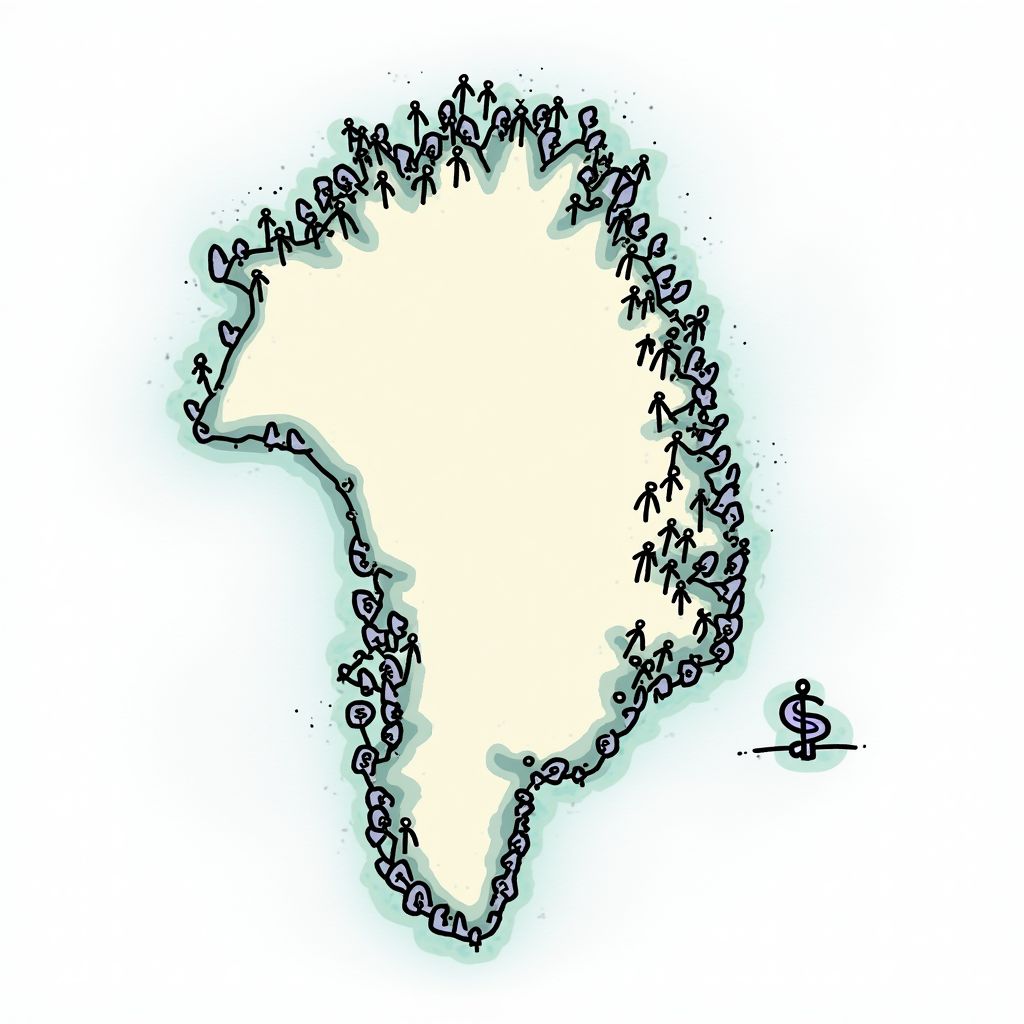
Reports suggest the Trump administration is exploring a plan to pay Greenland residents up to $100,000 each to bypass Copenhagen and incentivize secession. This unconventional economic strategy underscores the escalating valuation of the Arctic’s mineral resources and shipping lanes amidst growing geopolitical competition with Russia and China.
Financial Incentives and Strategic Calculations
The proposed financial package reportedly under consideration involves payments ranging from $10,000 to $100,000 for each of Greenland’s approximately 57,000 residents [1]. If fully implemented at the upper threshold, the total expenditure for these direct payments alone would amount to 5.700 billion (5.7 billion), aligning with reports estimating the program’s cost between more than $500 million and nearly $6 billion [1]. This fiscal maneuver is distinct from a traditional government-to-government purchase; instead, it appears designed to foster grassroots support for secession among the populace, bypassing the Danish government’s consistent refusal to sell the territory [1]. On January 8, 2026, White House Press Secretary Karoline Leavitt confirmed that the acquisition is “actively” being discussed by President Donald Trump and his national security team [2]. The administration views this move as essential to U.S. national security, specifically to “deter Russian and Chinese aggression in the Arctic region” [1]. President Trump emphasized this strategic necessity on January 5, 2026, stating that the island is “surrounded” by rival naval vessels and asserting that Denmark lacks the capability to provide adequate defense [1].
Diplomatic Friction and Political Reactions
The proposal has elicited sharp rebukes from Danish and Greenlandic officials. Greenland’s Prime Minister, Jens-Frederik Nielsen, declared on January 6, 2026, that his country is not something that can be taken over, stating, “No more pressure. No more hints. No more fantasies about annexation” [1]. Similarly, Danish Member of the European Parliament Anders Vistisen expressed on January 8, 2026, that Denmark is “fed up” with the U.S. administration’s attitude, emphasizing that the era of buying and selling territories is “long gone” [3][4]. Conversely, within the United States, Senator John Fetterman (D-Pa.) has voiced support for the acquisition, arguing that “ideally” the U.S. would purchase the territory in a manner similar to the Louisiana Purchase or the acquisition of Alaska [3].
Historical Precedent and Public Sentiment
This is not the first time the United States has sought to acquire the island. Historical records indicate that the U.S. made formal attempts to purchase Greenland as early as 1946, when the Truman administration offered Denmark $100 million in gold [5]. While that offer was rejected, the U.S. has maintained a significant military presence in the region, most notably at the Pituffik Space Base [5]. However, winning over the local population may prove difficult; a poll conducted in January 2025 indicated that 85% of Greenlanders rejected the idea of becoming part of the United States, with only 6% in support [6].
Military Context and Future Talks
Tensions regarding American expansionism have been heightened by recent military actions. Concerns over the administration’s methods resurfaced following the President’s unilateral use of military force against Venezuela on January 3, 2026 [2]. While White House Press Secretary Karoline Leavitt stated on January 7, 2026, that “all options are always on the table,” including military force [4], Secretary of State Marco Rubio reportedly ruled out the possibility of an invasion during a call with French Foreign Minister Jean-Noël Barrot on January 8, 2026 [2]. Secretary Rubio is scheduled to meet with his Danish counterpart the week of January 12, 2026, to further discuss the situation [1].