Goldman Sachs Signals Market Complacency Regarding Earnings Season Volatility
New York, Saturday, 10 January 2026.
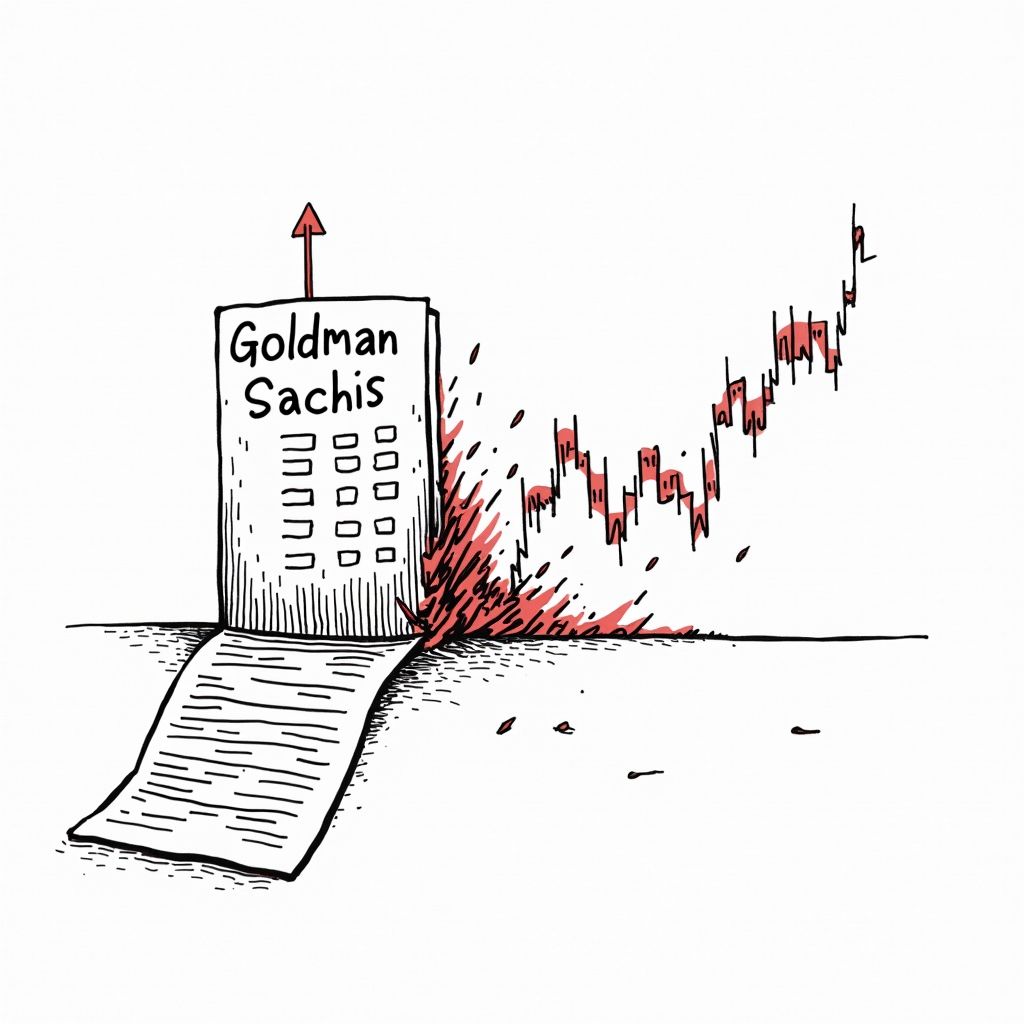
Goldman Sachs reports a critical “volatility gap,” warning that while traders are pricing in 20-year lows for expected moves, actual stock reactions are trending near financial crisis levels.
The Volatility Gap: A Disconnect in Market Pricing
As of January 10, 2026, a significant divergence has emerged between the stability implied by options markets and the underlying turbulence of stock fundamentals. John Marshall, Head of Derivatives Research at Goldman Sachs, identifies this phenomenon as a “volatility gap,” noting that while the average implied move for stocks reporting earnings currently sits at approximately ±4.7 percent, realized moves—the actual price swings occurring after announcements—are trending toward levels not seen since the 2009 financial crisis [2]. This discrepancy suggests that while the cost of protection in the options market hovers near 20-year lows, the potential for idiosyncratic shocks remains historically high [1][2].
Analyzing the Decline in Expectations
The complacency in current pricing is particularly stark when compared to recent market behavior. Just two quarters prior, the average expected move was ±5.4 percent, marking the highest level since 2009 [1]. Current data indicates a sharp contraction in these expectations, with the average S&P 500 stock now expected to move just ±4.5 percent [1]. This represents a decrease in volatility expectations of approximately -16.667 percent. Goldman Sachs strategists argue that this pricing structure offers an illusion of safety, failing to account for the “idiosyncratic shocks” likely to define the Q4 2025 earnings season [2].
Structural Fragility: Valuations and Concentration
Underpinning this volatility gap is a market structure defined by historic concentration and elevated valuations. Ben Snider, Goldman’s Chief US Equity Strategist, issued a warning on January 7, 2026, highlighting that the market’s fragility is exacerbated by “high valuations, high concentration, and high gains” [2]. The S&P 500 is currently trading at 22 times forward earnings, a valuation multiple not observed since the post-pandemic rally of 2021 [2]. Furthermore, the market’s dependence on a handful of mega-cap companies has intensified, with the top 10 stocks now comprising 41 percent of the S&P 500’s total market capitalization [2].
Strategic Opportunities in Mispriced Assets
In light of these conditions, Goldman Sachs released a “Top 25 Tactical Trades” report on January 8, 2026, advising investors to utilize the currently low options premiums to position for potential earnings surprises [1][2]. The firm has identified specific companies where their analysts hold “out-of-consensus” views. On the upside, stocks such as Meta Platforms, UnitedHealth Group, Arista Networks, and Robinhood are projected to potentially outperform market expectations [1]. Conversely, the bank flags downside risks for companies like Southwest Airlines and Texas Instruments, suggesting they could decline more than the market currently anticipates [1][2].
Broader Market Implications
The theme of underestimated volatility extends beyond equities into the broader economy and commodities sectors. Parallel to the equity warnings, Goldman Sachs has highlighted “extreme price swings” in the silver market, where spot prices have reached approximately $76 per troy ounce as of early 2026 [7]. Similar to the equity market’s structural issues, this volatility is driven by liquidity constraints and inventory dislocations rather than pure demand [4][7]. For equity investors, the immediate actionable advice from Goldman Sachs involves considering “straddles”—an options strategy benefiting from significant moves in either direction—to hedge against potential 5 percent to 10 percent shifts in major indices over the coming four weeks [2].
Sources
- www.investopedia.com
- markets.financialcontent.com
- www.goldmansachs.com
- investinglive.com
- finviz.com
- seekingalpha.com
- www.businessinsider.com