Technical Issue Forces Air Force One to Abort Flight to World Economic Forum
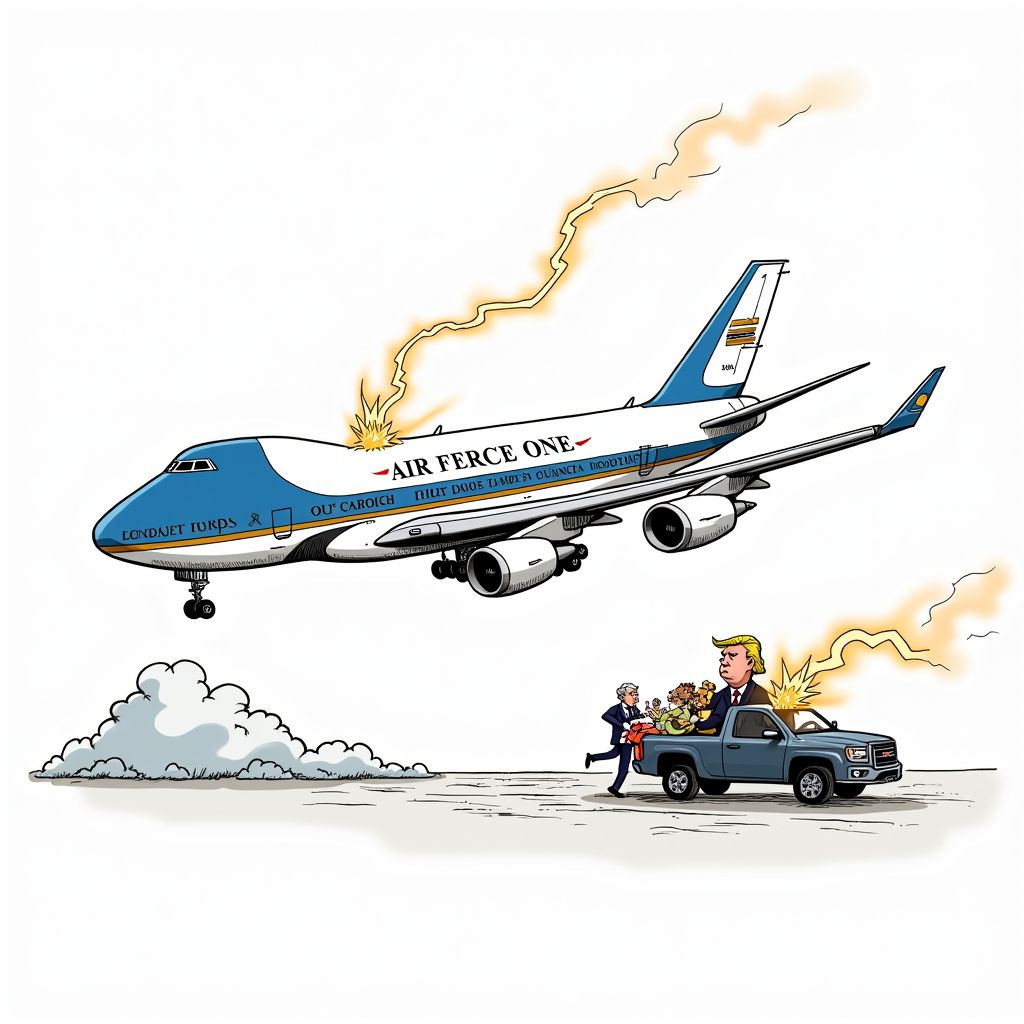
Washington D.C., Wednesday, 21 January 2026.
En route to critical trade talks in Davos, President Trump was forced to switch aircraft after the aging Air Force One suffered an in-flight electrical failure Tuesday evening.
Incident Details and Immediate Response
The unexpected diversion occurred on the evening of Tuesday, January 20, 2026, shortly after the President departed for Switzerland. White House Press Secretary Karoline Leavitt confirmed that the decision to return to Joint Base Andrews was made out of an “abundance of caution” after the crew identified a minor electrical issue mid-flight [1][2]. While officials did not immediately release a technical breakdown of the fault, a reporter onboard the aircraft noted that the lights in the press cabin briefly went out following the takeoff, which had occurred at 21:46 EST [3][6]. The aircraft was expected to land back at the base around 23:00 EST to allow the President to switch to a replacement plane [6].
The Mission to Davos
President Trump is traveling to the World Economic Forum in Davos to engage in high-level economic discussions. Despite the logistical setback, the President remained optimistic about the diplomatic mission, stating before the trip, “America will be well represented in Davos — by me” [6]. Upon returning to Joint Base Andrews, the President was scheduled to board a backup aircraft to continue the journey to Europe without further delay [1][5].
Operational Challenges for an Aging Fleet
This incident highlights the increasing operational challenges facing the current Air Force One fleet, which consists of two Boeing 747-200 aircraft that have been in service since 1990 and 1991 [6]. These jets, now flying for nearly four decades, are scheduled for replacement, but the procurement program has been plagued by setbacks [3]. Boeing is currently working on the new VC-25B aircraft to replace the aging models, but delivery is not expected until 2029 [6]. The program has also seen significant financial overruns, with costs rising to $5.3 billion from an original estimate of $3.9 billion—a substantial increase of 35.897 percent [6].
Future Alternatives and Interim Solutions
Amidst frustrations regarding the delays in delivering the new American-made fleet, the administration has explored other options. In May 2025, President Trump defended a decision to accept a luxury Boeing 747-8 gifted by the ruling family of Qatar, which is currently being retrofitted to meet strict U.S. security requirements [6]. The Qatari jet is noted for being more fuel-efficient and quieter than the current models [6]. Referencing the evening’s technical failure, Press Secretary Leavitt joked to reporters that the Qatari jet was sounding “much better” in light of the circumstances [3][5].
Sources
- www.usnews.com
- www.marketscreener.com
- www.yahoo.com
- vancouver.citynews.ca
- vernonmatters.ca
- www.dailymail.co.uk