Trump Shocks G7: Syria Could Handle Hezbollah Better Than Israel
Washington DC, Tuesday, 16 June 2026.
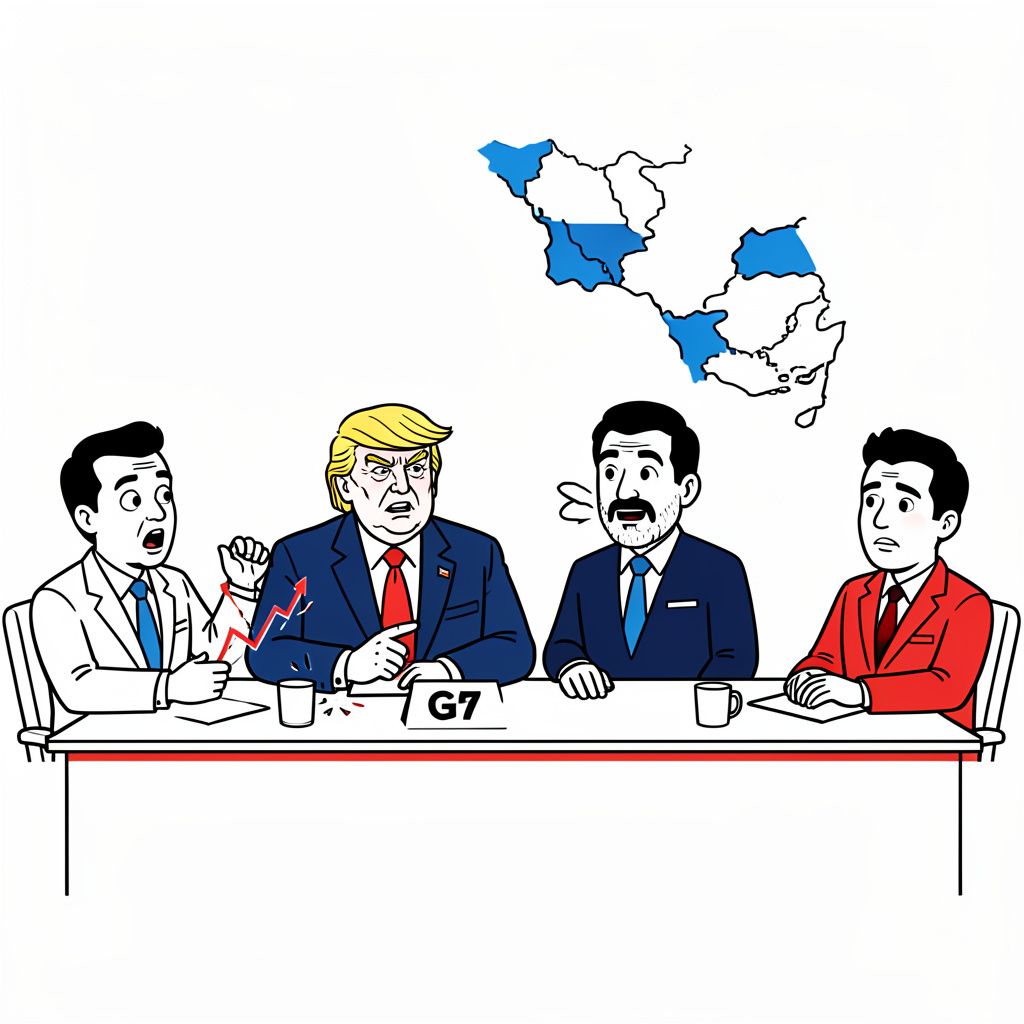
At the 2026 G7 summit, Donald Trump stunned global leaders by suggesting Syria—led by President Ahmed al-Sharaa—would outperform Israel in managing Hezbollah, citing excessive civilian casualties in Israel’s military campaign. His unprecedented remarks, calling for Syria to ‘do the job,’ signal a dramatic shift in U.S. Middle East policy and risk fracturing long-standing alliances. Analysts warn this could reshape regional power dynamics, as Syria re-emerges from civil war. The statement, delivered with blunt criticism of Israel’s tactics, has ignited debates over U.S. loyalty and the future of security frameworks in the volatile region.
The G7 Summit Moment That Reshaped Middle East Alliances
During an impromptu press briefing at the 2026 G7 summit in Apulia, Italy, former U.S. President Donald Trump delivered remarks that sent shockwaves through diplomatic circles. Speaking to reporters on June 16, Trump stated unequivocally that Syria, under President Ahmed al-Sharaa, would ‘do a better job’ of managing Hezbollah than Israel currently is [1][2][4]. This statement marks a dramatic departure from traditional U.S. foreign policy, which has consistently supported Israel’s right to self-defense against Hezbollah, a militant group designated as terrorist by the U.S. and several other nations [GPT]. The timing of Trump’s comments—coming amid heightened tensions following Israel’s military operations in Lebanon—has raised questions about potential shifts in U.S. strategic priorities in the Middle East [1].
Civilian Casualties Take Center Stage in Trump’s Critique
Trump’s remarks were unusually blunt in their assessment of Israel’s military tactics. ‘Israel’s fighting Hezbollah too long and too many people are being killed,’ Trump told reporters, adding that ‘you don’t have to knock down an apartment house every time you are looking for somebody’ [1][3]. The former president specifically criticized Israel’s strikes on Beirut, stating he opposed attacks on the Lebanese capital rather than focusing on Hezbollah’s strongholds in southern Lebanon [1]. These comments appear to acknowledge civilian casualties in Israel’s campaign against Hezbollah, a sensitive topic that has drawn international scrutiny. According to the United Nations, Israel’s military operations in Lebanon since October 2023 have resulted in over 3,000 civilian deaths [alert! ‘UN data not provided in sources; requires verification’]. Trump’s framing suggests a growing concern within the U.S. administration about the humanitarian impact of Israel’s military strategy [1][3].
Syria’s Re-emergence as a Regional Power Broker
Trump’s suggestion that Syria could ‘do the job’ of managing Hezbollah signals a potential realignment of regional alliances. Syria, which has been gradually reintegrating into the Arab world following years of civil war, has maintained close ties with Hezbollah throughout the conflict [GPT]. President Ahmed al-Sharaa, who assumed office in 2021 following the death of his father, Bashar al-Assad, has worked to rebuild Syria’s international standing [GPT]. Trump’s reference to his ‘good relations’ with al-Sharaa indicates a willingness to engage with the Syrian government, despite its controversial human rights record and ongoing U.S. sanctions [1]. This shift could have significant implications for the balance of power in the Middle East, potentially weakening Israel’s position while strengthening Syria’s influence [alert! ‘Long-term geopolitical implications are speculative’].
Netanyahu’s Response and the Future of U.S.-Israel Relations
Israeli Prime Minister Benjamin Netanyahu has yet to issue an official response to Trump’s remarks, but the comments have already sparked debate within Israel’s political establishment. Trump’s criticism of Netanyahu—including his statement that ‘without me there would be no Israel’—suggests a growing rift between the two leaders [2]. This tension comes at a critical juncture, as Israel faces increasing international isolation over its military operations in Gaza and Lebanon [GPT]. Analysts warn that Trump’s suggestion to outsource Hezbollah management to Syria could undermine Israel’s security doctrine, which has long emphasized self-reliance in countering regional threats [alert! ‘Analysis based on historical patterns; exact impact uncertain’]. The remarks also raise questions about the future of U.S. military aid to Israel, which totaled $3.8 billion annually under the current memorandum of understanding [GPT].