Maduro Proposes US Cooperation on Drug Trafficking Amid Reported Airstrikes in Caracas
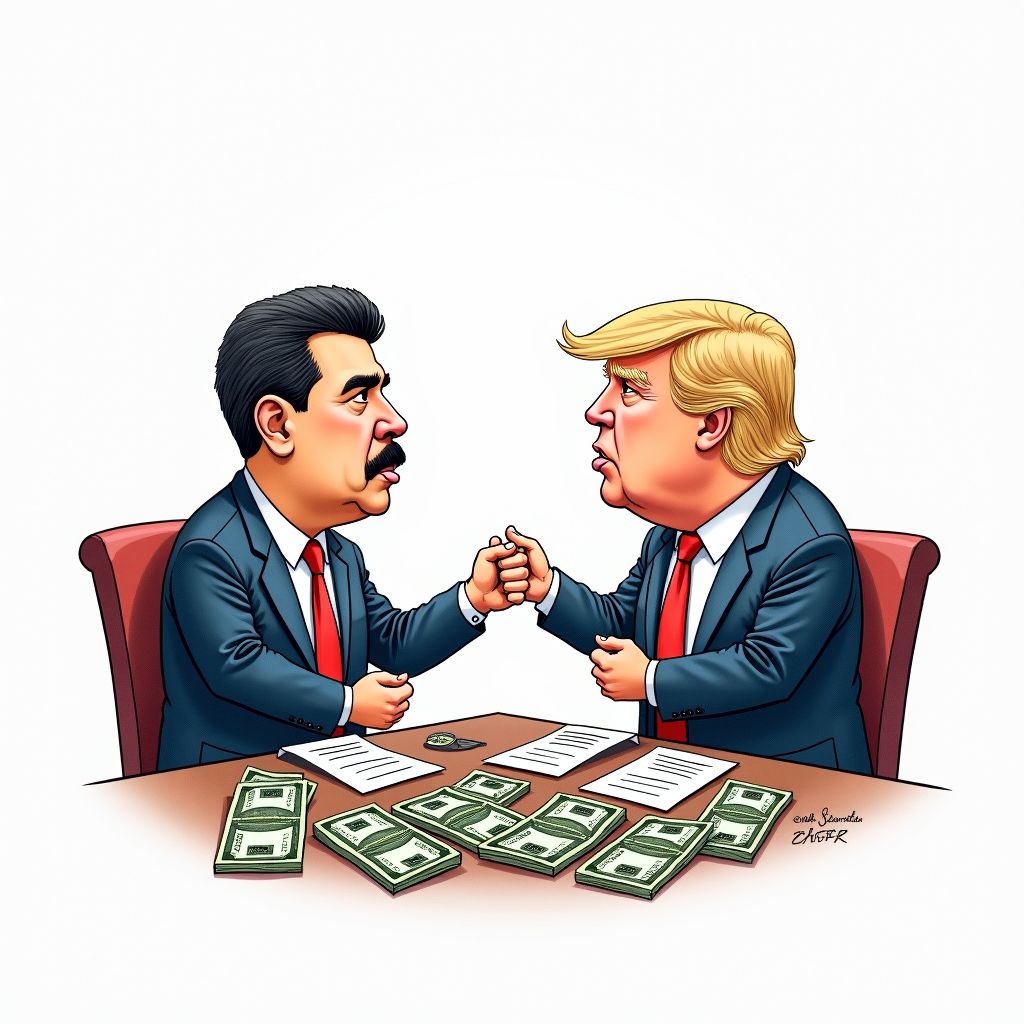
Caracas, Saturday, 3 January 2026.
In a stark geopolitical paradox, President Nicolás Maduro signaled readiness for “serious agreements” with Washington regarding drug enforcement just hours before explosions struck key military sites in Caracas on January 3, 2026. While the Venezuelan leader publicly offered an olive branch to the Trump administration, the capital was shaken by reported airstrikes, marking a volatile escalation that juxtaposes potential diplomatic dialogue with direct military pressure.
Diplomatic Overtures Amidst Rising Tensions
In a broadcast aired on Venezuelan state television on January 1, 2026, President Nicolás Maduro explicitly stated his administration’s willingness to coordinate with the United States in combating drug trafficking [2]. During the interview, Maduro emphasized that if Washington wishes to “speak seriously” about counter-narcotics agreements or oil investments, Venezuela is prepared to engage, citing the operations of Chevron as a model for potential future foreign investment [1][2]. This rhetorical pivot comes as the Venezuelan leader attempts to navigate severe economic headwinds; while the government claims a 9% economic expansion in 2025 [7], independent data indicates the bolivar currency depreciated by 83% over the same period, severely impacting the nation’s purchasing power [2].
A Night of Chaos in the Capital
The diplomatic signaling was abruptly overshadowed in the early hours of Saturday, January 3, 2026, when multiple explosions rocked Caracas. At approximately 01:50 local time, a CNN team in the capital witnessed heavy detonations that shook windows and observed columns of smoke rising into the night sky [6]. Reports indicate the strikes targeted critical military infrastructure, including the La Carlota airbase and Fuerte Tiuna, the country’s largest military barracks [3][8]. Eyewitnesses and social media reports corroborated the presence of low-flying aircraft and subsequent power outages in several districts, including areas near the Miraflores Palace [6][8].
Escalation of Force
While the situation remains fluid, reports citing U.S. officials suggest the United States conducted the bombing campaign, described as an aggression by local authorities [3]. This kinetic action follows repeated warnings from U.S. President Donald Trump, who had previously authorized the CIA to operate inside Venezuela and warned that ground actions against drug networks would begin “soon” [6]. The strikes represent a significant escalation from previous engagements, which were largely confined to maritime interdictions; as of late 2025, the U.S. administration had reported 35 boat strikes resulting in at least 115 casualties [1].
Regional Fallout and Future Outlook
The geopolitical ramifications were immediate, with Colombian President Gustavo Petro confirming that “Venezuela has been attacked” [3]. The Venezuelan government has declared a state of internal commotion, a move that complicates the political landscape just days before the scheduled launch of the new legislative body on January 6, 2026 [3]. As Caracas prepares to file complaints with the UN Security Council and other international bodies [3], the duality of Maduro’s call for investment alongside the reality of airstrikes highlights the precarious nature of current U.S.-Venezuela relations. The administration’s defense of its “territorial integrity” now faces its most direct challenge in years, even as it seeks to leverage its oil reserves—exports of which have been halved by sanctions—as a bargaining chip for survival [2].
Sources
- www.pbs.org
- www.reuters.com
- www.elmundo.es
- www.threads.com
- www.instagram.com
- kesq.com
- prensapresidencialvenezuela.gob.ve
- www.instagram.com