Rising Unpaid Caregiving Burden Threatens Workforce Productivity
Washington, Friday, 4 September 2026.
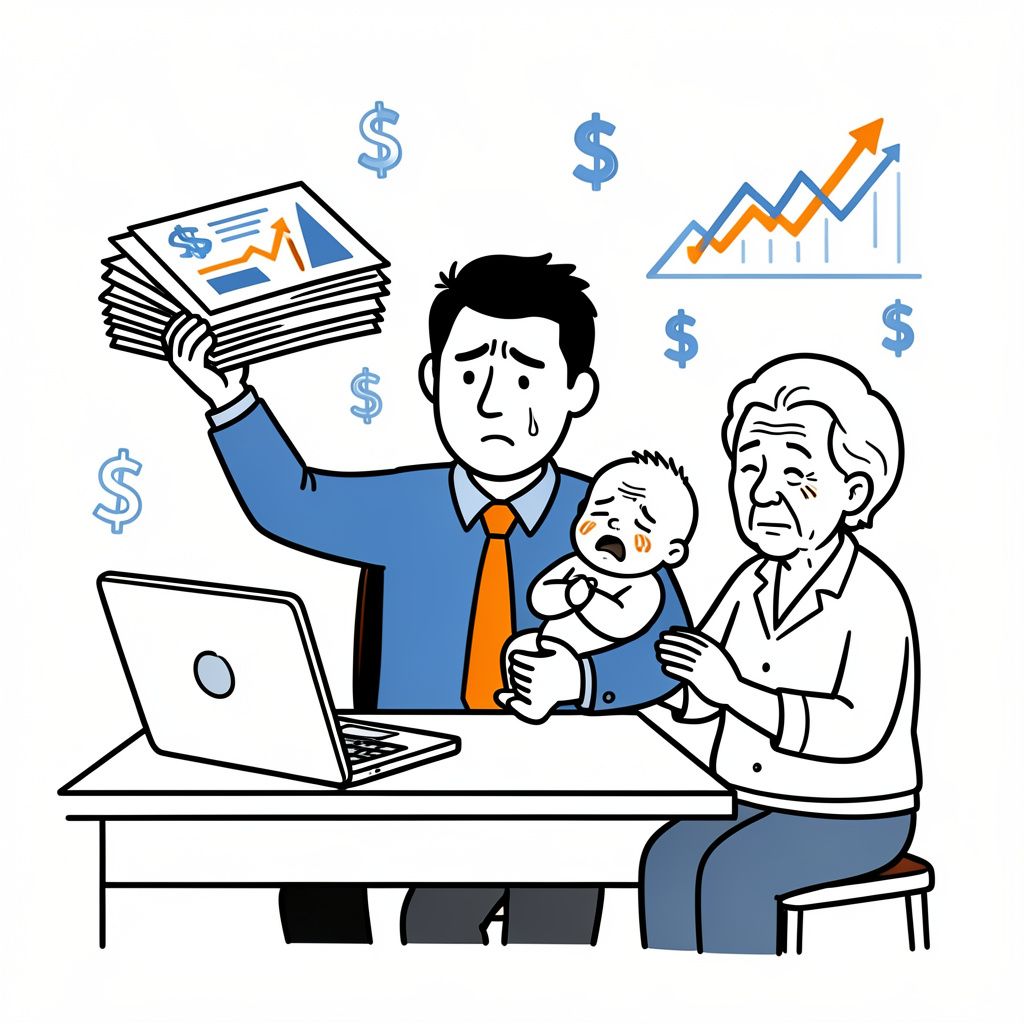
With 63 million Americans providing unpaid care, rising family obligations pose severe challenges to labor participation and corporate productivity, highlighting an urgent need for workplace structural support.
The Scale of Unpaid Caregiving
As of September 2026, an estimated 63 million Americans are operating as unpaid family caregivers, representing nearly one in four adults in the United States [1]. This demographic defines a family caregiver as a person providing unpaid support to a parent, spouse, child, or family member managing an illness, disability, or the realities of aging [6]. Data indicates this figure represents an increase of nearly 20 million caregivers compared to a decade ago, signaling a rapid acceleration in demand for unpaid care labor [1]. The percentage growth of caregivers over the last ten years can be expressed as 46.512, highlighting the steep upward trajectory of this societal shift [1].
Economic and Labor Implications
The growing burden of unpaid care presents a significant challenge for corporate strategy and macroeconomics, directly impacting workforce participation and employee productivity [1]. With 70% to 87% of individuals over 50 years old preferring to age in place over moving to a care facility, the reliance on family members to provide person-centered care at home is intensifying [5]. This preference places additional pressure on working adults who must balance full-time employment with managing elder and medical care, pressing business leaders to address caregiving infrastructure [1]. The lack of preparation for families navigating healthcare systems further exacerbates the economic strain on households and employers alike [1].
Leadership Perspectives on Care
On September 3, 2026, Lance A. Slatton, senior care leader and co-founder of Enriched Life Home Care Services, announced the release of his 766-page book, ‘Caregiving in America’ [1]. Slatton’s digital platform, All Home Care Matters, launched in 2020 and has produced over 500 episodes, garnering more than 112,000 YouTube subscribers and over 26 million video views [3]. His work emphasizes that caregivers deserve information before a crisis occurs and support while they are in the midst of caregiving responsibilities [1]. The text examines the economic impact and personal challenges of unpaid caregiving in the United States, aiming to better prepare families than previous generations were [1].
Personal Narratives and Advocacy
Highlighting the personal impact of this crisis, Mark Wilson, a former HR executive at Taco Bell, transitioned to full-time caregiving for his mother following her Alzheimer’s diagnosis [2]. Wilson stepped away from a 22+ year career to care for his mother full time at home, utilizing professional leadership skills to organize care teams [4]. His journey inspired the book ‘Breakthrough Alzheimer’s Care’, which serves as a playbook for caregivers containing practical tools and checklists [2]. On September 2, 2026, Wilson’s story was featured in an interview discussing the transition to ‘care leader’ status and the importance of preserving dignity and quality of life [4].
Infrastructure and Future Support
The current landscape underscores an urgent need for workplace structural support to accommodate the 63 million Americans providing unpaid care [1]. Advocacy efforts continue through support groups, fundraising, and patient rights efforts in Washington, D.C. and Sacramento to improve systems for families [4]. As demographic shifts accelerate, the intersection of labor productivity and caregiving responsibilities will remain a critical focal point for policymakers [1]. Effective solutions require recognizing caregivers as essential partners in the healthcare system rather than merely recognizing them after they are already exhausted [1].
Sources
- www.einpresswire.com
- www.linkedin.com
- lanceaslatton.com
- www.instagram.com
- www.instagram.com
- www.facebook.com