Minnesota National Guard Deploys Over 250 Troops as Middle East Conflict Escalates
Minneapolis, Sunday, 1 March 2026.
Amidst confirmed joint U.S.-Israel strikes and reports of Ayatollah Khamenei’s death, over 250 Minnesota National Guard members are actively supporting defense operations across the volatile Middle East region.
Expanding U.S. Presence Amidst Leadership Decapitation
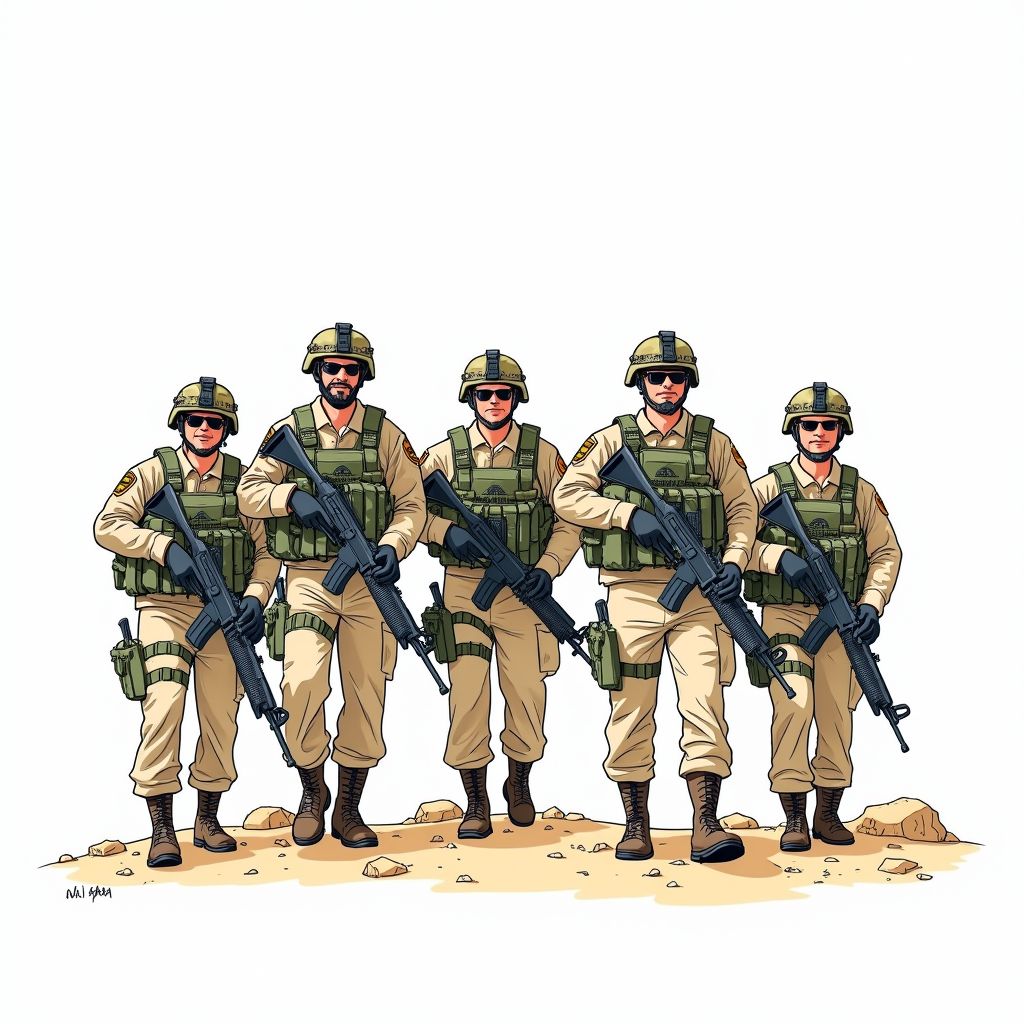
Following our earlier report on the casualties sustained during Operation Epic Fury, the scope of the American military commitment has become clearer with new confirmations from state-level defense officials. On Sunday, March 1, the Minnesota National Guard confirmed that over 250 of its service members are currently deployed to the Middle East [1]. This deployment comes as the geopolitical landscape shifts violently; Iranian state media reported the death of Supreme Leader Ayatollah Ali Khamenei early Sunday following joint operations by Israel and the United States [1]. This leadership decapitation, confirmed by President Donald Trump hours prior, marks a pivotal and volatile turning point in the conflict [1][2].
Strategic Asset Allocation
The composition of the deployed Minnesota units indicates a multi-faceted operational strategy involving air superiority, ground support, and logistics security. Army Maj. Andrea Tsuchiya, State Public Affairs Officer, identified the deployed units as Duluth’s 148th Fighter Wing, the Marshall-based 1-151 Artillery, and the Stillwater-based 34th Military Police Company [1]. While specific mission parameters remain classified, reports indicate that the Duluth-based citizen soldiers are tasked with protecting American airpower and defending regional allies [2]. Concurrently, the Marshall-based artillery unit is positioned to provide accurate fire support for ground units operating within the U.S. Central Command area [2].
Timeline of Escalation
The operational tempo intensified following large-scale strikes launched by the U.S. and Israel early Saturday, Feb. 28 [2]. In the wake of these strikes, President Trump publicly urged the Iranian populace to “seize control of your destiny,” a rhetorical escalation matching the kinetic military actions taken against the regime [2]. Tehran responded rapidly to the Saturday offensive with missile and drone attacks targeting Israel and U.S. military bases throughout the region [2]. Amidst this exchange, the Stillwater-based 34th Military Police Company, which deployed in January, continues to support customs operations as part of Operation Spartan Shield, highlighting the long-term logistical planning underpinning the current combat operations [2].
Regional Implications
The confirmation of these deployments underscores the breadth of the U.S. Central Command Area of Responsibility, which spans 21 countries across the Middle East, Central Asia, and Northeast Africa [2]. With over 250 Minnesota personnel now confirmed in-theater [1], the integration of National Guard units into active combat zones signals a significant strain on regular forces and a high level of operational readiness required to maintain pressure on Tehran. As attacks continue to be exchanged between the belligerents [1], the risk profile for energy transit and regional security architecture remains critical.