Over One Million Workers Strike Across Italy to Challenge the 2027 Budget
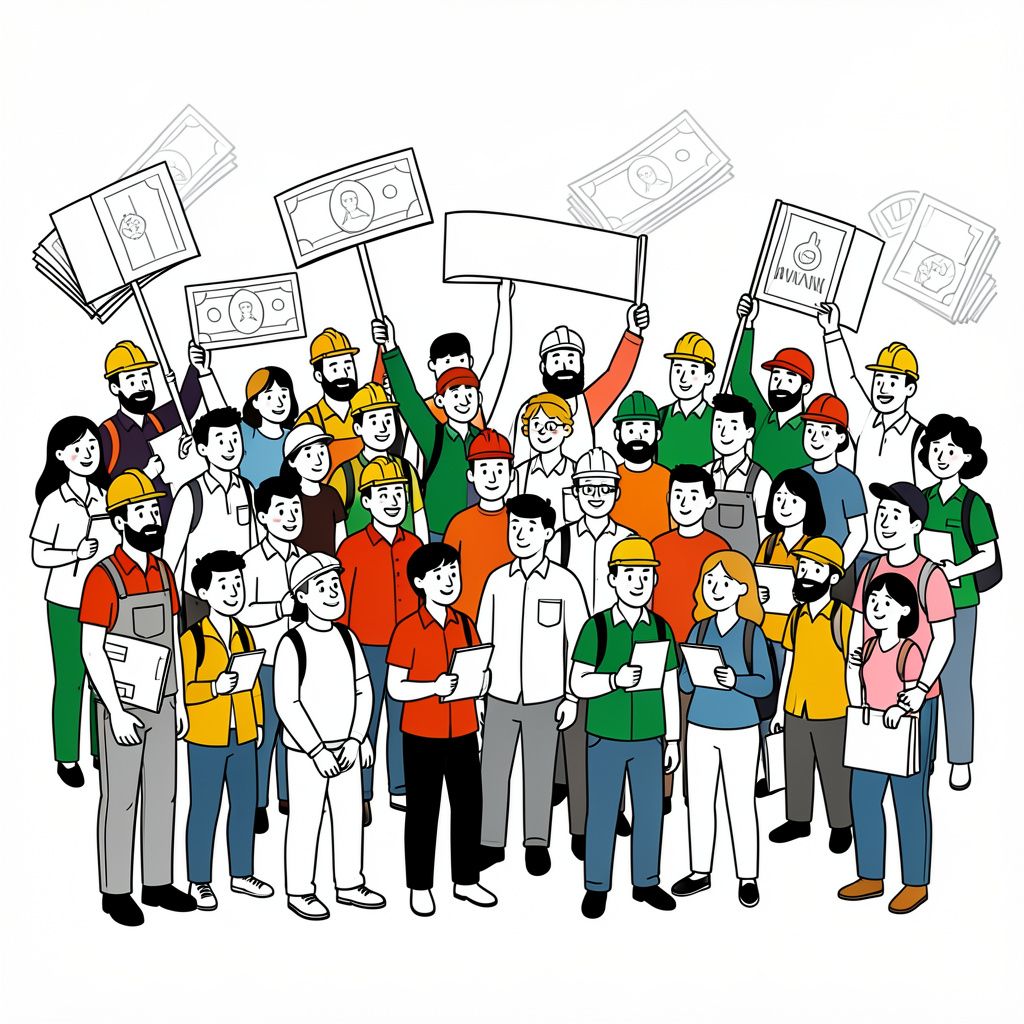
Rome, Friday, 20 November 2026.
Over one million Italian workers and students mobilized nationwide today, challenging government fiscal priorities by demanding urgent wage adjustments, enhanced welfare funding, and an immediate halt to rising defense expenditures.
A Nationwide Uprising: Scale and Scope of the General Strike
Over one million workers and students took to the streets across Italy on November 20, 2026, in a historic 24-hour general strike organized by the Italian General Confederation of Labour (CGIL). The demonstrations spanned more than 100 cities, from Rome and Milan to Palermo and Turin, marking one of the largest labor mobilizations in recent Italian history [1][2][5]. According to CGIL estimates, participation reached approximately 1.5 million people, with national strike turnout averaging 60% across public and private sectors [2]. The industrial action disrupted critical infrastructure, including local public transport, ports, and healthcare services, though air and rail transport were exempted by the Guarantee Commission [3][5]. In Milan alone, estimates placed turnout between 25,000 and 100,000 protesters, while Rome saw tens of thousands march from Piazza Vittorio to the Colosseum [2][5].
Economic Grievances: Wages, Inflation, and Fiscal Priorities
The strike crystallized mounting frustration over wage stagnation and inflationary pressures that have eroded purchasing power over the past four years. In Sicily, struggling families increased from 8.8% to 15%, while worker poverty in Palermo reached 30% amid inflation rates that climbed from 3.9% to 4.9% between August and September 2026 [2]. CGIL’s demands centered on restoring real wages through indexed contracts, halting the ‘fiscal drag’ effect on income taxes, and implementing a progressive tax system to address widening inequality [6]. The union highlighted that just 22,000 individuals in Italy possess a net wealth exceeding €10 million, underscoring the concentration of economic power [2]. CGIL General Secretary Maurizio Landini emphasized that the 2027 budget law fails to address these crises, stating, ‘There is nothing in this budget for citizens; even the government is undecided’ [2][8].
Welfare Under Siege: Healthcare, Education, and Public Services
Protesters condemned proposed cuts to healthcare and education budgets, which unions argue prioritize military spending over social needs. In Palermo, healthcare workers achieved a 60% strike participation rate, suspending activities at key sites like the railway ring construction and Cementerie di Isola [2]. CGIL’s demands included allocating €240 billion in corporate windfalls and €100 billion in unpaid taxes to fund healthcare, education, and generational renewal initiatives [2]. Student leaders echoed these concerns, calling for a 5% of GDP investment in school infrastructure, free public transport, and expanded scholarship programs [2]. The protests also targeted workplace safety, following the death of 23-year-old Mattia Battistetti in a construction accident, a tragedy his mother described not as a statistic but as ‘a person’ [2].
Political Tensions and Clashes: A Day of Confrontation
The demonstrations turned confrontational in several cities, with clashes reported in Rome, Turin, and Venice. In Rome, protesters threw objects at police outside the Ministry of Education and Merit, while in Turin, demonstrators marched against both the cost of living and rearmament policies [2][5]. Seven police officers were injured, including five from Rome’s Mobile Unit, and property damage was recorded in multiple locations [2]. Opposition leaders, including Elly Schlein (Democratic Party), Giuseppe Conte (Five Star Movement), and Nicola Fratoianni (Greens and Left Alliance), joined the Rome rally, amplifying calls to rewrite the budget law [2][7]. Meanwhile, Prime Minister Giorgia Meloni’s government defended its fiscal strategy, with Infrastructure Minister Matteo Salvini stating that 95% of high-speed and 85% of Intercity trains would operate during the strike [3].
Looking Ahead: Escalation or Negotiation?
The strike’s aftermath remains uncertain, but CGIL has signaled continued pressure through planned mobilizations. Key upcoming events include a national demonstration in Rome on December 12 against the cost of living and war, and a healthcare-focused protest on December 5 [1][2]. Union leaders have warned that if the 2027 budget remains unchanged by year’s end, they will escalate actions with a ‘democratic siege of Parliament’ [1]. The government’s exclusion of air and rail transport from the strike—despite Sgb and Cub Trasporti’s independent rail strike—raises questions about the sustainability of such compromises [3][5]. As Landini declared, ‘The future is now,’ but whether that future includes fiscal reform or further unrest hinges on the government’s response [4][8].
Sources
- www.einpresswire.com
- www.rainews.it
- www.ilsole24ore.com
- x.com
- www.ilpost.it
- www.cgil.milano.it
- www.rainews.it)