Trump Threatens to Oust Lauren Boebert in Growing Republican Party Rift
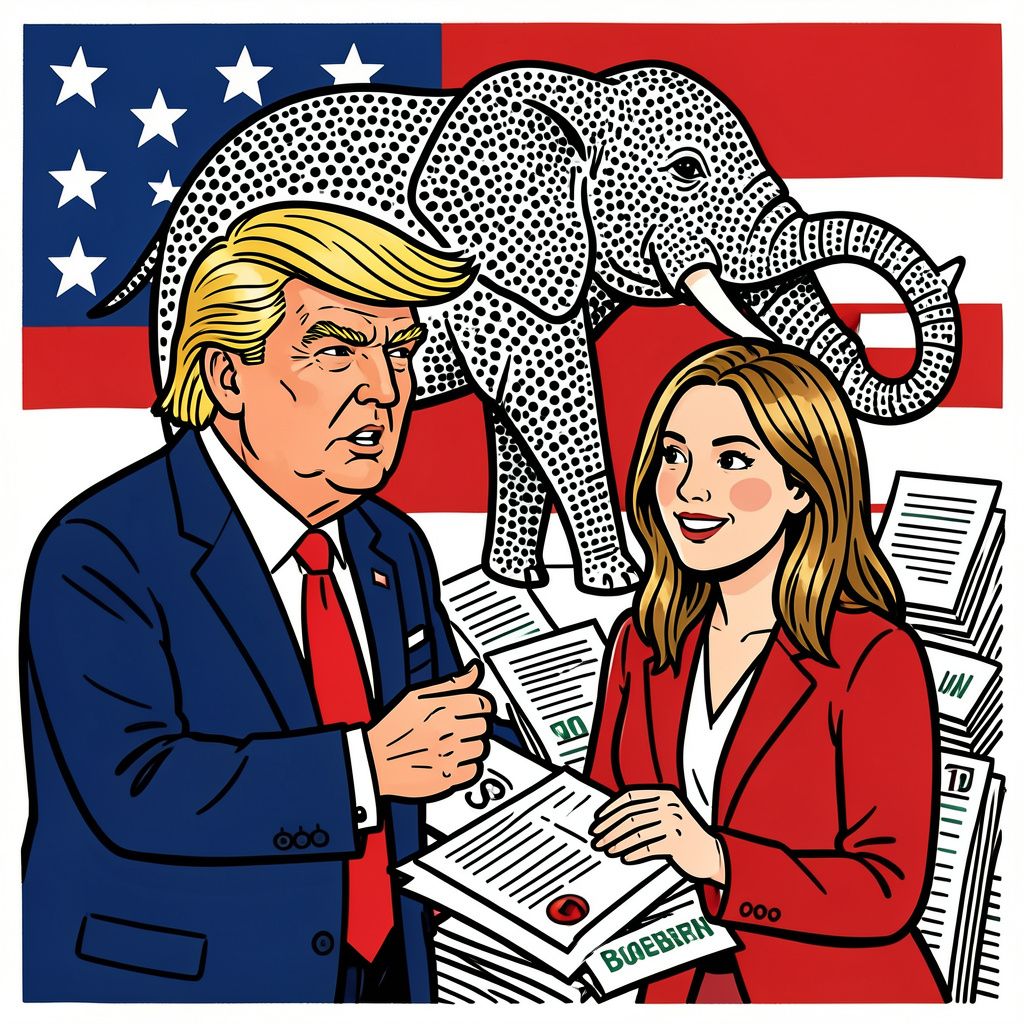
Washington D.C., Sunday, 17 May 2026.
Donald Trump labeled former ally Lauren Boebert ‘weak-minded’ and threatened a primary challenge after she endorsed a rival, exposing fractures that could destabilize Republican congressional unity.
A Fracture in the Populist Front
On May 16, 2026, former President Donald Trump launched a sharp public attack against Representative Lauren Boebert, a move that highlights growing ideological divisions within the Republican Party [1][3]. Writing on his Truth Social platform, Trump labeled the Colorado representative “weak-minded” and a “carpetbagger,” explicitly calling for a primary challenger to unseat her in Colorado’s 4th Congressional District [1][3]. The catalyst for this sudden withdrawal of support was Boebert’s decision to campaign alongside Representative Thomas Massie just days ahead of the May 19 Kentucky Republican primary [3]. Boebert had publicly endorsed Massie on May 13, sharing photographs of herself with both Massie and Trump while attempting to signal dual loyalty [1][3].
Loyalty Tests and Political Calculus
For financial markets and corporate strategists, the Republican Party’s internal cohesion is a critical indicator of future legislative stability [GPT]. Trump’s aggressive enforcement of party discipline suggests an expectation of absolute alignment from those he has previously helped elect [3]. Despite Massie voting in line with Trump’s positions 77.6 percent of the time in 2025, the former president’s demand for strict loyalty leaves little room for independent maneuvering [1][3]. Boebert, who successfully switched to Colorado’s 4th District in 2024 after a highly contested reelection bid in her previous seat, responded to the attack on May 16 by stating she was neither mad nor offended, acknowledging she “knew the risks” of standing by Massie [3].
Broader Market and Political Implications
As the 2026 midterm elections approach, persistent infighting could have tangible consequences for voter turnout and the GOP’s broader economic agenda [GPT]. Political commentators are increasingly noting signs of voter fatigue regarding intra-party conflicts. Sarah Isgur, an editor at SCOTUSblog, recently observed that the electorate appears to be tiring of “reality TV politics,” a sentiment that could undermine candidates relying heavily on dramatic political confrontations [2]. If the populist wing of the party remains consumed by loyalty tests rather than unified policy objectives, business leaders may need to recalibrate their expectations for corporate tax and regulatory legislation [alert! ‘Legislative outcomes depend heavily on midterm election results and internal party negotiations, which remain uncertain’].