Australian Rooftop Solar Hits Record Highs as Home Battery Sales Surge
Sydney, Tuesday, 13 October 2026.
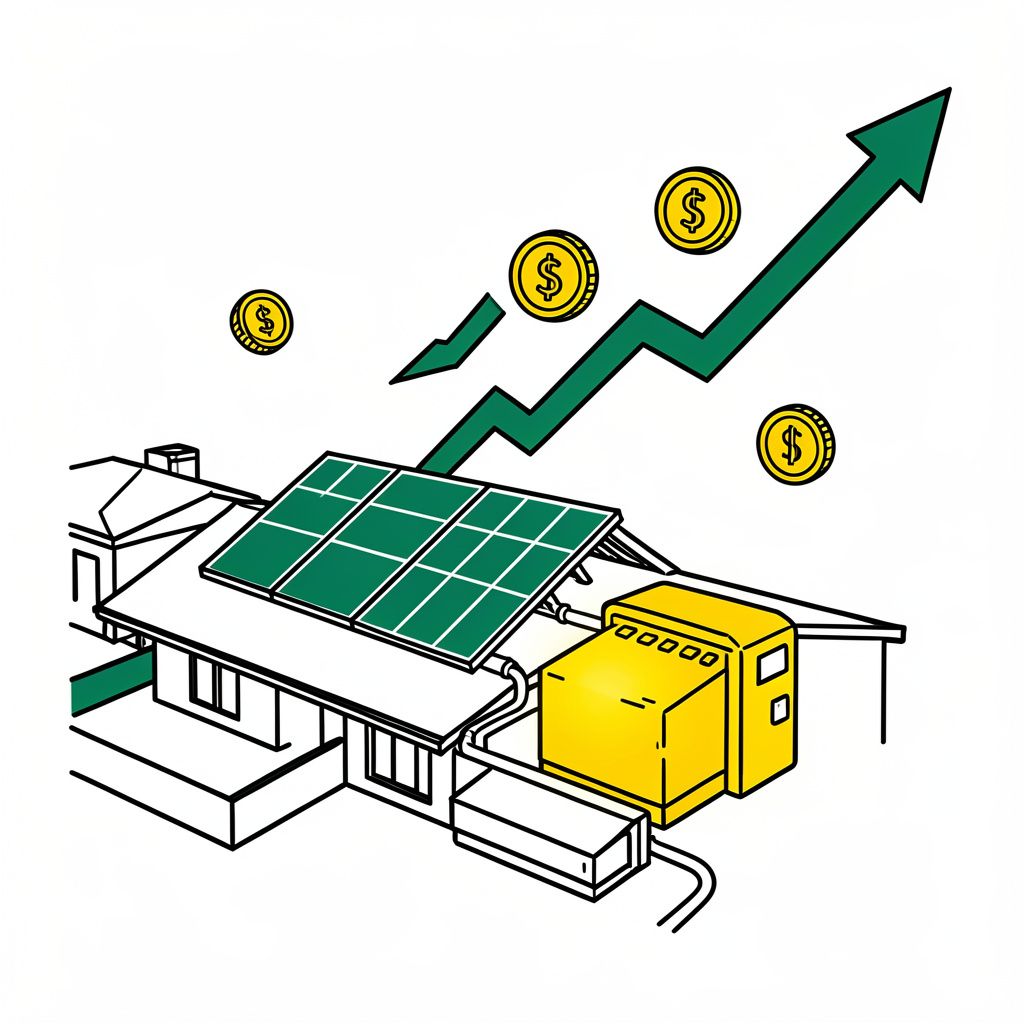
Driven by a 52% surge in home battery installations, Australia’s rooftop solar sector achieved record-breaking generation in mid-2026, fundamentally reshaping the national power grid’s financial landscape.
Historic Installation Surge in First Half of 2026
Australia’s rooftop solar sector has recorded its strongest six-month performance since 2021, driven by a significant increase in integrated battery storage systems [1]. In the first half of 2026, 180,878 solar systems were installed, representing a 35% increase compared to the same period in 2025 [1]. This expansion added 1,894MW of capacity, which is the highest six-month figure on record and a 41% increase over previous benchmarks [1]. Concurrently, the home battery market experienced a 52% surge, with 276,011 storage systems installed between January and June 2026 [1]. These battery installations contributed 8,691MWh of capacity, more than doubling the 4,221MWh added in the preceding six months [1]. The average battery system size also evolved, climbing from 17.2kWh in July 2025 to a peak of 35.3kWh in April 2026 before settling at 26.6kWh in June [1].
Grid Records and Generation Peaks
The impact of this distributed generation capacity became evident in October 2026, when rooftop solar output reached a new all-time high of 17,488MW in the National Electricity Market [4][5]. This record, set at noon on October 11, 2026, exceeded the previous high of 16,993MW set just weeks earlier on September 20, 2026 [4][5]. The increase represents a gain of 495 MW over the prior record [4][5]. During this peak interval, combined distributed PV and utility-scale solar reached 72.29% of National Electricity Market consumption [4]. Earlier in the season, on September 22, solar and wind met 80.4% of demand on the national electricity market for approximately 30 minutes [3]. During that specific window, rooftop panels alone carried more than half of the total load, demonstrating the growing capability of consumer energy resources to stabilize the grid [3].
Economic Drivers and Consumer Adoption
Consumer adoption is being fueled by high power prices, government subsidies, and the desire for energy security [2]. Approximately 36% of Australian households, totaling around 4 million homes and small businesses, now utilize rooftop solar systems [2]. In October 2026, the Australian government extended its solar certificate scheme to include larger systems on corporate premises to further reduce upfront costs [2]. Households with solar and batteries report electricity bill savings ranging from 20% to 52%, with virtual power plant participants saving between 57% and 63% [2]. The financial incentive is complemented by the physical suitability of the region, as low-density housing and abundant roof space make installations easier to deploy compared to many other nations [2].
Global Context and Future Targets
On the international stage, Australia became the first nation to endorse a global voluntary pledge during a meeting in Fiji in the week of October 12, 2026 [2]. The pledge aims to increase the number of homes with rooftop solar from 150 million to 300 million by 2030 [2]. Domestically, advocacy groups are collaborating to triple the amount of rooftop solar connected to storage by 2030 [2]. Despite these advancements, rooftop solar’s lower capacity factor means that 22GW of installed capacity produces about a quarter of the annual energy of 22GW of coal [1]. As the country targets 82% renewables by 2030, recent analysis suggests new capacity investment must increase considerably to bridge the gap between peak performance and consistent annual contributions [3].