Israel Launches Major Offensive on Beirut Following Hezbollah Rocket Barrage
Beirut, Monday, 2 March 2026.
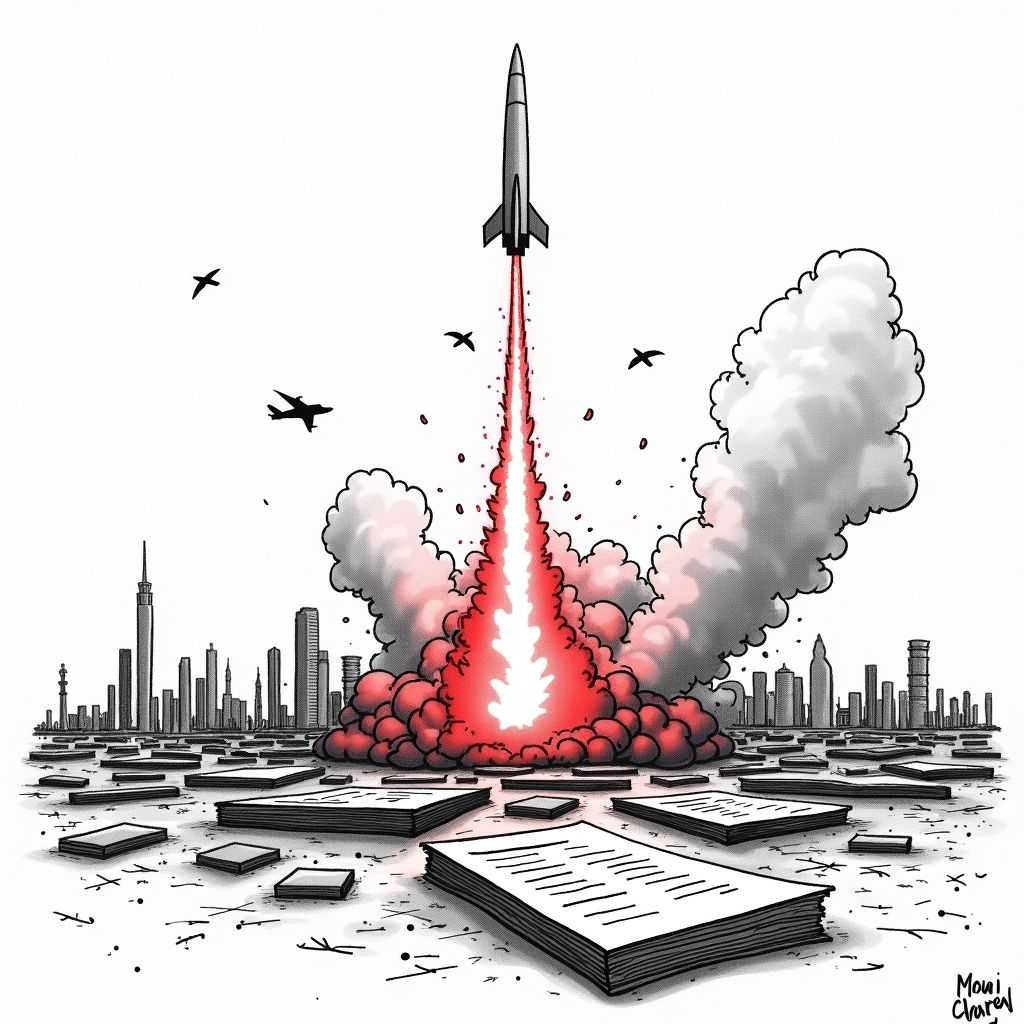
Tensions in the Middle East have reached a critical boiling point as of March 2, 2026. Israeli forces executed severe airstrikes on Beirut’s southern suburbs and southern Lebanon, resulting in at least 31 confirmed deaths and nearly 150 injuries. This military operation acts as a direct retaliation to Hezbollah’s recent drone and rocket barrage targeting northern Israel, which the group cited as revenge for the death of Ayatollah Khamenei. The escalation signals a dangerous shift; the IDF has declared a formal “offensive campaign,” issuing urgent evacuation orders for over 50 Lebanese villages. Analytically, the situation is further complicated by the Lebanese government’s condemnation of Hezbollah’s actions, exposing deep internal political fractures. For global investors, this widening conflict presents immediate risks to regional stability and energy security, as the prospect of a contained skirmish evolves into a broader multi-front war.
Operational Escalation and Casualties
This dramatic surge in hostilities follows the events of February 28, where Iran targeted U.S. bases across five Gulf nations in a coordinated missile barrage [7]. On Monday, March 2, 2026, the conflict widened significantly as the Lebanese Health Ministry confirmed that Israeli airstrikes on the southern suburbs of Beirut and southern Lebanon have killed at least 31 people and wounded 149 others [1][3]. The Israel Defense Forces (IDF) stated these strikes were a direct response to a heavy barrage of rockets and drones launched by Hezbollah earlier in the day targeting the Mishmar HaCarmel site, south of Haifa [3][4]. Hezbollah explicitly claimed this attack was executed in retaliation for the killing of Ayatollah Khamenei, signaling a deepening ideological commitment to the Iranian regime despite the severe repercussions for Lebanon [1][4].
Strategic Shift: Offensive Campaigns and High-Value Targets
In a decisive strategic pivot, the Israeli military has announced the commencement of an “offensive battle” against Hezbollah, moving beyond tit-for-tat exchanges to a broader campaign [3]. As part of this operation, the IDF issued urgent evacuation warnings to residents of 53 villages in southern Lebanon and the Bekaa Valley—including Srifa, Maaroub, and Mais al-Jabal—instructing them to immediately move at least one kilometer away from areas of tension [3][4]. Concurrently, Israeli Defense Minister Israel Katz escalated the rhetoric against Hezbollah’s leadership, declaring that Secretary-General Naim Qassem is now a “marked target” for elimination [5][6]. This statement was accompanied by reports that the IDF has already targeted senior Hezbollah commanders in Beirut and southern Lebanon, aiming to dismantle the group’s operational hierarchy [5][6].
A Nation Divided: Lebanon’s Political Fracture
The escalation has exposed severe fissures within the Lebanese political landscape. In a rare and sharp rebuke, Lebanese Prime Minister Nawaf Salam condemned the rocket launches from southern Lebanon as an “irresponsible and suspicious act,” emphasizing that such actions provide Israel with justification to continue its attacks [1][4]. The Lebanese Presidency and Government have formally rejected the use of their territory for these strikes, stating they will not allow the country to be dragged into a regional war [4]. Further illustrating this divide, Lebanese Minister of Justice Adel Nassar has ordered security forces to immediately arrest those responsible for launching rockets at Israel, while the Ministry of Education has closed all schools and technical institutions in response to the deteriorating security situation [4][6].
Regional Implications and Iranian Involvement
The conflict’s scope extends well beyond the Lebanese border, linking directly to the broader confrontation between Israel and Iran. IDF spokespersons revealed that in the preceding 48 hours, dozens of fighter jets dropped over one hundred munitions on regime headquarters in Tehran, claiming to have eliminated key leadership figures [6]. Israeli military officials, including Northern Command Major General Rafi Milo, have accused Hezbollah of prioritizing the Iranian regime’s interests over the safety of the Lebanese state [3][6]. With Saudi Arabia now imploring its neighbors to disengage from Iran and Israel opening its airspace as of March 2, the region faces a complex realignment that threatens to disrupt global energy markets and transit routes [5].
Sources
- www.ndtv.com
- www.timesofisrael.com
- www.aljazeera.net
- www.aljazeera.net
- www.maariv.co.il
- www.mako.co.il
- wsnext.com