University Ousted from Major AI Summit After Rebranding Chinese Robot as Homegrown Tech
New Delhi, Wednesday, 18 February 2026.
Authorities expelled a university from India’s flagship AI summit for displaying a commercially available $2,800 Chinese robot dog as its own indigenous innovation.
The ‘Orion’ Controversy Unfolds
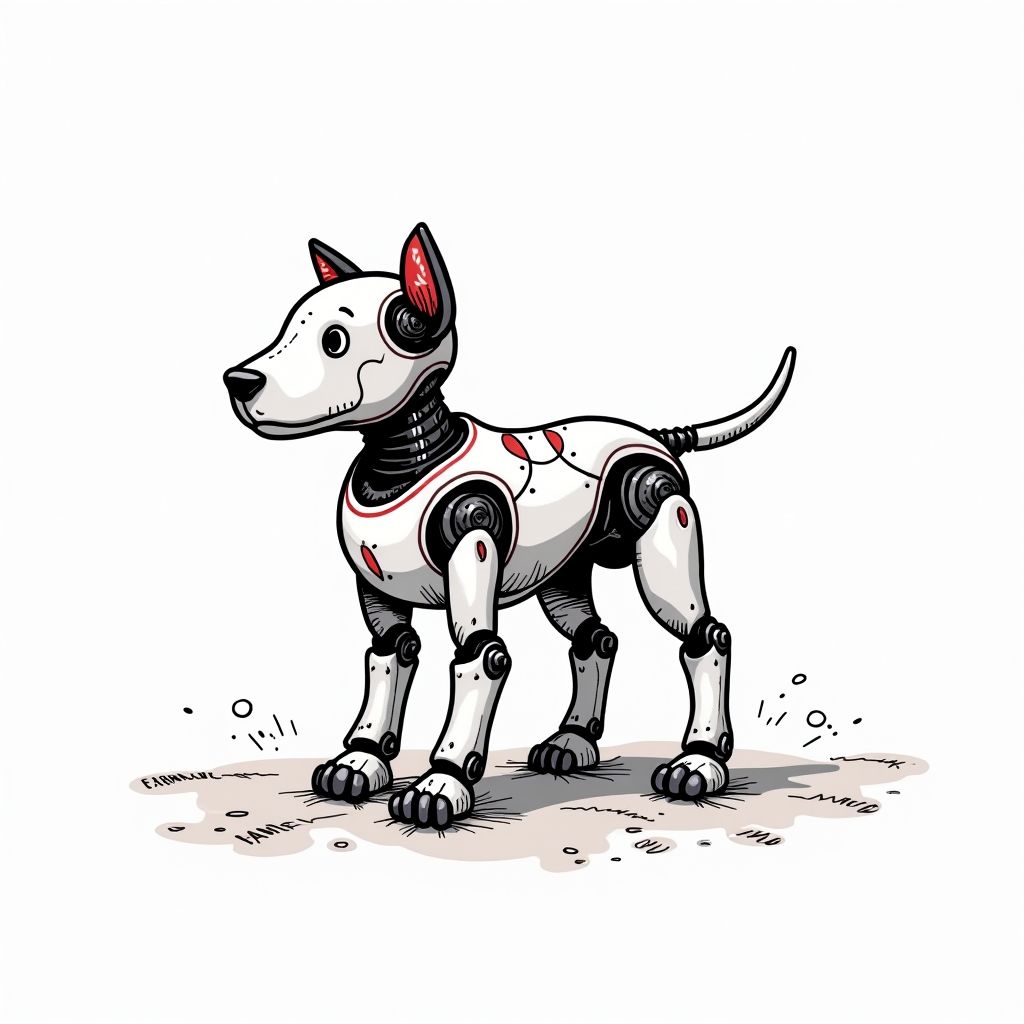
The expulsion occurred after government sources confirmed that a staff member at the university’s stall had explicitly presented a Chinese-made robotic dog as a proprietary creation [1]. The device, which the university dubbed “Orion,” was identified by experts and social media users as the Unitree Go2, a quadruped robot manufactured by China’s Unitree Robotics and commercially available for approximately $2,800 [1][2]. The controversy intensified when a video surfaced featuring Neha Singh, a professor of communications at the university, stating, “You need to meet Orion. This has been developed by the Centre of Excellence at Galgotias University” [1][2]. This claim was further amplified when the Press Trust of India released a video on February 17, 2026, showcasing the robot as a key attraction of the university’s AI showcase [5].
Government Response and Political Fallout
The incident drew immediate high-level attention when Union IT Minister Ashwini Vaishnaw shared a video of the robot on social media, only to delete the post following a public backlash regarding the device’s true origins [1][4]. On February 17, Minister Vaishnaw confirmed that immediate action had been taken against the “wrongdoing” to preserve the integrity of the exhibition [4]. While Galgotias University vacated its stall, representatives later claimed the incident was an “exaggeration and misinterpretation,” asserting they had never claimed to manufacture the robot but rather acquired it as a learning tool [2][4]. This defense, however, contradicted the earlier video evidence [5]. The episode sparked sharp criticism from the Indian National Congress, the country’s largest opposition party, which described the event as “brazenly shameless” and accused the government of making India a “laughing stock” globally by displaying Chinese technology as indigenous achievements [2][4].
Summit Ambitions Versus Reality
This intellectual property dispute has cast a shadow over the India AI Impact Summit, which opened on February 16, 2026, at the Bharat Mandapam in New Delhi [1]. The event, scheduled to run until Saturday, February 21, 2026, is a critical component of India’s strategy to position itself as a global tech hub [2]. Despite the controversy and reports of logistical difficulties including overcrowding, the summit has successfully garnered significant financial interest, with pledges for AI projects in India exceeding $100 billion from major entities such as the Adani Group, Microsoft, and Yotta [1][4]. High-profile industry leaders, including Prime Minister Narendra Modi, Sundar Pichai, Sam Altman, and Dario Amodei, are scheduled to address the summit on Thursday, February 20, 2026 [2].
Systemic Issues in Tech Promotion
The “Orion” incident was not the only appearance of the Unitree Go2 hardware at the event; tech major Wipro also showcased the same robot, rebranded as “TJ,” though the company clarified it did not claim to be the manufacturer [5][6]. Industry experts have cited these events as indicative of a broader issue where institutions prioritize “PR optics” over foundational research and development [6]. Reports note that the robot is available online for around Rs 2.5 lakh, and experts argue that presenting off-the-shelf hardware as innovation undermines the credibility of India’s AI ambitions [6]. As the government enforces strict measures to maintain the summit’s integrity, the focus remains on whether India can transition from adopting foreign technology to generating authentic domestic innovation [1][6].
Sources
- www.reuters.com
- www.aljazeera.com
- www.youtube.com
- www.moneylife.in
- www.newslaundry.com
- www.thestatesman.com