Jay-Z Shatters Yankee Stadium Ticket Record During Historic New York Concert Run
New York, Monday, 13 July 2026.
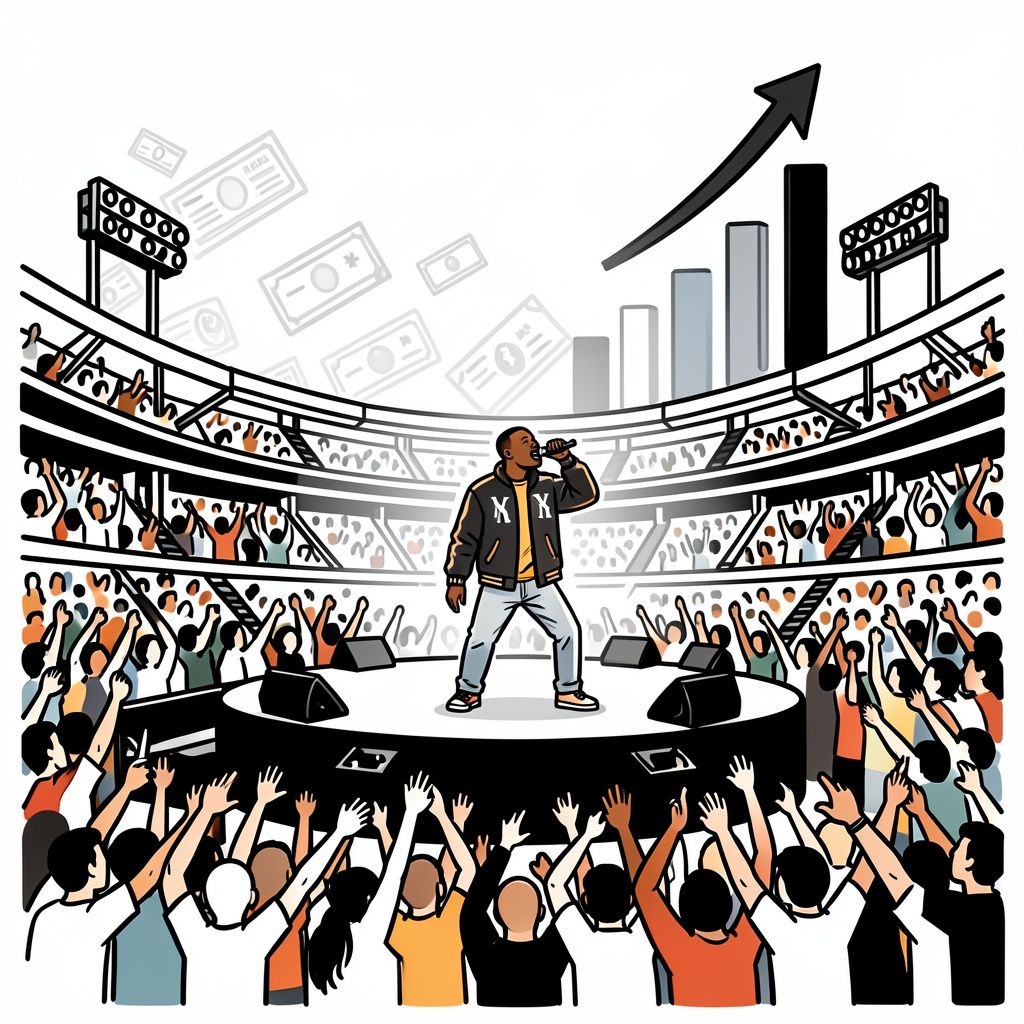
Jay-Z’s historic residency broke Yankee Stadium’s concert attendance record with 45,832 tickets sold on July 11, 2026, highlighting the massive economic power of premium live entertainment.
A Record-Breaking Weekend in the Bronx
The three-night stadium residency, which concluded yesterday on Sunday, July 12, 2026, represents a monumental moment in both cultural history and the live entertainment industry [1][2][3]. On Saturday, July 11, 2026, the performance drew a record-shattering crowd of 45,832 ticket holders to Yankee Stadium, eclipsing the previous venue record set just 24 hours earlier during the opening night on Friday, July 10 [1][3]. This back-to-back surge in ticket sales highlights the immense consumer demand for premium music events, which continue to show remarkable resilience despite broader inflationary pressures in the global economy [GPT].
Celebrating a Quarter-Century of The Blueprint
The historic Saturday performance served as a grand celebration of the 25th anniversary of Jay-Z’s seminal album, The Blueprint, which was originally released in 2001 [1][2][GPT]. Calculating the time elapsed since the album’s initial release to this landmark celebration in 2026 yields exactly 25 years [1][2][GPT]. To mark this milestone, the Brooklyn-born artist was joined on stage by a stellar lineup of guest performers, including Slick Rick, Eminem, and Pharrell Williams, who performed iconic collaborations and solo hits to a highly engaged crowd [1][2].
The Economic Ripple Effects on New York City Infrastructure
Beyond the cultural spectacle, the massive influx of nearly 46,000 concertgoers on a single evening provides a substantial economic windfall for New York City’s urban infrastructure [1][GPT]. According to regional economic frameworks, mega-events of this scale generate immediate positive externalities for public transit networks, such as the Metropolitan Transportation Authority (MTA), which experiences heightened ridership on subway lines serving the Bronx [GPT]. Furthermore, regional hospitality sectors, including hotels, bars, and restaurants, experience localized surges in demand, demonstrating how live entertainment acts as a vital catalyst for short-term economic stimulation [GPT].
The Experience Economy and Municipal Windfalls
While official municipal reports regarding the exact fiscal impact of this July 2026 concert run are still forthcoming from city agencies, historical data on stadium-scale events suggests that multi-day residencies can generate millions of dollars in local economic activity [GPT]. The ‘experience economy’—where consumers prioritize spending on unique, real-time events over physical goods—remains a primary driver of service-sector growth in major metropolitan areas [GPT]. This trend is particularly vital for local merchants in the Bronx who rely heavily on stadium foot traffic to bolster their summer revenues [GPT].
Corporate Partnerships and Live Event Viability
The success of the Yankee Stadium residency also underscores the lucrative nature of corporate partnerships and brand alignments in the modern music industry [GPT]. Organized in conjunction with entertainment agency Roc Nation, the event showcased how major brands leverage live music to capture consumer attention and drive engagement [2][3][GPT]. For corporate partners, the ability to align with an artist capable of breaking consecutive attendance records offers unparalleled brand visibility and consumer goodwill, reinforcing the financial viability of stadium-scale tours [GPT].
A Blueprint for Future Urban Entertainment Growth
In conclusion, Jay-Z’s record-breaking residency at Yankee Stadium from July 10 to July 12, 2026, serves as a powerful case study in the intersection of cultural influence and macroeconomic vitality [1][2][3]. By drawing 45,832 fans on a single night, the event not only solidified the artist’s enduring legacy but also provided a tangible boost to New York City’s service and hospitality sectors [1][GPT]. As the live entertainment sector continues to evolve, these premium, stadium-scale events will remain essential pillars of urban economic growth and consumer market resilience [GPT].