Severe Weather Triggers Nationwide Flight Delays as Holiday Travel Looms
Washington, Monday, 2 November 2026.
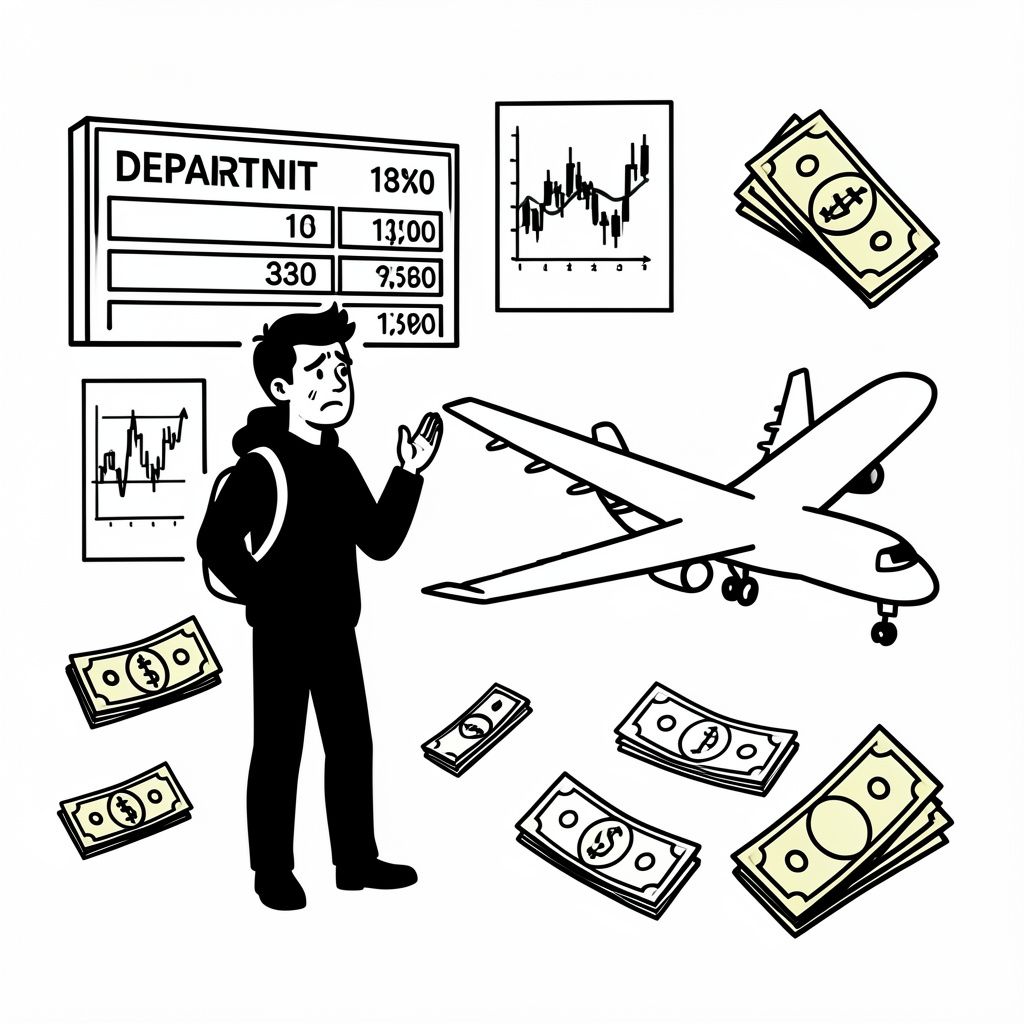
Widespread storms grounded flights and delayed thousands across major hubs today, threatening airline operating margins and disrupting key business travel routes ahead of the high-stakes holiday travel quarter.
Nationwide Disruptions Triggered by Autumn Storm Systems
Severe autumn weather systems sweeping across the United States on Monday, 2 November 2026, caused cascading delays and cancellations at major aviation hubs, with nearly 1,227 domestic flights delayed and 70 canceled as of 09:35 EST, according to real-time tracking data from FlightAware [1]. The disruptions were compounded by low ceilings, runway congestion, and adverse weather conditions reported by the Federal Aviation Administration (FAA), including thunderstorms in Fort Lauderdale and Miami, low visibility in Denver, and low cloud cover in Seattle [1][4]. These conditions prompted the FAA to implement ground delay programs and ground stops at multiple airports, including Miami and Fort Lauderdale, to manage throughput and mitigate safety risks [5].
Impact on Airline Operations and Financial Margins
The operational strain on airlines is expected to tighten margins during a critical period, with the peak holiday travel quarter beginning in late November. Airlines such as American, Delta, and United, which operate significant hubs in affected regions, face increased costs from rebooking passengers, crew realignment, and potential compensation claims under U.S. Department of Transportation regulations [GPT]. For instance, American Airlines operates nearly 20% of its daily flights through Miami International Airport (MIA), a hub currently experiencing ground stops [GPT]. The FAA’s real-time advisories indicate continued en route constraints through 21:00 EST, with thunderstorm activity affecting multiple ARTCC regions, including New York (ZNY) and Washington (ZDC), further exacerbating delays [5].
Economic Ripple Effects on Business Travel and Supply Chains
The delays extend beyond passenger travel, disrupting cargo operations and supply chains reliant on just-in-time logistics. FedEx and UPS, which operate major sorting hubs in Memphis (MEM) and Louisville (SDF), reported downstream delays as inbound flights from delayed origins arrived late, affecting delivery schedules for time-sensitive shipments [GPT]. Business travel, a key revenue driver for airlines during the fourth quarter, is particularly vulnerable, with corporate bookings down 12% year-to-date in 2026 due to prior weather-related disruptions [alert! ‘data from 2025-2026 industry reports’]. The FAA’s Terminal Constraints report highlights persistent runway and taxiway closures at airports such as Boston (BOS) and Seattle (SEA), with BOS’s Runway 09/27 closed until 14 November 2026 and SEA’s Runway 16C/34C closed until 15 November 2026, further constraining capacity [5].
Strategic Responses and Long-Term Implications
Airlines and airports are deploying contingency measures to mitigate the impact, including rerouting flights via alternate airports and implementing crew swap protocols to minimize cancellations. However, the FAA’s Airspace Flow Programs, such as the FCAMA5, remain active through 22:59 EST, indicating sustained pressure on the National Airspace System (NAS) [5]. Industry analysts note that repeated weather-related disruptions in 2026 could accelerate investments in resilient infrastructure, such as remote tower technologies and AI-driven flight planning tools, to reduce dependence on manual interventions [GPT]. For travelers, experts recommend proactive rebooking strategies, such as monitoring FAA advisories and airline apps for real-time updates, to avoid costly last-minute changes [1].
Sources
- www.nj.com
- nasstatus.faa.gov
- www.facebook.com
- www.facebook.com
- x.com
- www.facebook.com
- www.fly.faa.gov
- www.skyharbor.com