Global Demand Cushions Indian Factory Expansion as Warehouses Fill at Record Pace
New Delhi, Monday, 2 November 2026.
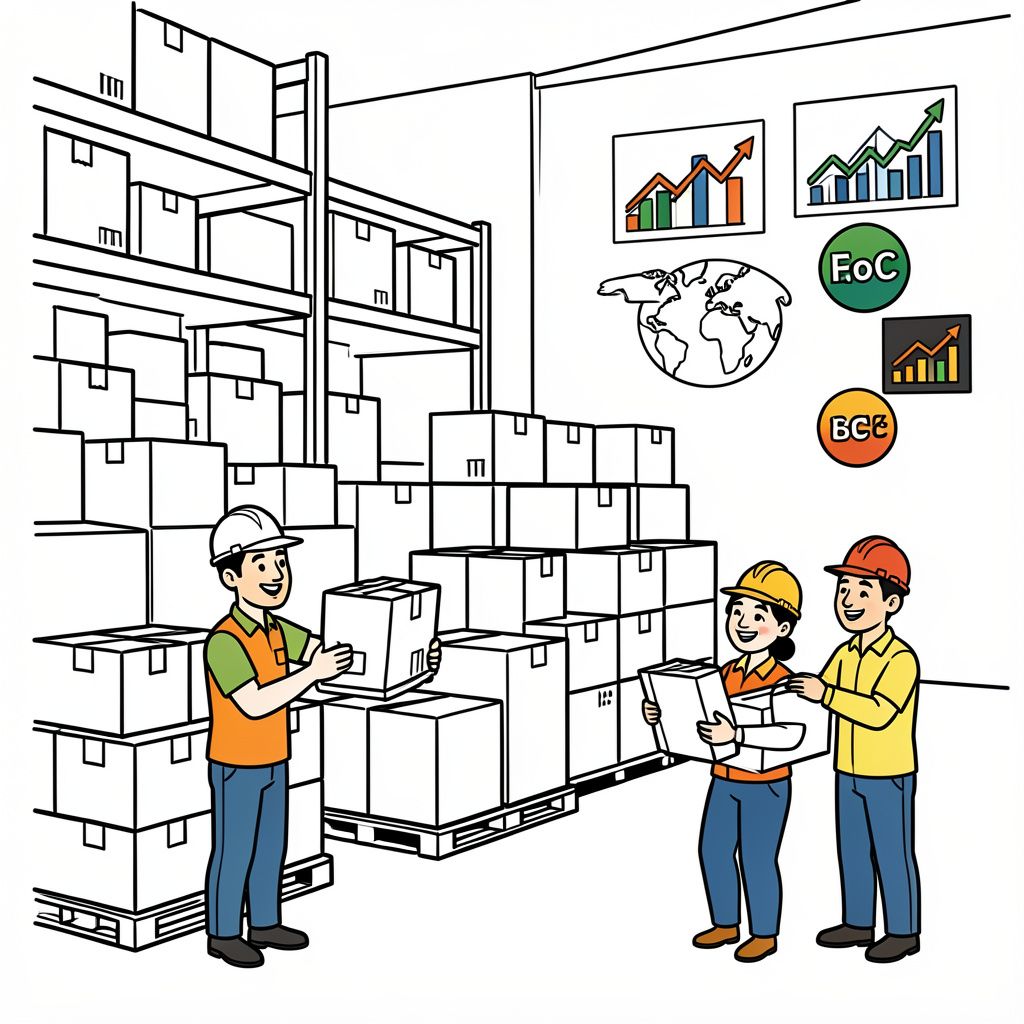
Despite slowing domestic growth, Indian factory stockpiles reached a historic 21-year peak in October as foreign orders surged at their quickest pace in six months.
India’s Manufacturing Momentum: Domestic Slowdown Meets Export Surge
India’s manufacturing sector exhibited signs of cautious expansion in October, with the HSBC India Manufacturing Purchasing Managers’ Index (PMI) easing to 54.7 from 55.1 in September, representing a marginal but notable deceleration in growth momentum [1][4][8]. The index, compiled by S&P Global, remained firmly above the 50.0 threshold that demarcates expansion from contraction, underscoring continued resilience in the sector despite softer domestic demand. New orders, a critical barometer of industrial health, moderated from September’s seven-month high, reflecting a tempered domestic appetite for manufactured goods [1][4]. However, the PMI data revealed an unexpected counterbalance: export orders accelerated to their fastest pace in six months, signaling robust international demand for Indian products [1][4][8][9]. This divergence between domestic tepidness and foreign dynamism paints a nuanced picture of India’s manufacturing landscape, where global trade dynamics are increasingly offsetting local cyclical headwinds.
Supply Chain Strategies: Record Warehouse Fills and Input Stockpiling
A striking feature of October’s manufacturing report was the unprecedented buildup of finished goods inventories, which surged to levels not seen in the survey’s 21-year history [1][4]. Manufacturers attributed this stockpiling to a combination of buoyant demand and proactive measures to preempt potential shortages, a strategy that has gained prominence amid ongoing global supply chain volatilities. Concurrently, input inventories expanded at the fastest pace in eight months, as firms sought to bolster precautionary buffers against input cost fluctuations and geopolitical disruptions [1][4][8][9]. The aggressive accumulation of raw materials diverged sharply from the broader trend in purchasing activity: growth in raw material procurement slowed to its weakest point in 64 months, suggesting a cautious recalibration rather than outright expansion [1]. This dichotomy—record warehouse fills alongside muted input purchasing—highlights a strategic hedging posture, with producers prioritizing inventory accumulation over immediate production scaling.
Employment and Business Confidence: Subdued Hiring Amid Mixed Signals
Labor market dynamics in India’s manufacturing sector offered a mixed outlook in October. Factory employment grew for the second consecutive month, though the pace of hiring decelerated from September’s levels, reflecting cautious optimism among manufacturers [1][4][8]. Notably, capital goods producers were cited as a segment where staff reductions contributed to the moderated employment growth, indicating sector-specific vulnerabilities amid the broader expansion [1]. Business confidence, while broadly stable, dipped marginally and remained below its long-run average, signaling lingering caution among industry stakeholders about future demand trajectories [1][4]. The subdued sentiment contrasts with the robust export performance, suggesting that while international markets provide a stabilizing force, domestic demand uncertainty continues to weigh on strategic planning.
Inflation Pressures Ease: Costs and Selling Prices Softening
Price dynamics in India’s manufacturing sector showed signs of stabilization in October. Input cost inflation retreated to its lowest level since February, while selling price increases eased to their weakest pace in nearly four years [1][4][8][9]. This disinflationary trend, noted by HSBC’s Chief India Economist Pranjul Bhandari, reflects a confluence of factors including softened global commodity prices and moderated pricing power among manufacturers [1]. The softening of output price pressures is particularly noteworthy, as it suggests that producers are absorbing cost increases rather than passing them on to consumers—a dynamic that could support broader price stability in the economy [1][4]. However, the persistence of input cost inflation, albeit at reduced levels, underscores ongoing vulnerabilities tied to global energy and raw material markets.
Export Markets Driving Growth: Geographic and Sectoral Insights
The surge in export orders, which hit a six-month high in October, was geographically diversified, with manufacturers reporting heightened demand from countries including Bangladesh, Canada, Indonesia, Nepal, Oman, Saudi Arabia, Sri Lanka, the United Kingdom, the United States, and the United Arab Emirates [8][9][10]. This breadth of international demand underscores India’s growing integration into global supply chains, particularly in sectors where cost competitiveness and manufacturing scale are critical. The report attributed the export growth to favorable demand trends, new client acquisitions, and successful marketing campaigns, highlighting the proactive strategies employed by Indian firms to capture overseas markets [10]. For global supply chain executives, these trends signal India’s strengthening role as a manufacturing hub, capable of balancing domestic market fluctuations with robust international engagement. The export-driven momentum also provides a cushion against the broader domestic slowdown, reinforcing the sector’s resilience in a volatile global economic environment.
Strategic Implications: Balancing Inventory, Employment, and Confidence
The October PMI data presents a complex narrative for India’s manufacturing sector, one where global demand offsets domestic softness but introduces new strategic challenges. The record warehouse fills and elevated input inventories suggest a sector prioritizing supply chain resilience over immediate production scaling, a prudent approach in an era marked by geopolitical tensions and supply chain fragilities [1][4]. However, the deceleration in raw material purchasing and subdued hiring trends indicate that this strategy is not without its trade-offs, particularly in terms of capital allocation and labor market dynamics [1]. The dip in business confidence, while modest, serves as a reminder that the sector’s resilience is contingent on sustained global demand and stable domestic conditions. For policymakers and corporate strategists alike, the data underscores the need for targeted interventions to bolster domestic consumption while leveraging India’s export potential to drive inclusive growth. As the final PMI data for October is released on November 2, stakeholders will be closely monitoring whether this balance can be maintained amid evolving economic conditions.
Sources
- m.economictimes.com
- www.investing.com
- www.secure.facebook.com
- tradingeconomics.com
- www.business-standard.com
- www.facebook.com
- www.socialnews.xyz
- www.tribuneindia.com