Why Soaring Chocolate Costs Are Chilling This Year's Halloween Candy Sales
Washington, Sunday, 25 October 2026.
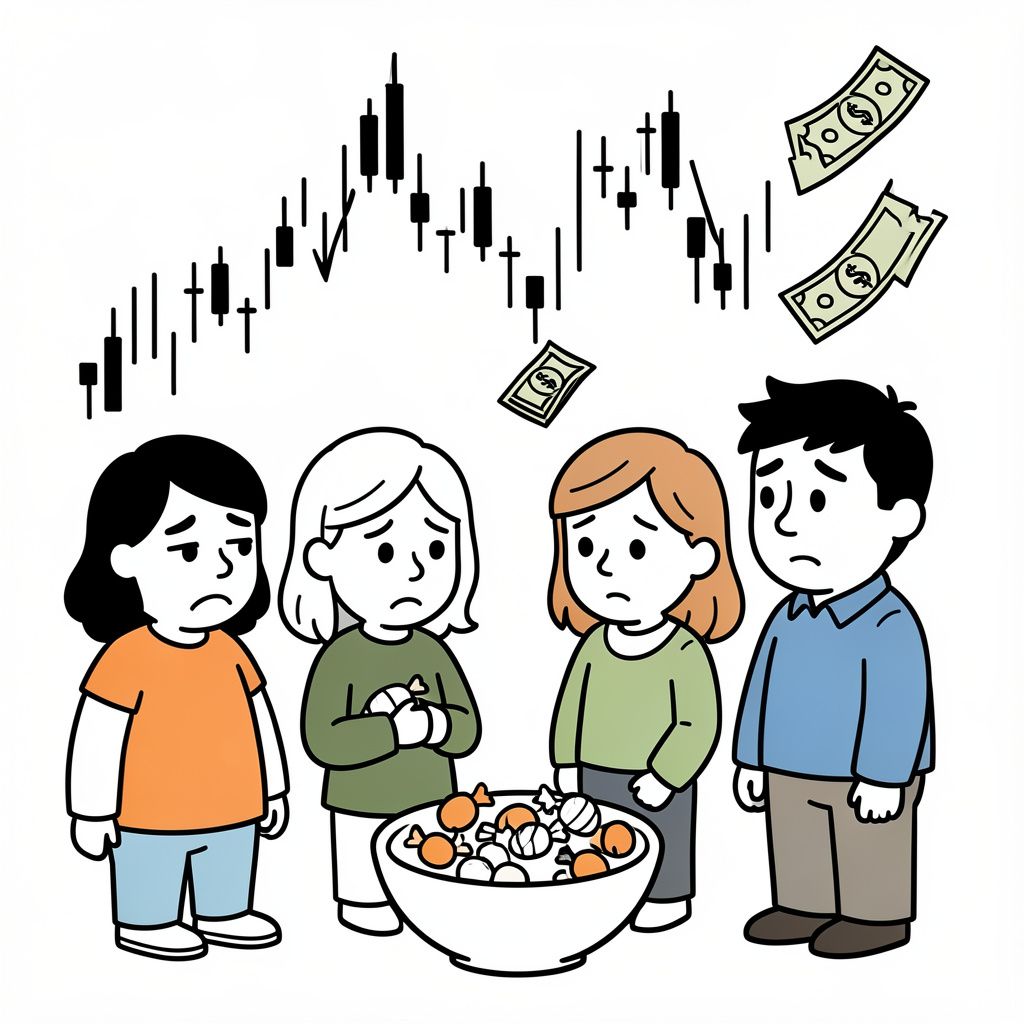
Surging living costs and a 44% five-year jump in candy prices have pushed October confectionery sales down 6.7%, forcing cash-strapped households to cut back on seasonal treats.
Inflation Pressure Mounts as Households Rethink Holiday Spending
The Halloween candy market is signaling broader economic strain this October, with U.S. confectionery sales declining 6.7% in the four weeks ending October 17, 2026, compared to the same period last year [1][3][5][8][10]. This downturn follows an 11.7% drop in mid-September, according to NielsenIQ data, underscoring a sharp pullback in discretionary seasonal purchases as inflation erodes purchasing power across essential categories such as housing, fuel, and groceries [1][3][5][8][10]. The average price of regular gasoline in the U.S. reached $4.29 per gallon on October 16, 2026, marking a 40% year-over-year increase, further constraining household budgets [1][3][5][8][10].
Cocoa Market Volatility Amplifies Cost Pressures
At the heart of the candy slowdown lies the global cocoa crisis, which has seen prices fluctuate dramatically over the past two years. Cocoa prices surged to a record $10,710 per metric ton in January 2025 due to poor weather conditions in West Africa—the world’s largest cocoa producer, supplying approximately 70% of global output—and speculative trading activity, according to the U.S. Bureau of Labor Statistics [1][3][5][8][10]. After a temporary retreat to $3,241 per metric ton in March 2025, prices rebounded sharply in spring 2025 as disruptions linked to the Iran war curtailed African fertilizer supplies and El Niño-driven weather patterns threatened production through at least February 2027 [1][3][5][8][10]. These supply shocks have cascaded into retail pricing, with candy and gum prices rising 44% over the five years ending September 2026—more than double the 22.5% increase in overall food-at-home prices during the same period [1][3][5][8][10].
Consumer Behavior Shifts Toward Frugality and Strategic Shopping
Rather than responding solely to price hikes at the candy counter, consumers are making broader trade-offs. NielsenIQ vice president Chris Costagli notes that households are prioritizing essential expenses such as fuel, housing, and groceries, leaving little room for discretionary seasonal items like Halloween candy [1][3][5][8][10]. ‘Some of the decisions they’re making about Halloween candy,’ Costagli explains, ‘it’s not necessarily because they notice it’s more expensive than last year—it’s because they can’t afford it this year’ [1][3][5][8][10]. This sentiment is reflected in shifting shopping behaviors, with consumers increasingly making smaller, more frequent trips to supermarkets and purchasing items only as needed [1][3][5][8][10].
Industry Outlook: Softness Expected, but Halloween Not Doomed
Despite the current sluggishness, industry analysts remain cautiously optimistic about the holiday’s longer-term resilience. Circana’s global executive vice president Sally Lyons Wyatt observes that consumers are becoming ‘very intentional and thoughtful’ about their consumption choices, not just during holidays but year-round [1][3][5][8][10]. She anticipates continued softness in overall candy sales but believes Halloween itself is unlikely to face collapse, citing strong underlying consumer enthusiasm [1][3][5][8][10]. The National Confectioners Association echoed this sentiment in a statement released on October 16, 2026, noting that the industry is just entering the peak Halloween period with ‘incredibly strong’ consumer enthusiasm [1][3][5][8][10]. Projections from the association suggest total U.S. Halloween candy spending will reach $4.1 billion in 2026, a figure that, while down from earlier expectations, still represents a significant seasonal outlay [1][3][5][8][10].
Sources
- apnews.com
- www.facebook.com
- www.usnews.com
- www.usatoday.com
- www.courant.com
- www.livenowfox.com
- www.bostonherald.com
- www.usnews.com
- www.facebook.com
- www.facebook.com