State Coalition Sues to Block $6.2 Billion Television Broadcast Merger
New York, Thursday, 19 March 2026.
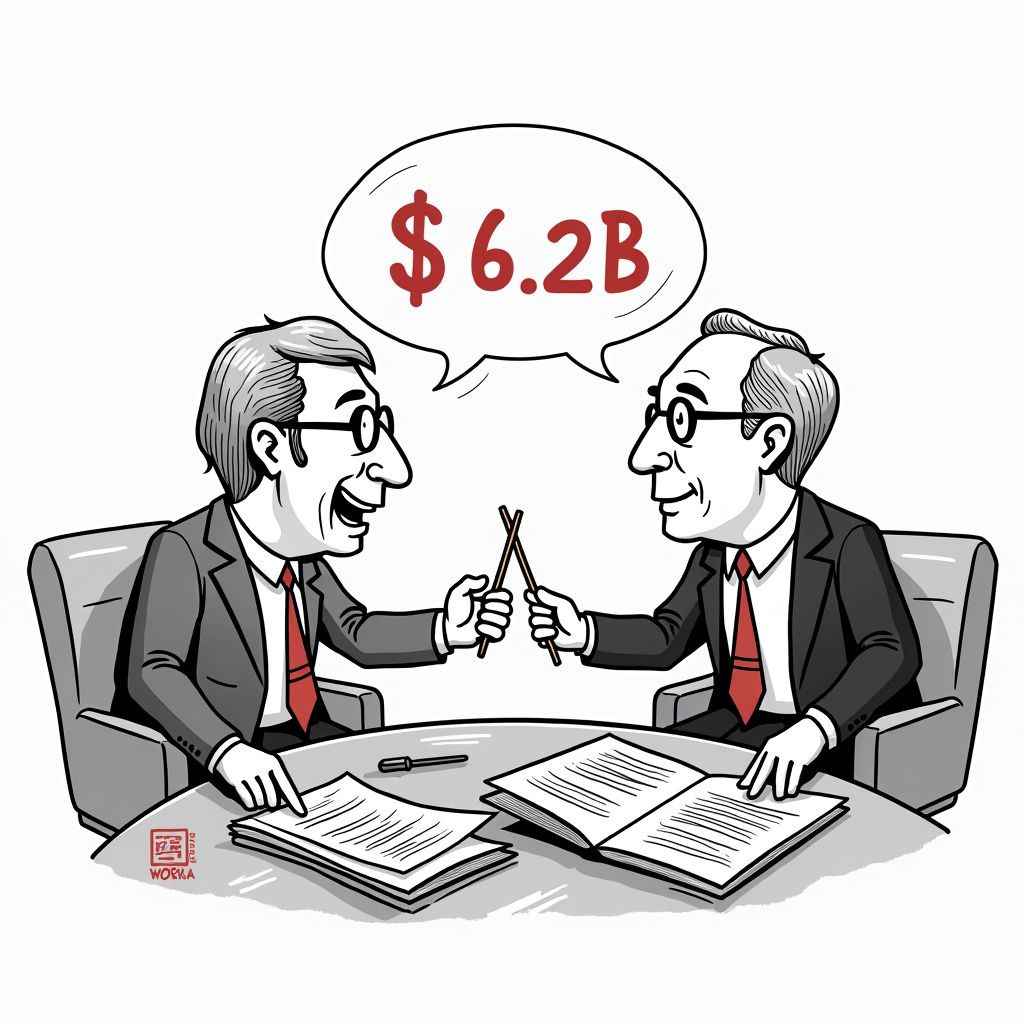
Eight states are suing to block a $6.2 billion television merger, signaling fierce state-level resistance against massive media consolidation despite the deal receiving high-profile federal backing.
A Clash Over Local Media Dominance
On March 18, 2026, a coalition of eight state attorneys general—representing California, New York, Colorado, Illinois, Oregon, North Carolina, Connecticut, and Virginia—filed a lawsuit in the U.S. District Court for the Eastern District of California [2][3][4][5]. The legal action seeks to halt Nexstar Media Group’s (NXST) proposed acquisition of Tegna (TGNA), a transaction valued at $6.2 billion, or $22 per share, originally announced in August 2025 [2][4]. The states allege that the merger violates Section 7 of the Clayton Act of 1914, foundational antitrust legislation that prohibits corporate combinations that substantially lessen competition or tend to create a monopoly [2][5]. By seeking a permanent injunction, the states aim to prevent the creation of what would become the largest broadcast station group in the United States [2][4].
Federal Support Meets State Resistance
The state-level intervention underscores a stark divide between local regulators and federal figures regarding media consolidation. Under current federal rules, television station groups are prohibited from reaching more than 39% of U.S. households [1][4]. To bypass this, Nexstar filed applications with the Federal Communications Commission (FCC) in November 2025 requesting a waiver of the ownership cap [4]. The merger has garnered prominent federal support; on February 7, 2026, President Donald Trump publicly endorsed the deal on Truth Social, arguing that the consolidation would increase competition against “Fake News National TV Networks” at a “higher and more sophisticated level” [4][6]. Furthermore, FCC Chair Brendan Carr has voiced his support for the merger and advocated for abolishing the 39% household limit entirely [1][4].
Antitrust Concerns and the Future of Broadcasting
At the heart of the states’ lawsuit is the economic threat posed to consumers and the potential degradation of local journalism. New York Attorney General Letitia James and Connecticut Attorney General William Tong argue that the massive consolidation would grant the Nexstar-Tegna monolith unprecedented bargaining leverage [3][6]. This leverage could easily translate into higher retransmission fees, which would subsequently be passed down to consumers in the form of inflated cable and satellite bills [3][4][6]. James noted that the “illegal merger threatens local news and could raise fees for consumers by combining hundreds of TV stations under the same owner,” stripping communities of independent voices and affordable media options [1][4][6].
Sources
- www.nbcnews.com
- www.kcra.com
- deadline.com
- variety.com
- news.bloomberglaw.com
- www.mainepublic.org
- www.wgrz.com