United States Halts Planned Iran Strikes Following Outline for Strategic Peace Agreement
Washington, Sunday, 2 August 2026.
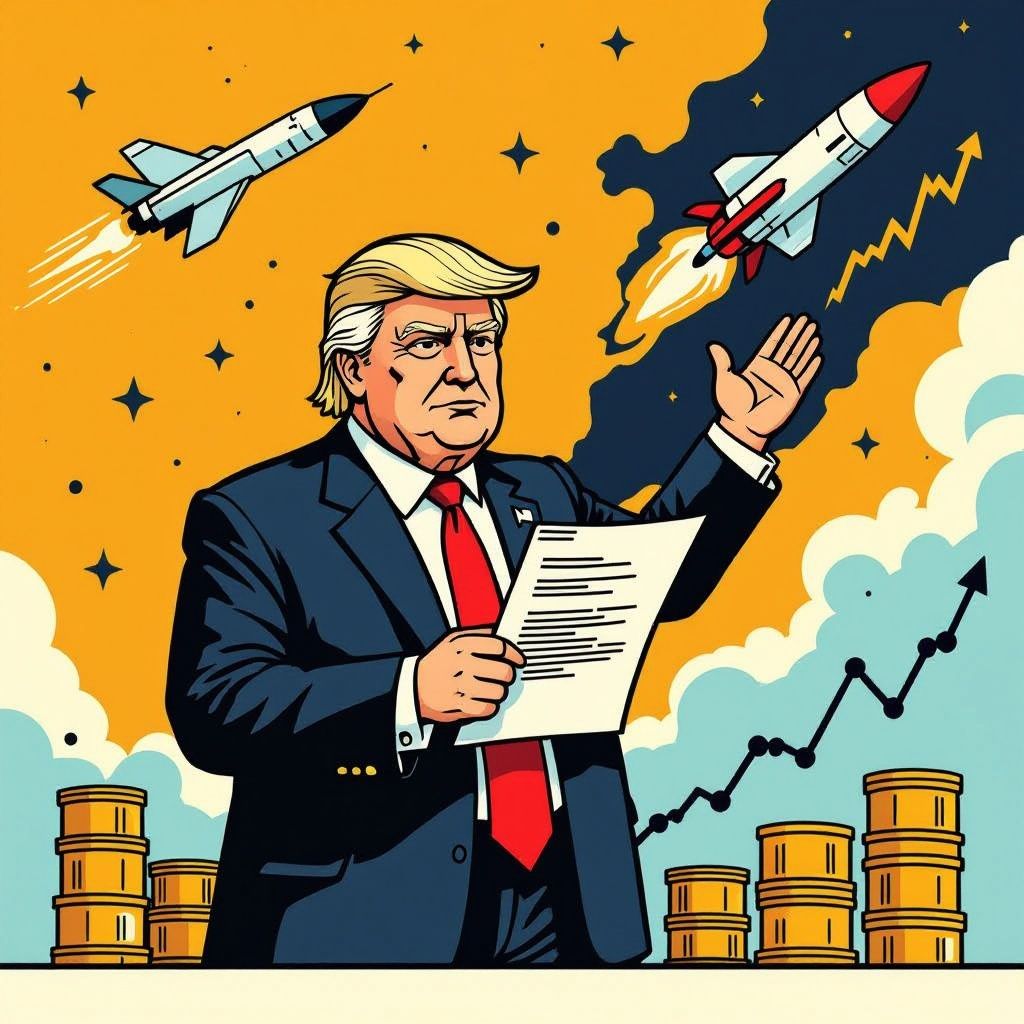
President Trump canceled military strikes on Iran on August 2, 2026, citing a preliminary framework to reopen the Strait of Hormuz and calm volatile global energy markets.
Strategic De-escalation Announced
President Donald Trump announced on August 2, 2026, that he has ordered U.S. forces to hold off on planned military attacks against Iran following preliminary progress on a diplomatic framework [1]. This decision marks a significant shift from the heightened alert status observed just days prior, where U.S. Embassies in Iraq, Jordan, and the United Arab Emirates advised citizens to consider immediate departure due to escalating tensions [1]. The de-escalation comes after key understandings were reached regarding the perimeters of a potential broad deal, easing immediate geopolitical tensions in the Middle East that had threatened global oil supply chains and heightened market volatility [1]. This development updates previous reporting on market stabilization during the conflict pause, detailed in our earlier coverage Global Markets Stabilize as United States and Iran Pause Military Strikes [GPT]. Readers can find that context here: https://wsnext.com/9eea928-Stock-market-Geopolitics/ [GPT].
Diplomatic Framework and Regional Involvement
The proposed agreement requires the Immediate, Complete, and Total OPENING OF THE HORMUZ STRAIT, and an end to Iran’s nuclear threat, according to President Trump [1]. On August 2, 2026, the President stated that Iran and its regional neighbors asked the U.S. to hold off any attacks after the perimeters of a deal were agreed to [1]. Saudi Arabia’s Crown Prince Mohammed bin Salman emphasized the need for dialogue to reduce escalation in a phone call with Trump on August 1, 2026 [1]. However, Iran’s Fars International news agency dismissed these demands as a wish list, indicating potential friction in finalizing the accord [1]. Iran’s acting Defense Minister, Seyyed Majid Ibn Al-Reza, stated via X that Iran considers every threat real and part of a psychological and cognitive warfare campaign [1]. Despite the skepticism, Trump stated the U.S. remains locked and loaded and ready to go should the deal fail [1].
Market Reaction and Oil Supply Chains
Financial markets responded to the conflict dynamics with notable sensitivity to supply chain disruptions. On August 1, 2026, oil prices responded to the conflict as West Texas Intermediate futures closed at $84.67 per barrel and Brent crude settled at $90.12 [1]. The spread between Brent and WTI crude can be calculated as 5.45, reflecting regional risk premiums associated with the Strait of Hormuz closures [1]. The U.S. State Department issued travel security alerts for Bahrain, Israel, Iraq, Jordan, Kuwait, Lebanon, Oman, Qatar, Saudi Arabia, and the United Arab Emirates, citing potential flight cancellations and airspace closures [2]. These alerts underscore the fragility of the region’s stability, even as diplomatic channels open [7]. The war between the U.S. and Iran began on February 28, 2026, and has since impacted global energy markets significantly [1].
Conditions and Future Risks
While the immediate threat of strikes has been canceled, the agreement is subject to rapid negotiation, with no specific timeline provided for the deal or the opening of the Strait [1]. A memorandum of understanding between the U.S. and Iran signed on June 17, 2026, had previously collapsed, with tensions resurging after the U.S. reimposed a naval blockade on Iranian ports on July 13, 2026 [1]. Public sentiment regarding the conflict is significantly negative, with a recent poll indicating 60% of respondents believe the war with Iran is not worth the cost [5]. President Trump noted that the Country of Israel joins him in this commitment to cancel the attack subject to making a deal [1]. The situation remains fluid, with the status of the agreement pending rapid diplomatic progress [1].