US Household Debt Hits Alarming Record—Why It Could Trigger an Economic Slowdown
New York, Monday, 22 June 2026.
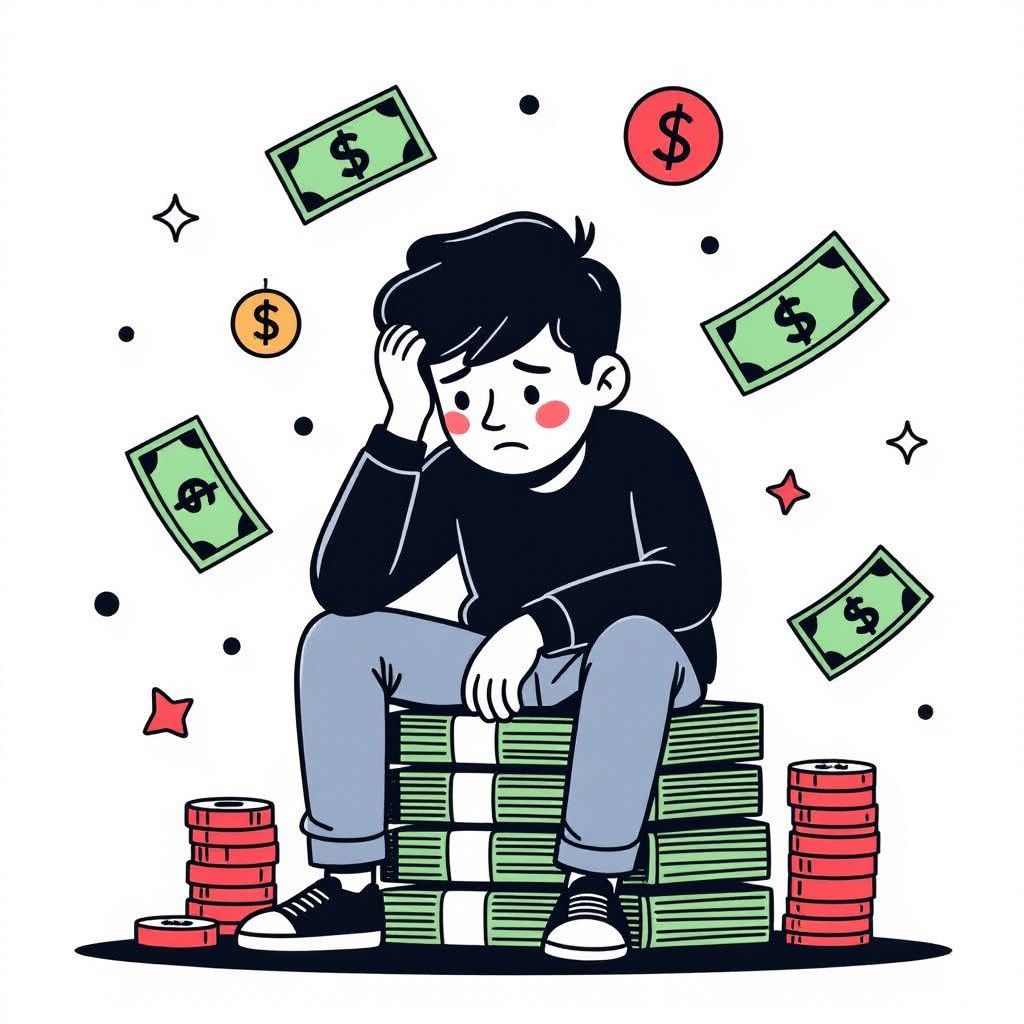
American households now owe a staggering $19.9 trillion in debt, the highest ever recorded, while savings rates plummet to a 65-year low. With borrowing fueling nearly all economic growth, experts warn this unsustainable trend could spark a spending slowdown—or worse, a financial crisis if jobs or wages falter.
A Debt-Driven Economy: The Numbers Behind the Crisis
The United States has reached a precarious financial milestone. As of the first quarter of 2026, total household debt surged to a record $19.9 trillion, according to data from the Federal Reserve [2]. This figure represents a 3.3% year-over-year increase, measured by the New York Fed’s narrower definition of $18.8 trillion [2]. The rise in debt coincides with a dramatic decline in personal savings, which plummeted to 2.6% in April 2026—the lowest level in 65 years [2]. For context, the savings rate stood at 3.6% just one month prior, in March 2026, indicating a rapid erosion of financial buffers [2]. The trend is stark: Americans are not only borrowing more but also saving less, a combination that leaves households increasingly vulnerable to economic shocks.
The Credit Intensity Paradox: Borrowing More for Less Growth
The relationship between debt and economic growth has become alarmingly inefficient. Bespoke Investment Group’s analysis reveals that the ‘credit intensity’ of U.S. GDP—the amount of new borrowing required to generate each additional dollar of economic output—reached 3.73 in 2025, the highest level in at least seven decades [1]. This metric underscores a troubling reality: the U.S. economy is becoming increasingly reliant on debt to sustain growth. In April 2026, consumer spending rose by a modest 0.1%, yet this marginal increase was largely fueled by credit card debt, auto loans, and student loans [2]. The data suggests that without continued borrowing, economic expansion could stall—or even reverse.
Who Bears the Burden? The Uneven Impact of Rising Debt
The debt crisis is not evenly distributed across income groups. Low-income households, already operating with thinner financial margins, are disproportionately affected by rising borrowing costs and stagnant wage growth [2]. However, higher-income earners are not immune; many are also reducing savings to maintain spending levels amid persistent inflation and a widening gap between wages and prices [2]. The Federal Reserve’s latest reports highlight a concerning rise in credit card delinquencies, signaling that some households are already struggling to meet debt obligations [2]. Meanwhile, job growth has begun to slow, as indicated by Bureau of Labor Statistics data released on 18 June 2026, further exacerbating the risk of a debt-driven economic downturn [2].
Expert Warnings: A Tipping Point for Consumer Spending
Economists are sounding alarms about the potential consequences of this debt accumulation. Albert Edwards, a strategist at Société Générale, has issued a stark warning: ‘If the U.S. saving ratio stops falling, consumer spending will grow in line with income, which is falling’ [1]. Edwards’ analysis suggests that even a stabilization of the savings rate could trigger a slowdown in consumer spending, which accounts for approximately 70% of U.S. economic activity [GPT]. The implications are dire: ‘Woe betide the economy if the saving ratio actually rises back to more normal levels,’ Edwards cautioned, hinting at the possibility of a sharp contraction in spending if households attempt to rebuild savings [1]. He further emphasized the economy’s vulnerability, stating, ‘This makes the economy all the more fragile should investors doubt the pot of gold at the end of the AI rainbow’—a reference to the speculative optimism surrounding artificial intelligence-driven economic growth [1]. Edwards’ final admonition, ‘Watch this debt-laden space,’ underscores the urgency of the situation [1].
Policy and Market Reactions: Navigating Uncharted Territory
Policymakers and business leaders are closely monitoring these developments, recognizing that sustained debt accumulation could trigger a ripple effect across sectors. Retail sales, corporate earnings, and even housing markets are at risk if consumer spending falters [1]. The Federal Reserve faces a delicate balancing act: raising interest rates to curb inflation could further strain debt-laden households, while keeping rates low risks prolonging inflationary pressures [GPT]. Market analysts are particularly concerned about the potential for a ‘debt trap,’ where high borrowing costs and slowing income growth create a self-reinforcing cycle of economic decline [1]. Some observers draw parallels to the pre-2008 financial crisis, noting that the current debt-to-income ratio has surpassed levels seen during that period [1]. However, the composition of debt differs today, with student loans and credit card debt playing a more prominent role than the mortgage debt that dominated the 2008 crisis [2].
Looking Ahead: Can the Economy Break the Debt Cycle?
The path forward remains uncertain. For the U.S. economy to avoid a debt-induced slowdown, several conditions would need to align: wage growth would have to outpace inflation, allowing households to reduce reliance on debt; employment rates would need to remain stable to support income levels; and borrowing costs would have to decline to ease the burden on consumers [2]. However, achieving these outcomes is far from guaranteed. The Federal Reserve’s ability to engineer a ‘soft landing’—where inflation is controlled without triggering a recession—is being tested like never before [GPT]. Meanwhile, households are left navigating a financial tightrope, balancing the need to spend to support the economy with the imperative to save for an increasingly uncertain future. As the debt crisis deepens, the question looms: can the U.S. break free from its reliance on borrowing, or is it destined for a painful correction?