Global Investors Push US Debt Holdings to Record $9.3 Trillion
Washington D.C., Friday, 16 January 2026.
Global confidence in U.S. financial stability has staged a remarkable recovery following the historic 43-day government shutdown. New data reveals that foreign holdings of U.S. Treasuries surged to an unprecedented $9.355 trillion in November 2025. This influx contributed to a robust $212 billion net capital inflow, signaling that international investors are largely looking past Washington’s recent fiscal volatility. However, a distinct divergence in strategy has emerged among major economic powers. While Japan, the United Kingdom, and Canada aggressively increased their portfolios—with Japan cementing its status as the largest holder at $1.2 trillion—China continued its strategic retreat. Beijing reduced its exposure to $682.6 billion, the lowest level since 2008, highlighting a deepening geopolitical rift in financial markets even as broader global sentiment rallies around the U.S. dollar.
A Resounding Vote of Confidence
The resolution of the longest federal government shutdown in U.S. history, which concluded on November 12, 2025, served as a critical catalyst for this financial rebound [1]. Treasury Department data released yesterday indicates that foreign holdings recovered from a dip in October to reach $9.355 trillion in November, a 7.2% increase compared to the same period the previous year [1][7]. This accumulation underscores the resilience of U.S. debt as a premier safe-haven asset, even immediately following severe domestic political turbulence [1]. Market dynamics reflected this renewed appetite; the benchmark 10-year U.S. Treasury yield, which moves inversely to prices, tightened from 4.107% at the start of November to close the month at 4.019% [1].
Strategic Divergence Among Major Holders
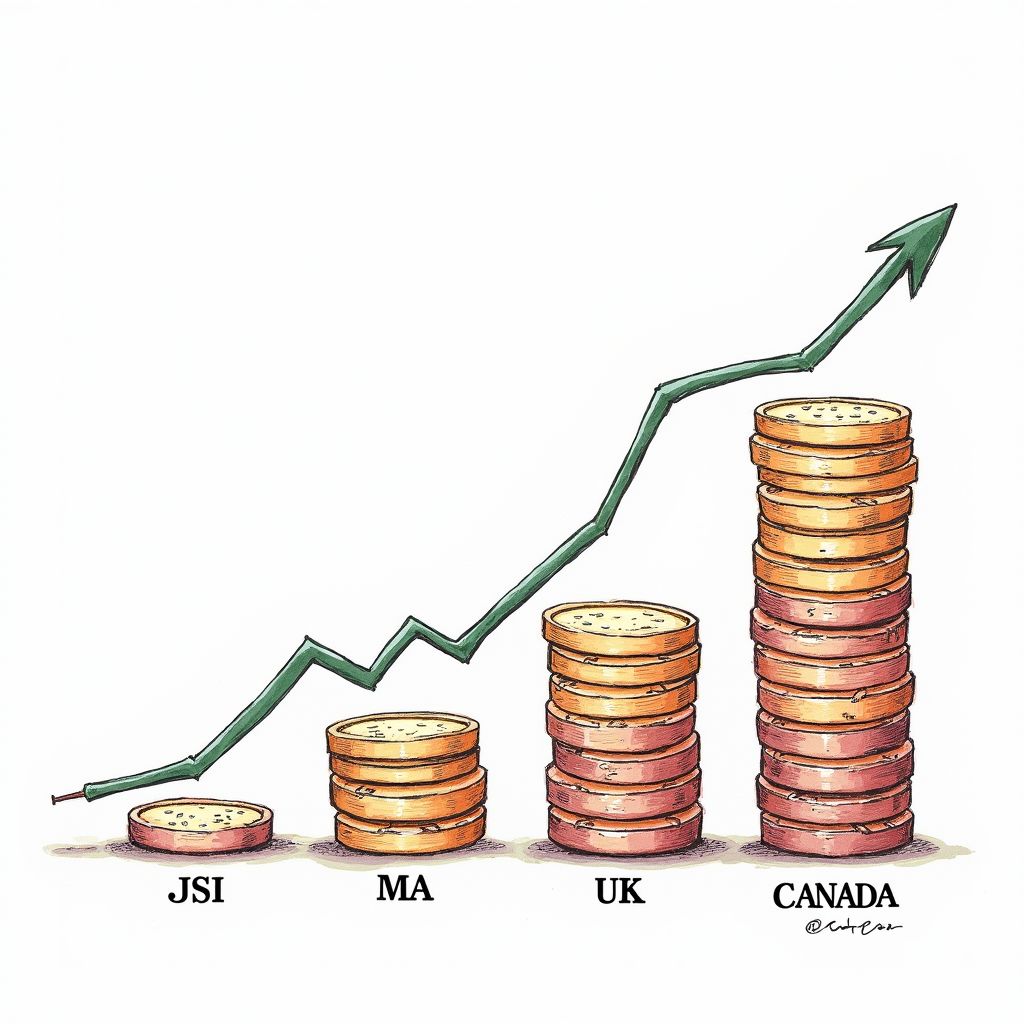
Japan remains the anchor of foreign investment, extending its buying streak to 11 consecutive months. Its portfolio swelled to $1.202 trillion, the highest level recorded since July 2022 [1][7]. The United Kingdom, often acting as a custody hub for global hedge funds and other institutional investors, also increased its stake to $888.5 billion, a rise of approximately 1.2% from the prior month [1]. Perhaps the most dramatic shift came from Canada, where holdings leaped by 13% to a record $472.2 billion [1][7]. This aggressive accumulation represents a sharp reversal from earlier in 2025, when Canadian investors had pulled back following the imposition of U.S. tariffs on steel and aluminum [1].
Broad-Based Capital Inflows
The renewed enthusiasm for U.S. assets extended well beyond government debt. The total net capital inflow into the United States hit $212 billion in November, a stark turnaround from the revised outflows of $22.5 billion observed in October [1][7]. This surplus was driven heavily by private foreign investors, who accounted for $167.2 billion of the net inflows, compared to $44.9 billion from official institutions [2][5]. Equities also saw robust demand, with foreign buyers purchasing $92.2 billion in U.S. stocks during the month, a significant increase from the $60.3 billion acquired in October [1][7]. These figures suggest that despite the fiscal complexities in Washington, global markets continue to view the U.S. financial system as the ultimate repository for capital during periods of recovery [6].
Sources
- m.economictimes.com
- mondovisione.com
- think.ing.com
- www.forexfactory.com
- tradingeconomics.com
- www.cmegroup.com
- www.reuters.com
- www.ainvest.com