U.S. Secret Service Uses Catering Truck Decoy to Evade Security Threat in Turkey
Ankara, Wednesday, 12 August 2026.
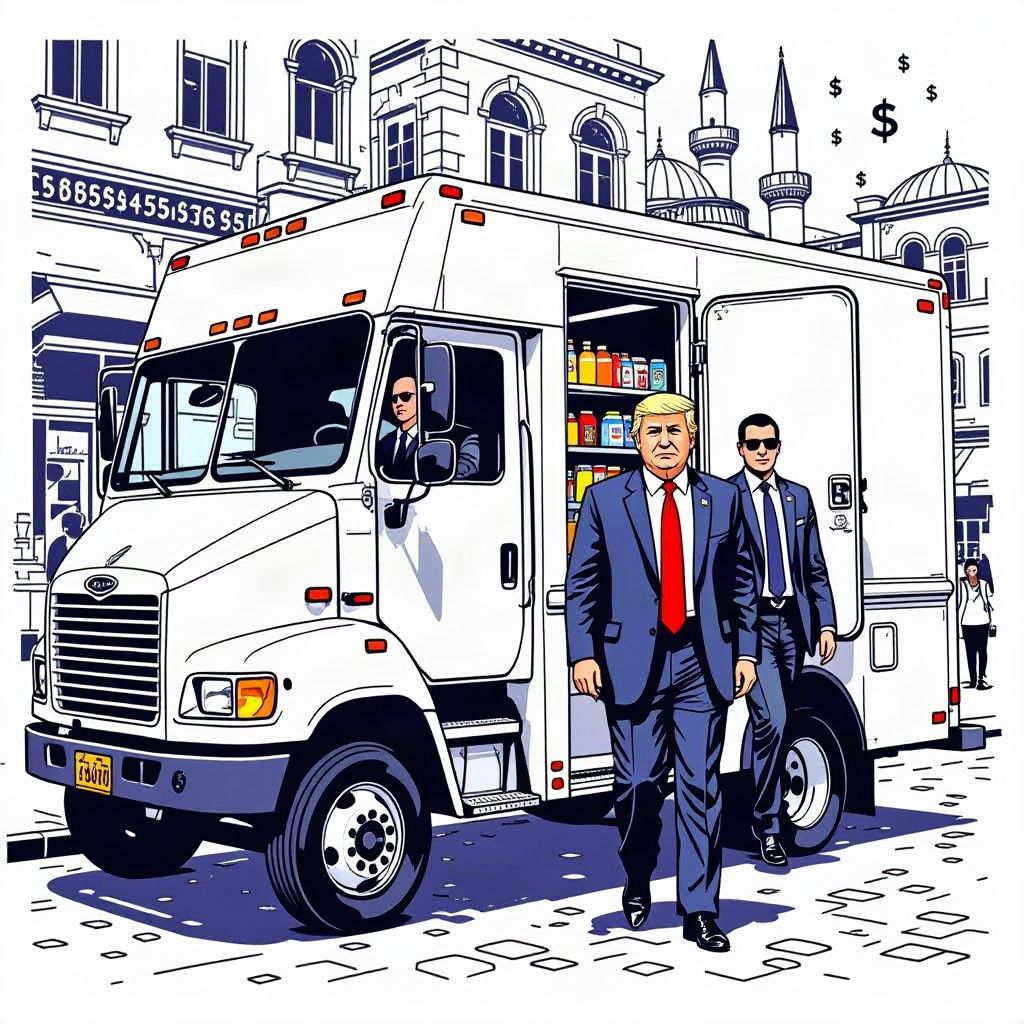
Following Iranian assassination threats in Turkey, the U.S. Secret Service secretly moved President Donald Trump off Air Force One using a catering truck, raising critical security and transparency concerns.
Presidential Confirmation and Timeline Discrepancies
President Donald Trump publicly confirmed the security maneuver on 11 August 2026, during an event in Ohio, attributing the decision entirely to the Secret Service [2]. While the confirmation occurred in August, the actual aircraft transfer took place on 8 July 2026, following the NATO summit in Ankara, Turkey [2][3]. This 34 day delay between the operational event and public disclosure has intensified scrutiny regarding transparency in presidential security protocols [3][4]. The President stated he complies with Secret Service directives without questioning specific threat details, noting, “I get a lot of threats” [2].
Operational Mechanics of the Aircraft Switch
The security ruse involved President Trump boarding the legacy Boeing 747-8 Air Force One in view of the media before secretly transferring to a catering truck [2][4]. From the truck, he was transported to a smaller C-32A military aircraft, carrying the call sign “Reach 18,” while the original jet retained the “AF1” call sign to deceive observers [2][4]. Defense Secretary Pete Hegseth boarded the C-32A separately via external stairs to maintain the appearance of a standard departure [2]. Journalists and staff on the decoy aircraft were instructed to keep window shades lowered to prevent visual confirmation of the President’s absence [3][4].
Intelligence Origins and Geopolitical Context
U.S. intelligence agencies received specific warnings from Israel regarding an Iranian assassination plot involving shoulder-fired missiles targeting the presidential aircraft [3][5]. This threat assessment emerged amidst renewed U.S. military strikes on Iran following the collapse of diplomatic negotiations to end the ongoing conflict [2][4]. Intelligence reports indicated a person near the summit possessed a shoulder-fired missile, prompting the Secret Service to execute the evasion tactic one day after the strikes resumed [2]. The Trump administration has confirmed briefings on “real and specific threats from Iran,” aligning with historical targeting of former officials like John Bolton and Mike Pompeo [3].
Safety Implications and Transparency Concerns
The decision to leave journalists and senior staff, including Secretary of State Marco Rubio and Treasury Secretary Scott Bessent, on the decoy aircraft has raised ethical questions about collateral risk [2][5]. Jose Zamora of the Committee to Protect Journalists emphasized that reporters should be informed of credible security threats to make informed safety decisions [2][4]. White House Press Secretary Karoline Leavitt stated the new Air Force One will receive additional security upgrades in the fall of 2026, expected to take approximately one month to complete [4]. Former Secret Service agents noted that while deceptive movements are protocol, using a populated aircraft as a decoy represents a significant calculated risk [5][6].