Shield of the Americas Summit Signals Major Shift in Regional Economic Strategy
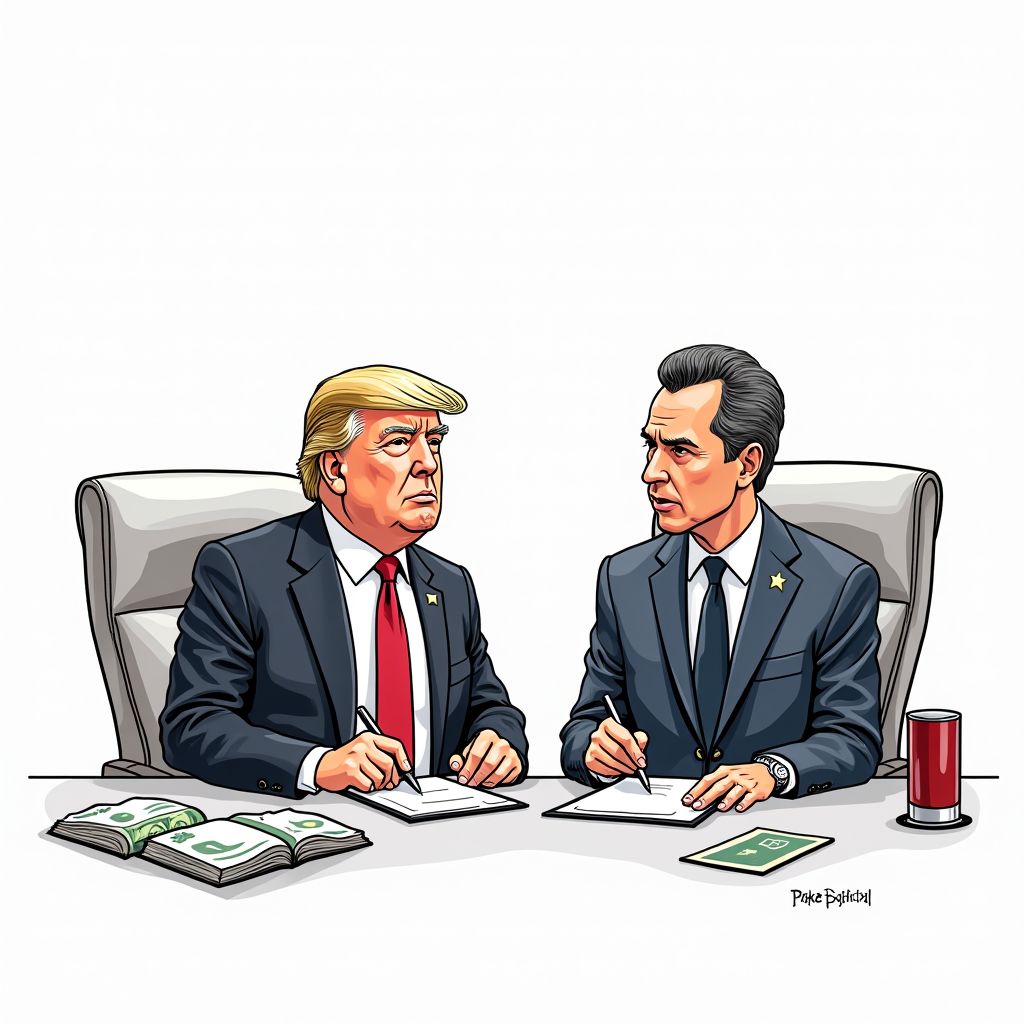
Washington, Thursday, 5 March 2026.
President Trump convenes the Shield of the Americas Summit this weekend to enforce the ‘Donroe Doctrine,’ reshaping hemispheric supply chains and security through the historic signing of the Doral Charter.
A New Coalition in Miami
This coming Saturday, March 7, 2026, President Donald Trump is scheduled to host a select group of Latin American leaders in Miami, Florida, for the inaugural “Shield of the Americas Summit” [2][3]. This gathering represents a strategic pivot from the broader, traditionally multilateral Summit of the Americas, which was postponed from its original December 2025 date following concerns regarding the administration’s approach [2]. Instead, the White House has opted to convene a coalition of 12 “like-minded” nations, including Argentina, El Salvador, and Costa Rica, to solidify a new regional framework [2][3]. The summit is explicitly designed to reinforce the “Donroe Doctrine,” a policy aimed at restoring American preeminence in the Western Hemisphere while curbing the influence of external powers such as China, Russia, and Iran [1][3].
Codifying the Donroe Doctrine
Central to the weekend’s agenda is the signing of the Doral Charter, a document confirmed by White House officials on March 3 to be signed by President Trump and each visiting delegation [3]. The Charter affirms the right of hemispheric nations to determine their destiny free from external interference, while simultaneously emphasizing democratic principles and private enterprise [3]. This diplomatic move aligns with the administration’s “Enlist and Expand” strategy outlined in the 2025 National Security Strategy, which prioritizes partnerships with ideologically aligned leaders to secure U.S. interests [2]. Key attendees expected to sign the charter include Argentine President Javier Milei, Salvadoran President Nayib Bukele, and Panamanian President José Raúl Mulino [2][3]. The administration views this narrower alliance as a more effective mechanism for fostering cooperation on security and migration compared to larger, often gridlocked regional bodies [2].
Personnel Shifts and Security Strategy
To spearhead this renewed focus on the hemisphere, President Trump announced today, March 5, that Kristi Noem will transition from her role as Secretary of Homeland Security to become the Special Envoy for “The Shield of the Americas” [4][5]. Consequently, U.S. Senator Markwayne Mullin of Oklahoma has been named as the next Secretary of Homeland Security, with his tenure set to begin on March 31, 2026 [4]. These leadership changes coincide with an aggressive new security posture; earlier today, the administration unveiled a strategy to combat drug cartels using military force at the Americas Counter Cartel Conference in Doral [6]. During the conference, officials emphasized a willingness to utilize “hard power” to defend the American homeland, with Deputy Chief of Staff Stephen Miller likening cartels to terrorist organizations [6].
Economic and Operational Implications
Beyond security, the summit aims to reshape economic engagement in the region. The administration has already secured a $75 million increase for the Inter-American Development Bank’s private-sector portfolio, signaling a commitment to fostering business ties within this new alliance structure [2]. However, the approach has drawn scrutiny for potentially undermining long-term diplomatic relations by “forum shopping” for favorable allies rather than engaging with established regional infrastructure [2]. Nevertheless, the White House maintains that the initiative will foster prosperity and stop mass migration by collaborating closely with partners on shared threats [3]. The formal unveiling of the broader “Shield of the Americas” security initiative is planned for March 8, following the leaders’ meeting [4].
Sources
- www.facebook.com
- nationalinterest.org
- voz.us
- thenationaldesk.com
- www.marketscreener.com
- thenationalpulse.com